
Abrasive
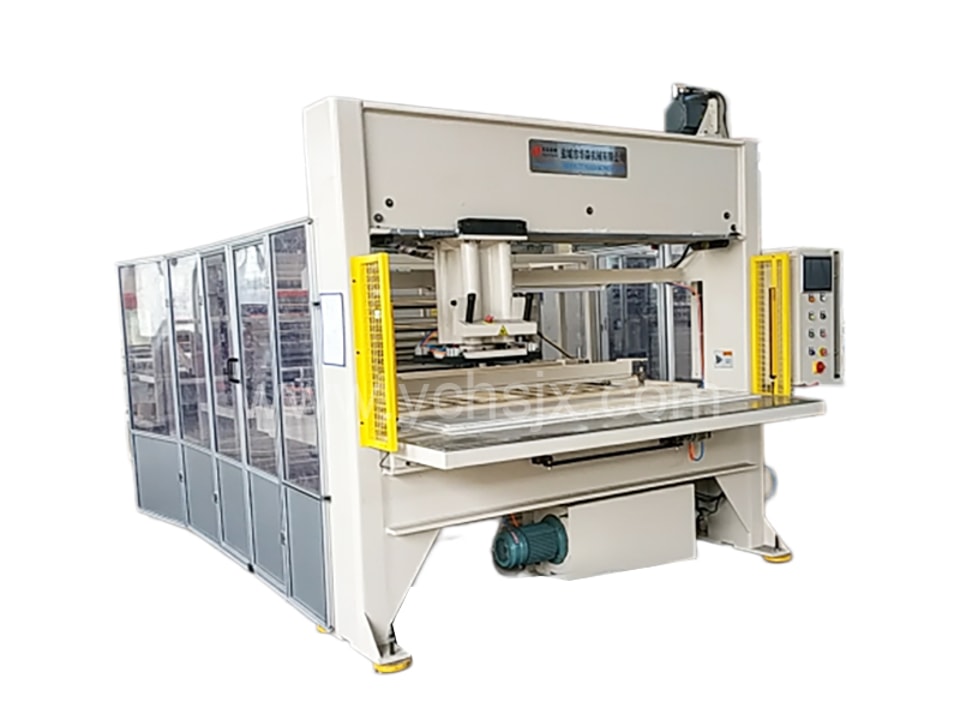
Designed for abrasive material processing, cutting machines can handle sandpaper, abrasive belts, grinding discs and other products with stable pressure and precise cutting performance.
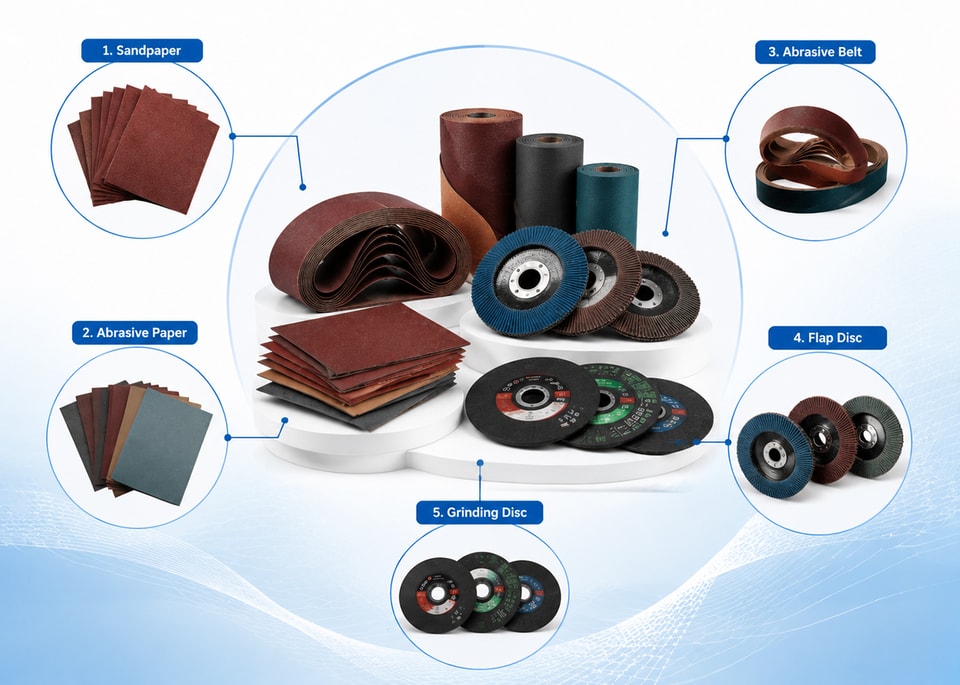
Automatic cutting machines are vital in the abrasive industry, where materials are hard, brittle, fiber-reinforced, or highly wear-resistant. Their applications span from raw abrasive conversion to final precision tool shaping, addressing challenges of heat generation, dust control, and dimensional accuracy.
For coated abrasives such as sanding belts, discs, sheets, and rolls, automatic rotary die-cutters and oscillating knife systems process materials like aluminum oxide, silicon carbide, and zirconia alumina on paper, cloth, or film backings. These machines achieve clean, delamination-free edges with minimal dust, using servo-driven kiss-cutting techniques that cut through the abrasive layer without damaging the backing, or through-cut for complete separation. High-speed reciprocating knife systems handle continuous roll stock, producing standardized sheets or custom shapes for automotive refinishing and woodworking, with nesting software maximizing yield from expensive abrasive rolls.
For bonded abrasives like grinding wheels, cut-off discs, and mounted points, CNC-controlled waterjet and laser cutting machines are employed. Waterjets use high-pressure abrasive-laden streams (garnet or olivine) to cut through vitrified or resin-bonded wheels up to 200mm thick without heat-affected zones, preserving the structural integrity of the bonding matrix. Laser cutters, particularly fiber lasers, are used for precise slotting, profiling, and balancing hole drilling in superabrasive wheels (diamond and CBN), where traditional machining would cause rapid tool wear. These systems achieve positioning accuracies of ±0.01mm, critical for high-speed balancing.
In the production of non-woven abrasives (scourers, flap wheels, and surface conditioning belts), ultrasonic cutting technology is preferred. Ultrasonic blades vibrate at 20-40 kHz, creating a low-friction cut that prevents the compression and fraying of nylon fibers impregnated with abrasive minerals. This method produces sealed, melt-bonded edges that reduce fiber shedding during use, extending product life by up to 30%. Multi-head ultrasonic systems can simultaneously cut multiple layers (up to 50mm stack height), dramatically increasing throughput.
For abrasive filament brushes and flap discs, automated cutting machines equipped with vision systems measure and cut fiberglass-reinforced backing plates and stacked cloth/flap segments to precise angles (often 15°-45° bevels). Robotic arms feed these irregular shapes into gang-rip cutters or band-knife splitting machines, ensuring consistent segment widths within ±0.1mm for balanced rotational performance.
Finally, all these systems integrate dust extraction and closed-loop cooling to manage abrasive particulate hazards, with Class M or H filtration per EN 60335. Smart IIoT-enabled cutters monitor blade wear via current draw, automatically adjusting feed rates or scheduling tool changes, reducing downtime by up to 40%. Combined with CAD/CAM nesting that can improve material usage by 15-25%, automatic cutting machines are not just production tools but strategic assets in the abrasive industry, delivering precision, safety, and sustainability across the entire product spectrum.
Contact Us


