
What Does a Sliding Table Do on a Die Cutting Machine?
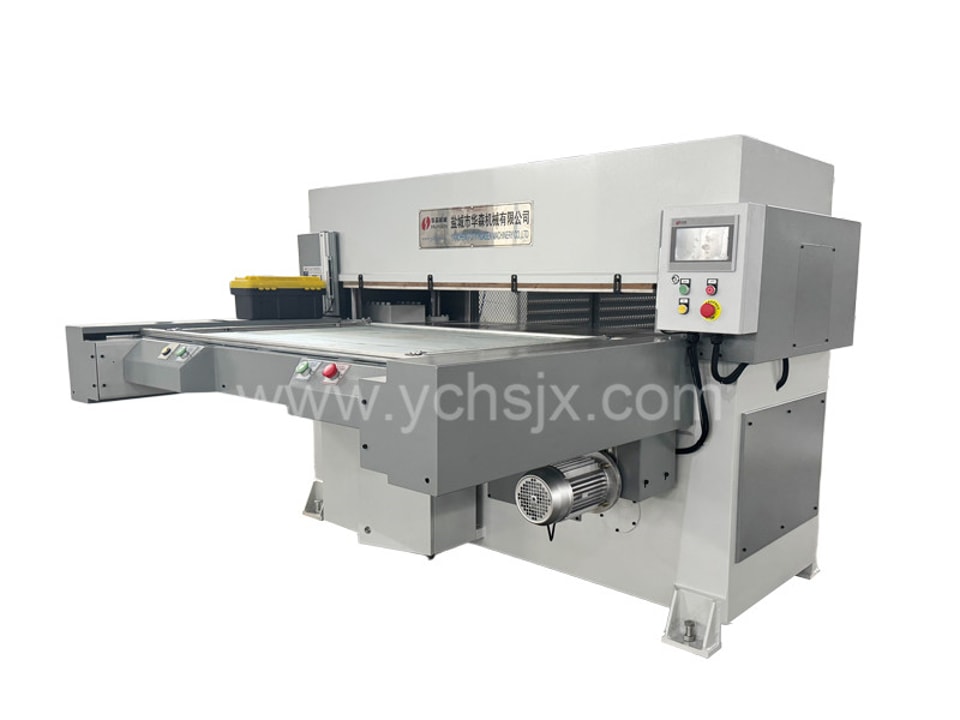
What Does a Sliding Table Do on a Die Cutting Machine? A sliding table carries the die and the material in and out of the pressing zone on rails, so that loading and unloading happen outside the area where the platen comes down. It does not change how the machine cuts; it changes when the operator can work. On a fixed-table press the operator reaches into the press to position the die, waits for the stroke, then reaches in again to remove the part. On a sliding-table press the table travels out, the operator works in clear space, and the table carries the job back under the beam. The cut still takes the same time, but the loading stops competing with it for the same floor space and the same seconds. The table is extended out of the frame while the die and material are positioned. Once the table runs back in and locks, the platen descends — the operator's hands are clear of the pressing zone for the whole stroke. I. What the Table Does Mechanically The table is a steel plate carried on guides, driven in and out by a hydraulic cylinder, a pneumatic cylinder or a rack-and-pinion drive. It has two positions. In the loading position it sits outside the uprights, giving the operator access to the whole die. In the cutting position it is centred under the platen and mechanically locked or positively seated, because any movement during the stroke would show up as a dimensional error in the part. Two details decide whether the table is a convenience or a source of rejects. The first is seating repeatability: the table must return to the same position every cycle, which usually means a locating block or a taper seat rather than relying on the cylinder's end stop. The second is flatness under load. A table that deflects slightly in the middle will cut deeper there than at the edges, and the effect grows with table size and with the force of the press. II. Single Table and Double Table A single sliding table removes the need to reach into the press, but the press is still idle while the table is out. The cycle is: table out, load, table in, cut, table out, unload. The saving is real but partial, and it is largest on big, heavy dies that are slow to position. A double sliding table puts two tables on the same frame. One sits under the platen being cut while the other is outside being unloaded and reloaded, and the two swap positions. The press now spends most of its time cutting instead of waiting, which is why catalogue sheets for this type usually state that a double-side feeding system raises output substantially compared with single-side feeding. That gain is only realised if the operator can actually load and unload within one press cycle; if loading takes longer than the cut, the second table buys nothing. The same machines are commonly offered across a wide force range, from about 400 kN up to 4,000 kN, with cutting areas up to roughly 1,600 × 1,500 mm on the largest versions. Table size, not tonnage, is usually the figure that decides whether a particular die fits. III. What It Changes on the Factory Floor The first change is safety. Loading outside the pressing zone removes the most common reason operators put their hands under a platen: the need to adjust a die that has shifted. The second is ergonomics. Working at a table extended towards the operator is easier on the back than reaching across a fixed table into a machine frame, particularly with heavy dies and thick stacks. The third is throughput, in the specific sense of cutting time as a share of the shift. A press that cuts for 40 percent of the shift because the rest is loading can be pushed towards 70 or 80 percent with a well-matched double table — but only if the upstream material supply keeps up. The fourth is floor space. The table travel needs clear space in front of the machine, and a double table needs it on both sides. Machines are often specified with the table travel forgotten, then installed in a bay that is 500 mm too short. The fifth is die changing. With the table out, the die is fully accessible and can be lifted vertically rather than slid out from under a frame — which is why shops running many short jobs tend to prefer this layout even when the volume does not demand it. IV. What to Check Before You Buy Start with table size against your largest die, and load capacity against the heaviest die plus material. Then ask about the drive: hydraulic tables are smooth and strong, pneumatic tables are faster and cheaper but less rigid, and rack-and-pinion drives suit very long travel. Ask what locks the table in the cutting position, and how repeatable that lock is. Ask for the flatness tolerance of the table surface, not just its dimensions. Ask how the cutting board is changed — on some designs the board can only be reached with the table removed, which turns a ten-minute job into an hour. Finally, ask about the interlocks. On a double-table machine the essential requirement is that the tables cannot index while the platen is descending, and that the loading station is guarded so a second operator cannot reach into the cutting position. Two-hand control or a light curtain at the cutting station is normal on machines built for export markets; confirm what is fitted rather than assuming. V. Where Sliding Tables Are Used The layout appears wherever dies are large, heavy or numerous: footwear uppers, soles and insoles; automotive interior panels and sound insulation; foam and gasket converting; EPE and packaging inserts; bag and luggage panels; abrasive products; and sports mats. If the material arrives in rolls rather than sheets, a sliding table is the wrong starting point. Roll work is better served by a beam press with an automatic feeding system, because the table would add a manual step where the process is trying to remove one. VI. Where the Layout Stops Helping A sliding table is a way of organising manual work, not a way of eliminating it. Once a job runs continuously with the same die, the operator's loading time becomes the limit, and the next step is an automatic line rather than a bigger table. Within those limits it is one of the cheapest productivity upgrades available on a hydraulic press, because it converts operator time that was previously wasted inside the machine into useful loading time outside it. The four-column press with double sliding tables is the version most buyers land on for repeat production; single-table versions and the wider four-column die cutting range cover lower volumes and larger parts. Where the requirement is small parts with two independent working positions rather than two tables, a dual-station machine is the different answer. FAQ Does a sliding table make a cutting machine faster? It makes the machine more productive rather than faster. The press stroke is unchanged; what disappears is the idle time while the operator reaches into the press. A double table usually gains the most, because one table is loaded while the other is being cut. Single sliding table or double sliding table? A single table suits low to medium volume and large parts, where the time saved by loading outside the press already justifies it. A double table suits repeat work with short cut cycles, where loading time would otherwise dominate the cycle. Is it safe to load the table while the press is cutting? Only on a machine where the loading station is physically outside the pressing zone and the controls are interlocked so the table cannot move while the platen descends. On a single-table machine the operator never loads during the cut, because the table is inside the press. Why does cut depth vary across a sliding table? Usually three reasons: the table surface is not flat, the table does not seat in exactly the same position every cycle, or the rails and frame have worn so the table tilts slightly when it locks. Check seating repeatability before adjusting the press. Is a double sliding table the same as a dual-station machine? No. A double sliding table carries two tables under one press so loading and cutting overlap in time. A dual-station machine has two independent pressing heads or working positions, typically for small parts and secondary punching. Working Out Which Layout Fits? Send us your largest die footprint, the material, the number of die changes per shift and the output you need. We will tell you whether a single table, a double table or an automatic feed is the sensible choice, and what floor clearance to plan for. Contact our team with the details.
Four-Column, Four-Post, Four-Bar: What the Names Mean
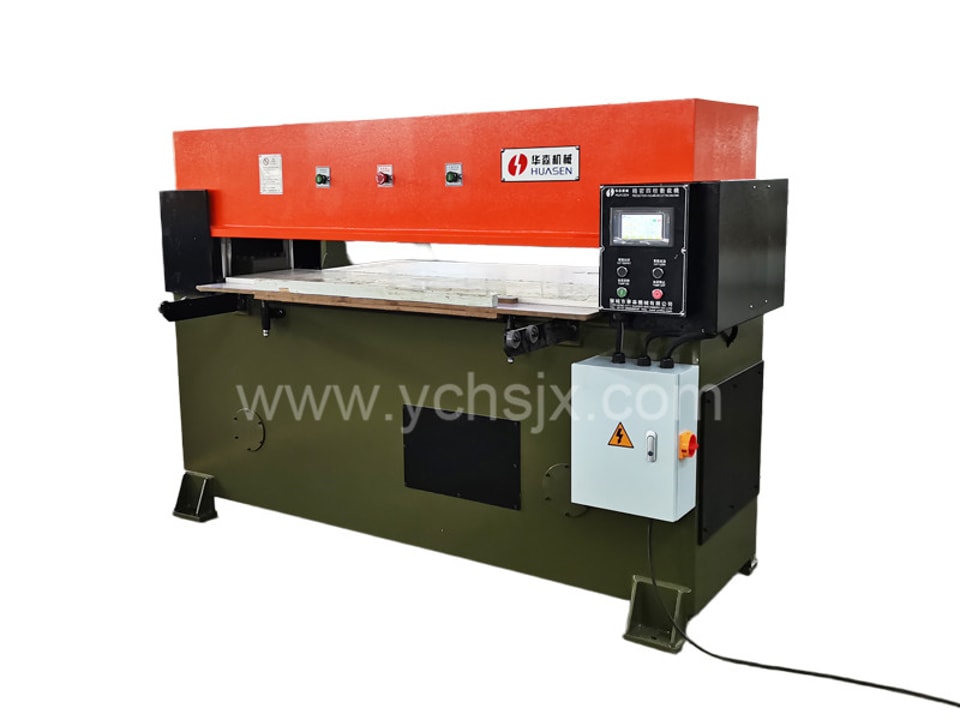
Four-Column, Four-Post, Four-Bar: What the Names Mean Four-column, four-post and four-bar are three names for one frame geometry: a moving platen guided at its four corners by uprights that tie a top yoke to a base. What changes between the names is not the layout but which job the writer has in mind — the column that carries the reaction force, the post that keeps the platen level, or the tie rod that holds the whole frame in preload. Suppliers choose whichever term their catalogue translator preferred, and buyers end up comparing pages that describe the same machine under different headings. I. Where the Three Names Come From In a typical four-column hydraulic press the uprights are hardened, ground and usually chrome-plated, threaded at both ends, and clamped by nuts above the top yoke. That single member does three jobs at once: it carries the reaction force of the cut, it guides the moving platen so it stays parallel, and it holds the frame together in preload. A writer describing the load path calls it a column; a writer describing the sliding fit and the bush calls it a post; a writer describing the threaded, nut-tensioned construction calls it a bar or tie rod. Most of the confusion is translation-driven. The Chinese source terms are si zhu (four columns), si dao zhu (four guide posts) and si la gan (four tie rods), and different factories have historically translated the same machine three ways. There is no trade association that fixed one English term, so the same drawing can appear on three supplier pages with three headings. II. Why the Distinction Still Matters If all three names described the identical casting, the choice would be cosmetic. It is not quite, because a tie-rod frame and a monoblock frame are genuinely different constructions, and both get called four-column. A tie-rod frame is built from separate pieces — base, top yoke, and four tensioned uprights — pulled together by nuts. The preload is what gives it stiffness: the joint stays closed under cutting load because the rods are already stretched. That frame can be re-torqued, which is useful after transport, after a foundation settles, or after years of service. It also means the preload is a maintenance item. If a nut works loose or is never checked at commissioning, the frame loses stiffness and the platen can tilt slightly under an off-centre load, which shows up as uneven cutting depth across a wide die. A monoblock frame is welded or cast as one piece. There is no preload to maintain and nothing to re-torque, but it is heavier, and any repair means welding rather than replacing a rod. Buyers rarely ask which one they are getting, and catalogues rarely say. III. What the Name Cannot Tell You Once you know that four-column means four uprights at the corners, the name has said everything it can, and the rest has to come from the specification. Five items matter more than the label, and none of them is implied by it. The first is whether the quoted force is the rated cutting force, the working force, or the maximum the cylinder can produce once. The second is the table size and the daylight, meaning the clear height between the platen and the table with the press open — that figure, not the tonnage, decides whether your die and stack actually fit. The third is stroke. The fourth is the guiding arrangement: bush material, running clearance, and how the guide is lubricated. The fifth is whether the columns also carry the load or whether the frame's side members do, which changes how the machine behaves when a die sits off-centre. Unit confusion sits on top of all five. A tonne-force and a kilonewton are not interchangeable: 1 tf is about 9.81 kN, so a press quoted at 200 in one catalogue and 2,000 in another may be the same machine. IV. How to Read a Supplier Catalogue Look for the model table rather than the headline. A usable table lists, for each model, the rated force in kN or tf, the table dimensions, the daylight, the stroke, the main motor power and the machine weight. If a page shows one photograph and one number, the photograph is almost certainly shared across the whole range and tells you nothing about the model you are being quoted. Two more traps are worth knowing. The first is that four-post is sometimes used loosely for any press with four uprights, including machines whose uprights only guide and carry no preload. The second is that the same machine may appear under two different names on the same site, in the category page and in a product page, with slightly different figures. Ask for the outline drawing with overall dimensions and the daylight marked; that single document resolves more confusion than any amount of terminology. V. Which Term to Use in Your Enquiry Use four-column, because it is the term most suppliers will recognise, and then remove the ambiguity yourself by stating force, table size, daylight, material, die footprint and target output. Add one line asking the supplier to confirm whether the frame is a pre-stressed tie-rod design or a monoblock. That single question separates a catalogue entry from a specification. The same applies in Chinese: si zhu cai duan ji (four-column cutting press) is understood everywhere, while dao zhu (guide post) and la gan (tie rod) describe the same member from a different angle. If you are comparing quotations from several factories, restate each offer in the same terms before comparing price, or you will be comparing three vocabularies rather than three machines. VI. Where the Term Appears in Buying Specifications Four-column machines turn up in the specifications of any process that needs a wide, flat table and a die that cannot be supported by a single arm: automotive interior trimming, footwear sole and insole cutting, bag and luggage panels, abrasive converting, household cleaning products, and sports mats. In each of those, the reason for choosing the frame is the same — a large die has to meet the material evenly across its whole area, and the platen has to stay parallel while it does. If you are still deciding between frame types rather than naming one, the practical rule is that the die footprint decides the frame and the material decides the force. The four-post hydraulic press and the wider four-column die cutting range cover most of those cases; where the frame is built from tensioned rods, it is listed separately as a four-bar hydraulic cutting press. FAQ Is a four-post press the same as a four-column press? In practice yes. Both describe a press whose moving platen is guided at four corners by uprights tying a top yoke to a base. The word post emphasises guidance and the word column emphasises the structural member, but they refer to the same part. What does four-bar mean then? The same geometry, named after the tie rods that clamp the frame together and put it in preload. If a supplier writes four-bar, ask whether the frame is a pre-stressed tie-rod design or a monoblock, because that affects maintenance. Do more columns mean more tonnage? No. Cutting force comes from the cylinder bore and the hydraulic pressure. Four columns distribute the reaction force and keep the platen parallel; adding a fifth or sixth column changes stiffness, not force. Why do Chinese suppliers use three different English names? They are translations of different Chinese source terms: si zhu, si dao zhu and si la gan. There is no industry standard mapping, so the same machine can appear under any of the three. Should I specify tie-rod or monoblock in my enquiry? Yes, if the machine will be moved, re-levelled or kept for a long service life. A tie-rod frame can be re-torqued to restore preload; a monoblock frame has no preload to maintain but is heavier and cannot be re-tensioned. Still Comparing Names? Send us your die drawing and the material you are cutting, and we will reply with the frame type and the model that fits it, stated in the same terms on every quotation. Contact our team with the details.
How Does a Four-Column Die Cutting Machine Work?
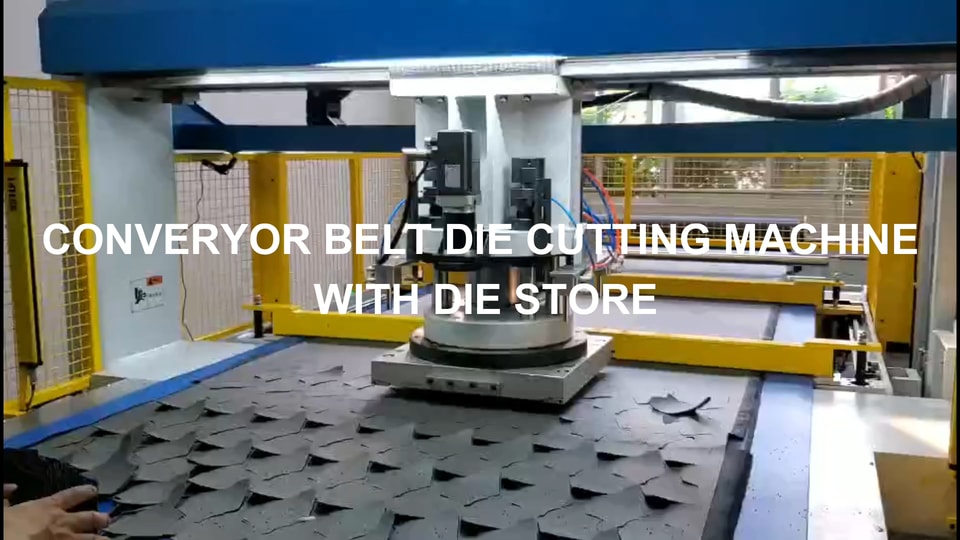
How Does a Four-Column Die Cutting Machine Work? A four-column die cutting machine is a hydraulic press in which a moving platen is guided by four vertical columns at its corners. Hydraulic pressure pushes the platen down onto a die resting on the worktable, and the four columns keep the platen level as the load rises. The die shears the material in one stroke; the platen returns, the operator moves the material, and the cycle repeats. The columns are what separate this design from a single-frame press: they carry the load at four points rather than one, which is why wide dies and thick stacks can be cut at an even depth across the whole table. Front section of a four-column die cutting machine Schematic showing a hydraulic cylinder on top of an upper frame, a moving platen guided by four columns (two shown in this section), a cutting die above a material stack, and the cutting board on the worktable. Hydraulic cylinder Moving platen Cutting die Material stack Cutting board Worktable and base Top frame Column stroke Front section through a four-column press. Two columns are visible in this view; the machine has four, one at each corner. The platen stays parallel as it descends, so the die reaches the whole material stack at the same depth. I. The Frame: Four Columns, One Moving Platen The structure is simple to describe and demanding to build. A heavy base carries the worktable. Four columns rise from the base and pass through guide bushes in the moving platen, which is tied at the top to the main hydraulic cylinder. The upper yoke closes the frame and takes the reaction force. Every element has a job. The columns resist the sideways and twisting loads that appear the moment the die meets material unevenly. The guide bushes set the clearance that decides how much the platen can tilt. The base and upper yoke must be rigid enough that they do not deflect under full tonnage, because any deflection shows up as a variation in cutting depth. On a machine with a wide table, frame rigidity matters more than cylinder size. This is also why the same nominal tonnage can behave very differently between two machines. A light frame flexes, the platen tilts slightly, and the die cuts deeper on one side. A rigid frame with properly fitted guides delivers the rated force where the die actually is. II. Where the Force Comes From Power comes from the hydraulic power unit: a motor drives a pump, the pump pressurises oil, and valves direct that oil into the main cylinder. The piston area multiplies pressure into force, so the tonnage on the nameplate is a function of both working pressure and cylinder bore. Two practical consequences follow. First, the pressure gauge alone does not tell you the cutting force; you need the effective piston area to convert one into the other. Second, force is adjustable within a range, which is why the same machine can cut soft foam at low pressure and dense rubber at high pressure without changing anything mechanical. Most machines in this category use a two-stage approach: fast approach at low pressure to close the gap quickly, then a slower, high-pressure stroke for the actual cut. The slow stroke is not a compromise — it is what allows the blade to propagate through the material instead of punching a hole and tearing the edges. Machines in this family differ less in principle than in scale. Huasen's HSC series covers cutting forces from 200 kN to 2,000 kN, cutting areas from 1,000 × 450 mm up to 1,600 × 1,000 mm, and main motor power from 1.5 kW to 11 kW. The presses use two cylinders together with a double-crank connecting rod balancing mechanism: the cylinders supply the force while the linkage holds the platen level mechanically, which is how the same cutting depth is maintained at every position on the table. A central oil supply lubricates the guides and linkage automatically — a detail that matters more on a machine running all shift than on one used occasionally. III. What the Four Columns Actually Do If force is the easy part, guidance is the difficult one. Three things depend on it. Depth consistency. A die with several cavities must cut every cavity to the same depth. If the platen tilts by a fraction of a millimetre across a one-metre table, one cavity is over-cut into the board while the opposite one barely separates. On thick or laminated materials this shows up immediately as parts that hang together on one edge. Die life. A tilted platen loads one side of the die harder than the other. That side wears faster, the die loses height unevenly, and the operator compensates by raising pressure — which accelerates wear further. Parallel guidance is one of the cheapest ways to extend die life. Board life. The cutting board under the die is a consumable. Even penetration wears it evenly and allows repeated resurfacing. Uneven penetration digs a deep trench on one side and forces early replacement. IV. The Cutting Cycle, Step by Step In production the sequence is short and repeatable. The operator lays the material on the cutting board and positions the die, either by eye against a mark or with a locating frame. The pump builds pressure while the platen descends on its fast approach. When the die contacts the material, resistance rises and the machine completes the cut on the slow, high-pressure stroke. A pressure switch or a position sensor ends the stroke, the directional valve reverses the flow, and the platen returns to the top of its travel. Cycle time is therefore set by three things the buyer can influence: the approach speed, the length of the slow stroke, and how quickly the operator can reposition material. On a machine with a sliding table, the repositioning step happens outside the press area, so loading and cutting overlap and the effective cycle shortens noticeably. V. Table Options That Change How the Machine Is Used The frame stays the same; the table decides the workflow. A single fixed table is the simplest and cheapest, and suits parts that are easy to reach and lift. A sliding table moves the work surface out of the pressing zone so the operator can arrange the die and material in the open, then push it under the platen. On wide or heavy dies this removes most of the physical effort and reduces the risk of a hand being in the pressing area during the stroke. Double sliding tables go a step further: while one table is being cut, the other is being loaded, so the machine spends less time waiting for the operator. Configurations in this range include presses with double sliding tables and heavy-duty versions built for high tonnage, such as the 200-ton model. VI. What These Machines Are Used For Because the design favours large dies and even depth, four-column presses concentrate in industries where parts are wide and materials are flexible: automotive interior components such as seat covers, sound insulation cotton and door panel liners; footwear soles, insoles and uppers; bag and luggage panels; foam and sponge packaging inserts; non-woven and textile parts; rubber and plastic gaskets; and laminated composites where several layers must be cut together. The common thread is not the material but the requirement: a part too wide for a small clicker bed, a die too heavy to swing by hand, or a depth tolerance that a single-point frame cannot hold over the full table. VII. What to Confirm Before Choosing a Model Four questions decide most of the specification. How long is the total cut line on the largest die, and how thick is the stack — those two give the required force. What is the largest die footprint, which sets the table size and therefore the frame class. And how often does the die change, which decides whether a sliding table or a fixed table is the sensible choice. Buyers who answer those four before contacting a supplier usually end up with a smaller, better-fitted machine than those who start from a tonnage figure. The full range is listed under four-column die cutting machines, and our engineers will check the numbers against your die drawing before quoting. FAQ What is the advantage of four columns over a single-frame press? Four columns share the load between four guided points instead of one C-frame, so the moving platen stays parallel across a wide table. On large dies and thick stacks that means uniform cutting depth from edge to edge instead of a deeper cut near the ram. Why does parallelism matter more than tonnage? A machine can have enough force and still cut badly if the platen tilts. A tilted platen pushes one side of the die deeper than the other, so part of the material is over-penetrated and part is not fully cut. Guidance quality decides whether the available force reaches the whole die evenly. What materials are usually cut on a four-column machine? Mostly flexible and semi-rigid sheet materials: leather and synthetic leather, EVA and PU foam, sponge, rubber, non-woven fabric, textile, felt, sound insulation cotton, cardboard, plastic sheet and laminated composites used in automotive interiors, footwear and packaging. Can a four-column press cut several layers at once? Yes, within the limits of die height and available force. Because the platen descends evenly, multi-layer cutting is more consistent than on a light frame, but the blade must still be tall enough to pass through the whole stack and the force must cover the combined thickness. What maintenance does the structure itself need? Column surfaces and guide bushes need clean lubrication, the platen should be checked for parallelism at intervals, and the hydraulic oil, filter and seals follow the service schedule. Most parallelism problems start as contamination on the columns rather than as wear in the cylinder. Ask us to check your die against the frame Send the die drawing, the material and the stack height, and we will confirm which four-column configuration holds your tolerance without oversizing the press. Contact our team for a specification review.
What Industries Need Hydraulic Plane Cutting Machines?
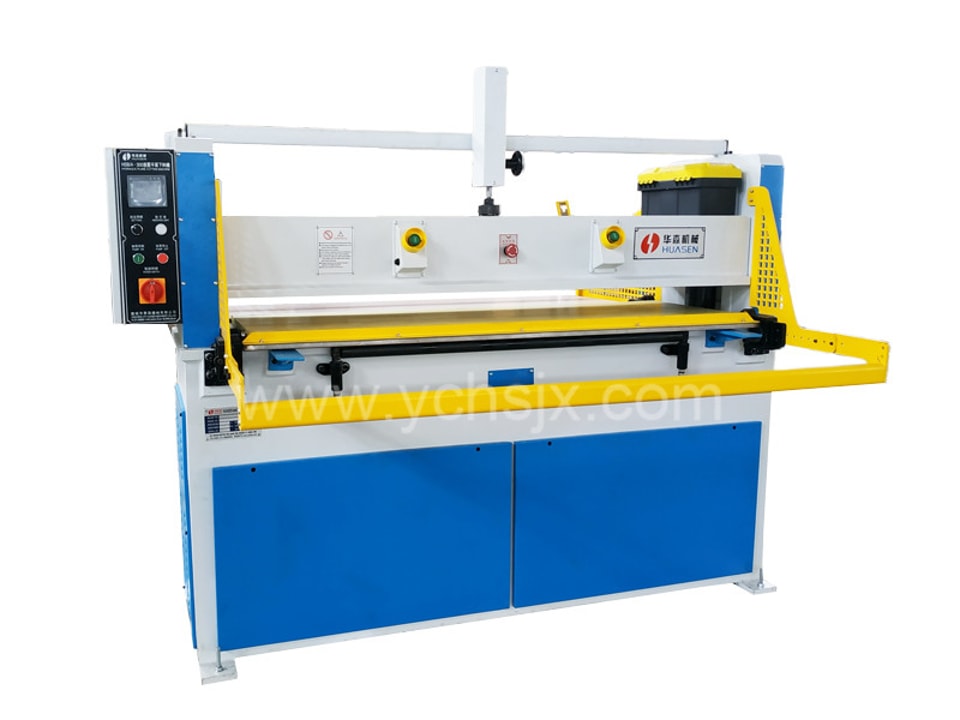
A hydraulic flatbed cutting machine is an industrial device that utilizes a hydraulic system to generate pressure and employs cutting dies to precisely cut materials. Characterized by stable pressure, high cutting efficiency, and versatility regarding materials, these machines are widely used in manufacturing sectors that require the mass processing of sheet materials, flexible materials, and composites.From traditional footwear and leather industries to automotive interiors, electronic accessories, packaging, and general industrial manufacturing, hydraulic flatbed cutting machines help enterprises boost production efficiency and ensure processing precision. I. Footwear Manufacturing IndustryThe footwear industry is a major application area for hydraulic flatbed cutting machines.Footwear production involves cutting large quantities of materials such as leather, synthetic leather, EVA, rubber, foam, and insole materials. Given the complex shapes of footwear components and the strict requirements for dimensional accuracy, manual cutting is prone to errors.By using specialized cutting dies, hydraulic flatbed cutting machines can rapidly cut components—such as uppers, soles, insoles, and decorative pieces—thereby increasing production efficiency while ensuring consistent product dimensions. II. Leather Goods IndustryThe production of leather goods—such as luggage, wallets, belts, and leather accessories—requires extensive precision cutting.Leather materials are often soft and vary in thickness; traditional processing methods can easily lead to material waste.Hydraulic flatbed cutting machines allow for the creation of custom dies based on product designs, enabling rapid cutting, improving material utilization, and minimizing dimensional deviations caused by manual handling. III. Packaging IndustryThe packaging industry has a high demand for materials such as foam, pearl cotton (EPE), shock-absorbing materials, and cardboard.Hydraulic flatbed cutting machines can perform customized cutting based on product shapes to produce items like packaging inserts, protective pads, and cushioning layers.Mechanized processing accelerates the production of packaging materials while ensuring precise structural dimensions, thereby enhancing product protection. IV. Automotive Interior IndustryAutomotive manufacturing requires the extensive use of flexible interior materials, such as leather, non-woven fabrics, sound-insulating cotton, foam, and composite materials.Hydraulic flatbed cutting machines meet the stringent requirements for dimensional accuracy and processing stability demanded by automotive interior components. The equipment can be used to process products such as seating materials, door panel liners, and sound insulation components, thereby enhancing production efficiency and ensuring greater precision during subsequent assembly. V. Electronic Accessories IndustryThe electronics industry demands high processing precision; common materials include insulating sheets, protective films, double-sided tapes, foam tapes, and conductive materials.These materials are typically thin and require clean, neat cutting edges.By precisely controlling pressure, hydraulic flatbed cutting machines enable the processing of small-sized materials with high accuracy, making them ideal for the mass production of electronic accessories. VI. Textile and Apparel IndustryThe textile industry makes extensive use of materials such as fabrics, non-woven fabrics, felt, and composite fabrics.Hydraulic flatbed cutting machines can be used to process garment accessories, decorative materials, protective gear, and filtration materials.Compared to manual cutting, the equipment rapidly executes repetitive cuts, boosting production efficiency and minimizing processing errors. VII. Rubber and Plastics IndustryRubber and plastic materials are widely used in the manufacture of industrial components, such as gaskets, anti-vibration pads, insulating sheets, and protective parts.These materials often possess a degree of elasticity, requiring stable pressure to achieve precise cuts.Hydraulic flatbed cutting machines deliver sufficient cutting pressure while maintaining processing stability, meeting the demands of industrial production. VIII. Sports Equipment IndustryThe production of sports equipment involves processing large quantities of materials such as foam, rubber, and fabrics.Items like sports protective gear, yoga mats, and safety equipment require precise cutting tailored to their specific product structures.Hydraulic flatbed cutting machines ensure uniform product dimensions and increased efficiency, satisfying the requirements for mass-producing sports equipment. IX. Medical and Protective Supplies IndustryHydraulic cutting equipment is also utilized in the production of certain medical supplies and protective products.Materials such as non-woven fabrics, filtration media, and flexible composites require standardized cutting processes.Hydraulic flatbed cutting machines offer faster processing speeds and consistent product dimensions, making them suitable for high-volume production. X. Industrial Component ManufacturingIn the field of industrial production, many components are manufactured from sheet materials—such as sealing, thermal insulation, anti-vibration, and electrical insulation materials. Hydraulic flatbed cutting machines enable precise die-cutting, ensuring part consistency and meeting industrial manufacturing requirements for stable quality. SummaryHydraulic flatbed cutting machines are suitable for a wide range of industries, including footwear materials, leather, packaging, automotive interiors, electronic accessories, textiles, rubber, sporting goods, and industrial components.With stable hydraulic pressure, efficient cutting capabilities, and broad material compatibility, this equipment helps enterprises boost production efficiency, reduce material waste, and enhance product processing quality.For manufacturing sectors requiring high-volume, standardized cutting operations, the hydraulic flatbed cutting machine is a reliable and efficient production tool.
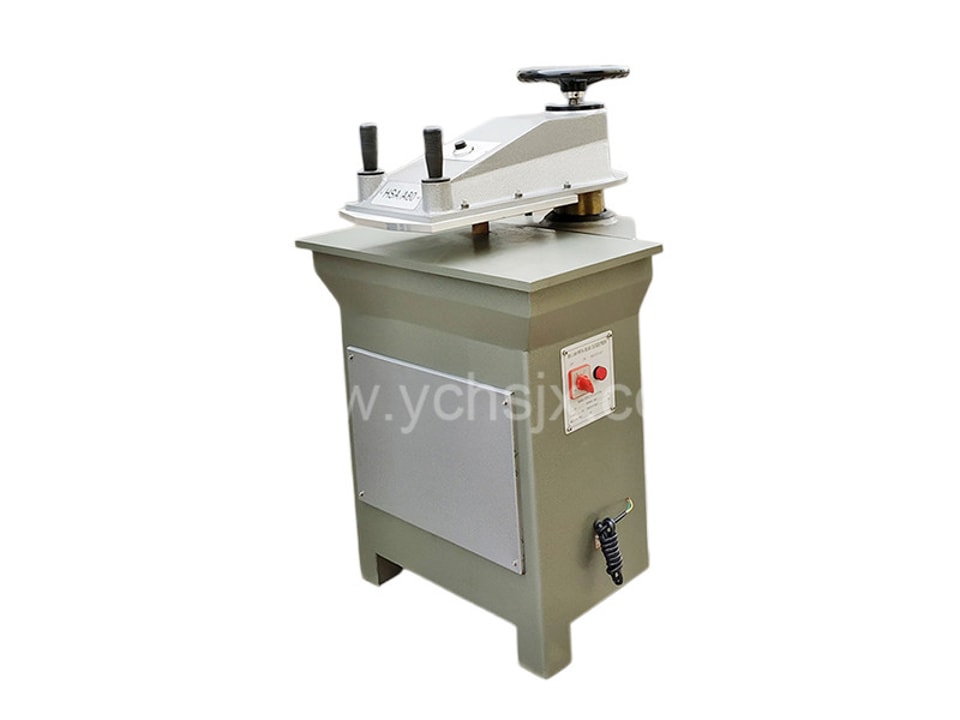
What Are the Advantages of a Hydraulic Swing Arm Clicker Press?
The hydraulic swing-arm cutting machine is a piece of equipment that utilizes a hydraulic system for power and a swing-arm structure to drive a cutting die for material punching and cutting operations. Compared to traditional manual cutting methods, this equipment offers stable pressure, flexible operation, high cutting precision, and a wide range of applications; it is widely used in industries such as footwear materials, leather goods, luggage, automotive interiors, packaging, and electronic accessories.As the manufacturing industry increasingly demands higher production efficiency and product quality, the hydraulic swing-arm cutting machine has become a vital tool in the field of flexible material processing, thanks to its stable and reliable performance. I. Hydraulic drive ensures stable cutting pressureThe hydraulic system serves as the core power source for the swing-arm cutting machine, providing consistent and stable cutting pressure.When processing materials of varying thicknesses and hardness levels, this stable pressure output ensures the cutting die fully penetrates the material, thereby minimizing issues such as incomplete cuts or uneven edges.Compared to manual operation, hydraulic drive maintains consistent cutting force for every operation, enhancing product quality—making it particularly suitable for production environments requiring high-volume, repetitive cutting. II. High cutting precision improves product consistencyThe hydraulic swing-arm cutting machine employs a die-cutting method, achieving precise product shaping through the use of custom-made cutting dies.During mass production, the equipment maintains stable cutting dimensions, ensuring high consistency across parts and reducing errors associated with manual cutting.For industries with strict dimensional requirements—such as footwear, leather goods, and automotive interiors—high-precision cutting boosts downstream assembly efficiency and lowers rework rates. III. Flexible operation adapts to diverse processing needsThe swing-arm structural design offers excellent operational flexibility. Operators can adjust the swing-arm angle based on material positioning, facilitating easy loading, alignment, and cutting.Additionally, the equipment can process products of various shapes by simply changing the cutting dies, thereby meeting the demands of multi-variety production.This flexibility makes it suitable not only for mass production but also for scenarios involving a wide range of product types. IV. Wide range of applicable materialsThe hydraulic swing-arm cutting machine demonstrates strong material adaptability, capable of processing a wide variety of flexible and semi-flexible materials. Common materials include leather, synthetic leather, EVA, rubber, foam, sponge, non-woven fabrics, textiles, plastic sheets, and composite materials.By adjusting cutting pressure and selecting appropriate cutting dies, the equipment meets the processing needs of various industries and maximizes equipment utilization. V. Increased production efficiency and reduced labor costsThe hydraulic swing-arm cutting machine employs a mechanized cutting method, enabling the rapid completion of repetitive processing tasks.Compared to manual cutting, the machine completes the cut in a single stroke, significantly reducing processing time per unit and increasing output per unit of time.Furthermore, mechanized production reduces reliance on manual skill levels, stabilizes the production process, and helps lower labor costs. VI. Reduced material waste and improved utilization ratesIn industries where material costs are high, maximizing raw material utilization is crucial.Through precise positioning and the use of standardized cutting dies, the hydraulic swing-arm cutting machine minimizes cutting errors and wasteful losses.Particularly in sectors such as leather processing and packaging, efficient layout and precise cutting effectively reduce material waste and enhance economic efficiency. VII. Stable structure and easy maintenanceThe hydraulic swing-arm cutting machine features a mature, stable structural design suitable for long-term, continuous production.Maintenance involves routine checks of the hydraulic system, lubrication of mechanical parts, and cleaning of the work area, making daily upkeep simple.Stable performance minimizes downtime and ensures production continuity. VIII. High safety standardsHydraulic swing-arm cutting machines are typically equipped with safety features—such as two-hand controls and safety limiters—to enhance operational safety.Compared to manual cutting with hand tools, mechanized processing reduces direct contact with sharp implements, thereby lowering operational risks. IX. Space-saving designThe swing-arm cutting machine features a compact structure with a small footprint, making it suitable for production workshops of various sizes.In space-constrained environments, the machine delivers efficient processing while integrating easily with other equipment, thereby optimizing the overall production layout. ConclusionThe hydraulic swing-arm cutting machine offers numerous advantages, including stable pressure, precise cutting, flexible operation, broad applicability, and high production efficiency. Powered reliably by a hydraulic system and utilizing a die-cutting method, this equipment meets the needs of various industries for processing flexible materials. In modern manufacturing, the hydraulic swing-arm cutting machine not only enhances product quality but also reduces production costs, making it a key choice for improving processing efficiency.
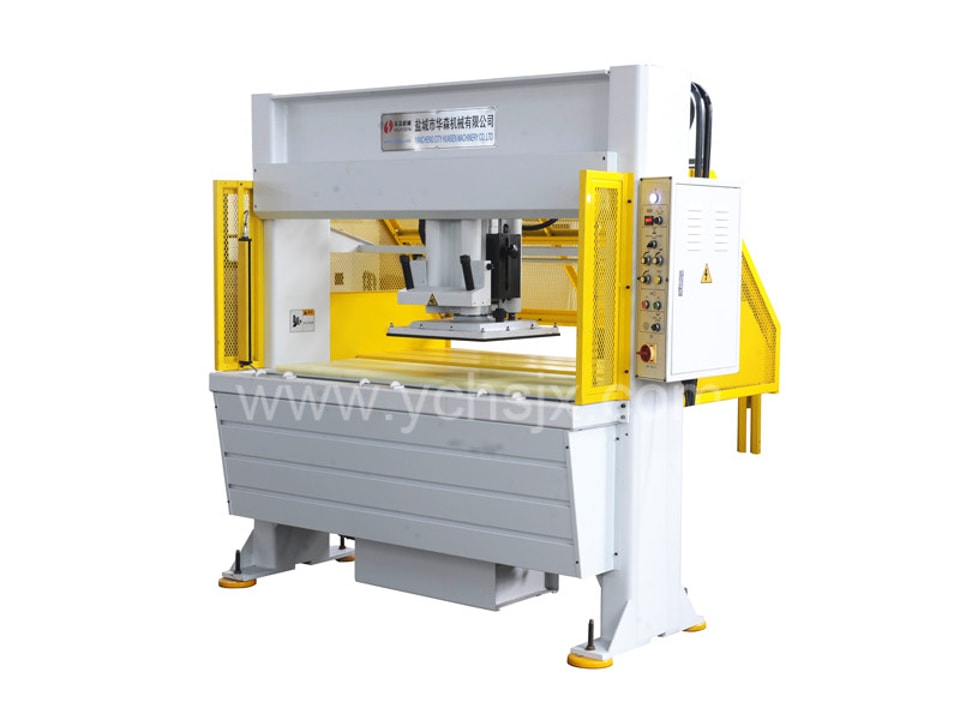
How Does a Traveling Head Die Cutting Machine Work?
A traveling head die-cutting machine is a high-efficiency cutting device featuring a movable cutting head structure. It utilizes a hydraulic system or mechanical drive to move the cutting head across the work area, working in conjunction with a specialized die to perform precise material cutting.Compared to traditional stationary cutting equipment, traveling head die-cutting machines offer a larger operating range, higher material utilization, and greater processing flexibility. They are widely used in industries such as footwear, leather goods, packaging, automotive interiors, electronic accessories, foam processing, and composite materials. I. Power System Provides Cutting PressureThe primary operating power for the traveling head die-cutting machine comes from its hydraulic system.Upon startup, the hydraulic system generates pressure and transmits it to the cutting head, driving the head and the attached die downward to apply pressure to the material placed on the worktable.Once the pressure reaches the preset level, the die cuts into the material, completing the cutting cycle.The hydraulic system delivers stable pressure output, enabling the machine to handle materials of varying thicknesses and hardness levels. II. Movable Cutting Head Enables Flexible ProcessingThe defining feature of the traveling head die-cutting machine is the ability of the cutting head to move within the work area.During processing, the operator can adjust the position of the cutting head based on the material's placement, ensuring the die aligns precisely with the area to be cut.This design expands the machine's effective working range, making it particularly suitable for large-format materials or production scenarios requiring frequent adjustments to cutting locations.Compared to stationary cutting equipment, the movable structure reduces the need for material handling and enhances processing efficiency. III. Precision Cutting via DiesTraveling head die-cutting machines typically utilize specialized dies for processing.Dies are custom-fabricated to meet specific product shape and size requirements and are then mounted onto the cutting head.During operation, the cutting head moves to the designated location and descends; the applied pressure forces the die through the material, creating the desired product shape.This die-based processing method ensures consistent cutting dimensions and improves product quality stability. IV. Material Positioning and the Cutting ProcessThe workflow of a traveling head die-cutting machine typically involves several steps: material placement, position adjustment, cutting head movement, pressure cutting, and automatic return. First, lay the material to be processed flat on the worktable and position it according to the product layout requirements.Next, the cutting head moves to the designated area and descends to perform the cutting operation.Once the cut is complete, the cutting head returns or moves to the next processing position to continue the cycle.Through this continuous operating cycle, the equipment meets the demands of mass production. V. Pressure Control Affects Cutting ResultsDifferent materials require different cutting pressures.For instance, leather requires clean, smooth edges; foam requires pressure that avoids compression deformation; and rubber materials require sufficient pressure to ensure a clean cut.The moving-head cutting machine allows for the adjustment of pressure parameters based on material characteristics, ensuring optimal processing results.Proper pressure control not only improves cutting quality but also reduces die wear and material waste. VI. High-Precision Guidance Ensures Operational StabilityDuring operation, the moving-head cutting machine must ensure the cutting head moves to precise locations.The equipment utilizes a precision guidance structure to keep the cutting head stable during movement, minimizing deviation and error.Stable movement ensures accurate die positioning and enhances processing precision.Precise positioning is particularly critical for products with strict dimensional requirements, such as electronic accessories and precision packaging materials. VII. Suitable for Processing a Wide Range of MaterialsThe moving-head cutting machine demonstrates strong material versatility.Commonly processed materials include leather, EVA, rubber, foam, non-woven fabrics, textiles, plastic sheets, packaging materials, and multi-layer composites.By changing dies and adjusting equipment parameters, the machine can meet production needs across various industries and maximize operational efficiency. VIII. Improved Production Efficiency and Material UtilizationThe moving-head cutting structure reduces the need for frequent material repositioning, thereby enhancing processing continuity.When processing large sheets of material, the machine moves the cutting head according to the layout, allowing for more efficient material usage.Precise cutting minimizes scrap, improves raw material utilization, and lowers production costs. IX. Safety Controls Ensure Reliable OperationModern moving-head cutting machines are typically equipped with safety features such as safety sensors and emergency stop buttons.These designs mitigate operational risks and enhance the safety of the machine's operation.Additionally, standardized operation and regular maintenance of the hydraulic system, moving mechanisms, and control systems are essential measures for ensuring stable equipment performance. SummaryThe working principle of the moving-head cutting machine involves using a power system to generate pressure and a movable cutting head for precise positioning, combined with specialized cutting dies to perform the material cutting process.Its key advantages include a large cutting area, flexible positioning, high processing efficiency, and strong material adaptability.With its stable performance and efficient processing capabilities, the moving-head cutting machine meets the demands for precision and efficiency across various industries—such as footwear materials, leather, packaging, automotive interiors, and electronic accessories—making it a vital piece of equipment in modern material processing.
What Are the Advantages of a Precision Four-Column Die Cutting Machine?
The precision four-column cutting machine is equipment designed specifically for high-precision material cutting. It utilizes a four-column guide structure and a hydraulic drive system to achieve stable, efficient processing through the precise control of cutting pressure and positioning.Compared to standard cutting equipment, the precision four-column cutting machine offers significant advantages in structural stability, processing precision, production efficiency, and versatility. It is widely used across industries such as footwear materials, automotive interiors, electronic accessories, packaging, leather goods, and composite materials. I. High-precision structure for enhanced cutting accuracyThe machine features a high-rigidity four-column structure, ensuring the upper platen maintains stable vertical movement during operation.During the cutting process, the equipment minimizes errors caused by misalignment or tilting, ensuring precise contact between the cutting die and the material.For components with strict dimensional requirements, this high-precision structure guarantees consistent product specifications and improves the product pass rate. II. Stable pressure control for superior processing qualityCutting pressure directly impacts the quality of the processed material. Insufficient pressure may result in incomplete cuts, while excessive pressure can damage the material.The machine delivers stable pressure via its hydraulic system and allows for adjustments based on specific material characteristics, ensuring greater cutting precision.Stable pressure output ensures smooth cut edges, minimizes burrs and deformation, and enhances overall processing quality. III. Four-column guide design for smoother operationThe four-column structure is a key feature of this precision cutting machine. Positioning via four precision guide columns effectively reduces vibration during operation.The equipment maintains stable performance even under high-pressure conditions or when cutting large surface areas.This structure not only improves cutting precision but also reduces mechanical errors that can accumulate during long-term operation. IV. Increased production efficiency, suitable for batch processingThe machine employs a mechanized cutting method, completing the cut in a single operation.Compared to manual cutting, this equipment significantly reduces processing time and boosts production efficiency.By simply changing cutting dies, the machine can quickly switch between product types, meeting the demands of high-volume production involving diverse product varieties. V. Reduced material waste and improved material utilizationMaterial cost is a critical factor for manufacturing enterprises. Precision four-column cutting machines minimize cutting errors and material waste through precise positioning and standardized die processing.Improving material utilization effectively lowers production costs, particularly in sectors dealing with high-value materials such as leather, packaging materials, and composites. VI. Wide Range of Applicable MaterialsPrecision four-column cutting machines offer excellent material versatility, capable of processing a wide variety of flexible and composite materials.Commonly processed materials include leather, EVA, rubber, foam, non-woven fabrics, plastic sheets, textiles, and multi-layer composites.Processing requirements across different industries can be met by adjusting equipment parameters and selecting appropriate cutting dies. VII. High Product Consistency and Reduced Rework RatesIn traditional manual processing, dimensional deviations often occur due to variations in operator experience.Precision four-column cutting machines utilize a die-based production method, ensuring consistency in every cutting cycle and effectively minimizing human error.Stable processing results reduce defect rates and enhance overall production line efficiency. VIII. User-Friendly Operation and Simplified Production ManagementPrecision four-column cutting machines feature clear operational workflows, allowing operators to master the equipment after training.Parameters can be adjusted according to specific material and product requirements, standardizing the production process.Simple operation facilitates efficient production management and minimizes inconsistencies caused by operator differences. IX. Stable and Durable Equipment Suitable for Long-Term ProductionIndustrial production often requires continuous equipment operation, making stability a critical factor.Precision four-column cutting machines feature a high-strength structural design capable of withstanding long-term, continuous operation.Regular maintenance of the hydraulic system, inspection of mechanical components, and equipment cleaning ensure sustained, optimal performance. X. Meets Automation RequirementsAs the manufacturing industry moves toward automation, precision four-column cutting machines can integrate with systems such as automatic feeding and intelligent controls to enhance automation levels.Automated applications reduce manual labor, boost production efficiency, and ensure greater stability throughout the processing cycle. ConclusionPrecision four-column cutting machines offer advantages such as high precision, stability, efficiency, and broad applicability.Through their four-column guide structure, hydraulic pressure control, and die-based processing method, these machines effectively meet the modern manufacturing industry's demands for precision cutting and mass production. Whether in the fields of footwear materials, automotive interiors, electronic components, packaging, leather processing, or composite materials, precision four-column cutting machines help enterprises boost production efficiency, reduce material waste, and enhance product quality, making them a key choice for industrial cutting operations.
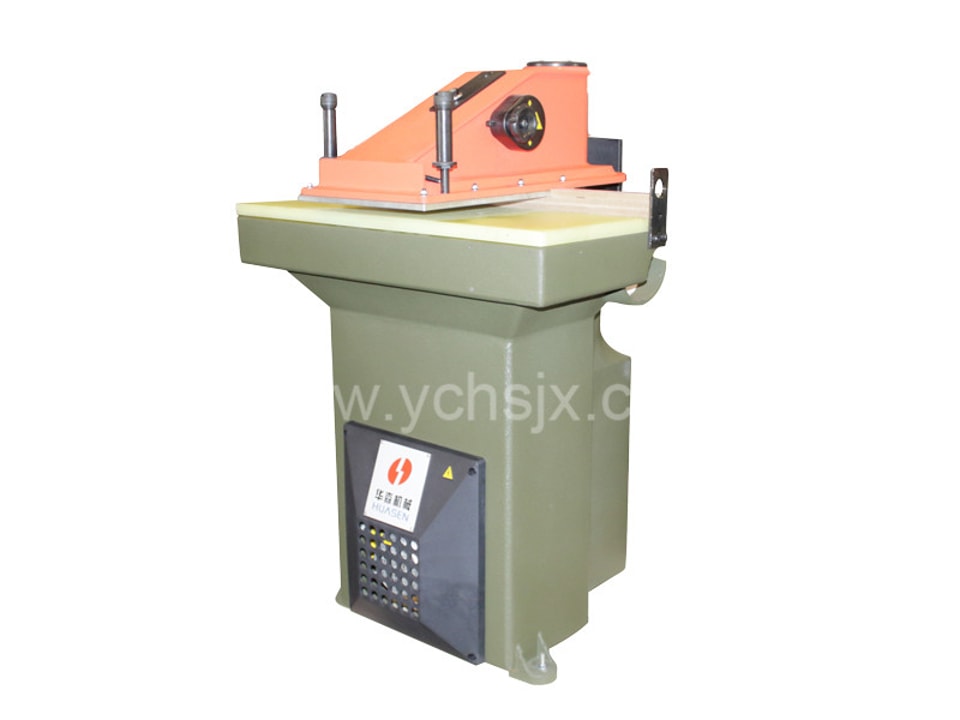
What Industries Use Swing Arm Clicker Presses?
The swing-arm cutting machine is a piece of equipment designed for the die-cutting of flexible materials; it is characterized by cutting precision, operational flexibility, and a wide range of applications. By simply changing the cutting die, it can rapidly cut materials into various shapes, making it widely used across numerous manufacturing sectors. I. Footwear IndustryThe footwear industry is a key application area for swing-arm cutting machines. The equipment is used to cut materials such as leather, synthetic leather, EVA, rubber, foam, and insole materials to produce components like shoe uppers, soles, and tongues.Die-based cutting ensures consistent product dimensions, boosts production efficiency, and minimizes material waste. II. Leather Goods and Luggage IndustryThe manufacturing of leather goods and luggage involves processing large quantities of materials such as leather, artificial leather, and fabrics.Swing-arm cutting machines enable precise cutting based on product design, making them ideal for producing components like wallets, handbags, belts, and luggage accessories, while enhancing processing speed and product consistency. III. Automotive Interior IndustryComponents such as car seats, door panels, and sound insulation materials are typically made from leather, foam, non-woven fabrics, and composite materials.Swing-arm cutting machines rapidly cut interior materials with high dimensional accuracy, improving assembly efficiency and meeting the demands of mass production for automotive parts. IV. Packaging IndustryThe packaging industry frequently utilizes materials like foam, EPE (expanded polyethylene), and cardboard to create protective cushioning structures.Using specialized dies, swing-arm cutting machines can quickly process packaging inserts of various shapes, increasing production efficiency and reducing errors associated with manual cutting. V. Electronic Accessories IndustryElectronic product manufacturing requires significant quantities of insulating materials, protective films, foam adhesives, and conductive materials.The equipment offers high cutting precision, meeting the requirements for processing small, intricate parts and enhancing the production efficiency of electronic accessories. VI. Sporting Goods IndustryThe manufacture of sporting goods often involves processing materials such as rubber, foam, and fabrics.Swing-arm cutting machines are used to cut products such as sports protective gear, yoga mats, and safety equipment, ensuring uniform dimensions and consistent production quality. VII. Textile and Garment IndustryThe swing-arm cutting machine is suitable for processing materials such as fabrics, non-wovens, felt, and composite fabrics.In the production of garment accessories, decorative cutouts, and specially shaped fabric pieces, the equipment boosts cutting speeds and meets the demands of mass production. VIII. Industrial Components IndustryCertain industrial products require the processing of components such as rubber pads, shock-absorbing materials, seals, and insulation materials.The swing-arm cutting machine delivers precise cutting and enhances part consistency, meeting industrial standards for quality and efficiency.ConclusionThanks to advantages such as precise cutting, operational flexibility, and broad material compatibility, swing-arm cutting machines are widely used in sectors including footwear materials, leather goods, luggage, automotive interiors, packaging, electronics, sporting goods, and industrial manufacturing.By utilizing die-based processing, the equipment increases production efficiency and minimizes material waste, providing a highly efficient and stable cutting solution for a wide range of materials.
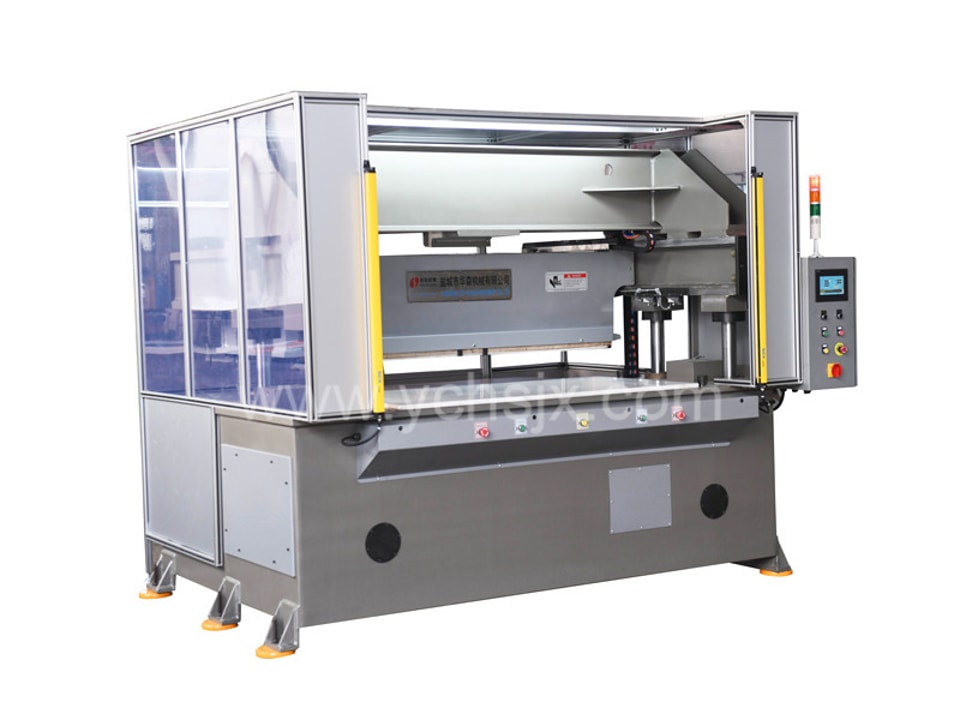
How to Operate a Receding Head Beam Press Safely?
The Receding Head Beam Press is an industrial machine used for die-cutting flexible materials. It utilizes a hydraulic system to generate the pressure required for the moving head to drive the cutting die through the material. Given the high pressures involved during operation, adherence to proper operating procedures and safety protocols is essential.Correct operation not only ensures personnel safety but also minimizes equipment malfunctions, enhances processing efficiency, and extends the machine's service life. I. Pre-operation Equipment InspectionBefore starting the receding head beam press, conduct a comprehensive inspection of the machine.First, verify that the power connection is secure and that all control buttons, switches, and safety devices are functioning correctly.Second, check the hydraulic system for oil leaks and ensure the hydraulic fluid level meets specifications. Simultaneously, verify that components such as the moving head, guide rails, and worktable operate smoothly.Keep the area surrounding the machine tidy to prevent material scraps or other debris from compromising operational safety. II. Verifying Correct Die InstallationThe cutting die is the critical component that makes direct contact with the material; its installation status directly impacts the quality of the cut.Before operation, confirm that the die specifications meet production requirements and inspect the cutting edge for damage, deformation, or wear.Ensure the die is securely fastened during installation to prevent loosening or shifting during the cutting process.Improper die installation can lead to cutting inaccuracies or even equipment malfunctions. III. Correct Placement of MaterialsBefore cutting, place the material flat on the worktable.Ensure the material lies flat and is free from wrinkles, tilting, or misalignment, as these issues can compromise cutting precision.For large materials, adjust the placement according to the die's position to maximize the use of the machine's working area.Correct material positioning improves processing quality and reduces material waste. IV. Starting the Equipment According to ProtocolOperate the receding head beam press in accordance with established startup procedures.After starting the machine, verify that the moving head is moving in the correct direction before proceeding with actual cutting.Operators must remain attentive and avoid touching moving parts while the machine is in operation.If any abnormal noises, pressure fluctuations, or operational instability occur, stop the machine immediately for inspection. V. Avoid Placing Hands in the Danger ZoneDuring the operation of the retracting-head cutting machine, significant pressure is generated in the cutting die area; therefore, operators must maintain a safe distance.Do not place hands or other objects beneath the cutting die while the machine is descending to cut.Ensure the machine is stopped before placing materials, adjusting positions, or changing cutting dies.Adhering to safe operating procedures effectively reduces the risk of accidents. VI. Properly Adjust Cutting ParametersDifferent materials vary in thickness and hardness, requiring the selection of appropriate cutting pressure and operating parameters.Insufficient pressure may result in incomplete cuts, compromising product quality, while excessive pressure can damage the material and increase the load on the machine.Operators should adjust settings based on material characteristics and avoid prolonged operation under excessive loads. VII. Keep the Machine's Operating Area CleanPromptly clear away debris, such as material offcuts and dust, generated during production.Debris entering moving parts can impair the movement of the cutting head and even cause equipment failure.Maintaining a clean work area enhances operational stability and improves the production environment. VIII. Perform Regular Equipment MaintenanceSafe operation encompasses not only the correct use of the machine but also routine maintenance.Regularly inspect the hydraulic system, guide rails, fasteners, and electrical control components.Promptly replenish lubricant, remove internal impurities, and replace worn parts to keep the machine in good condition.Good maintenance habits reduce downtime caused by breakdowns and enhance production safety. IX. Operators Must Be TrainedThe retracting-head cutting machine should be operated by trained personnel.Operators must understand the machine's structure, workflow, safety precautions, and emergency procedures.Operation by untrained personnel may lead to errors due to a lack of familiarity with the machine's capabilities, compromising both personnel safety and machine operation. X. Stop and Inspect Immediately Upon Detecting AbnormalitiesIf any abnormalities occur during operation—such as irregular pressure, jerky cutting head movement, unusual noises, or oil leaks—stop the machine immediately.Do not attempt forced adjustments or repairs while the machine is running.Once a problem is detected, it should be inspected and resolved by qualified personnel; resume production only after confirming the machine has returned to normal operation. SummaryThe safe operation of a retracting-head cutting machine requires management across several areas, including equipment inspection, die installation, material positioning, parameter adjustment, adherence to operating procedures, and routine maintenance.Proper use of the equipment not only ensures operator safety but also enhances cutting precision and production efficiency.By establishing standardized operating procedures and maintenance protocols, the retracting-head cutting machine can maintain stable, long-term operation, providing the enterprise with an efficient and safe solution for material cutting.
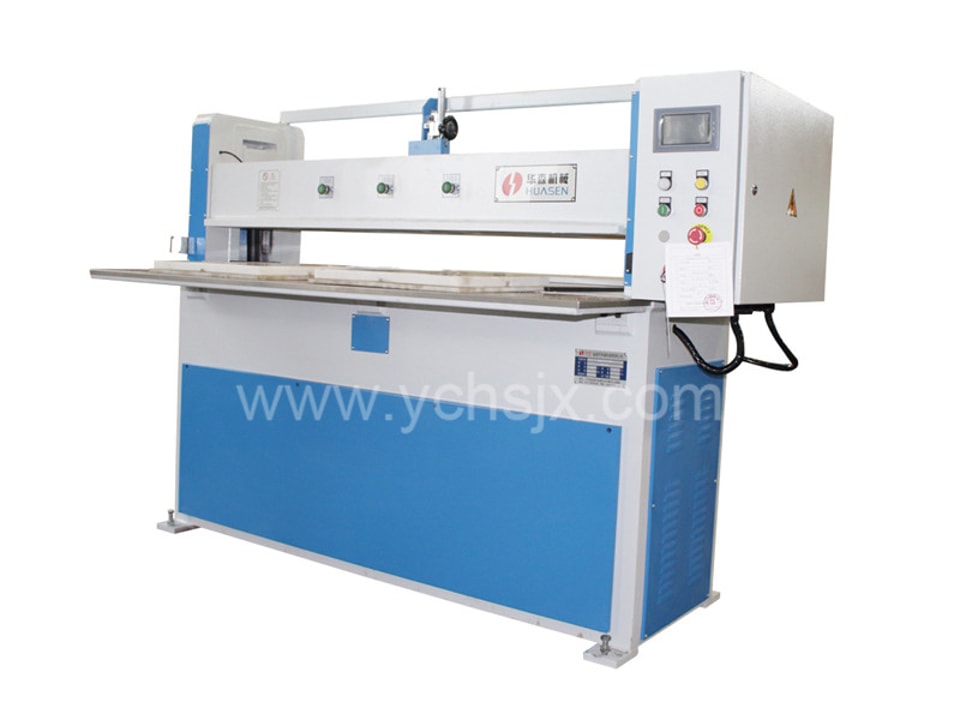
How Does Hydraulic Pressure Affect Cutting Performance?
Hydraulic pressure is a critical factor influencing the processing performance of hydraulic flatbed die-cutting machines. The equipment generates pressure via a hydraulic system and transmits power to the cutting mechanism, enabling the die to punch through and cut the material. The magnitude, stability, and control precision of the pressure directly affect cutting speed, cut quality, material compatibility, and the equipment's service life.When processing different materials, the hydraulic pressure must be adjusted according to characteristics such as thickness, hardness, and elasticity to achieve efficient and precise cutting results. I. Hydraulic Pressure Determines Cutting CapabilityDuring the cutting process, the die must overcome the material's inherent resistance to complete the cut.When hydraulic pressure is sufficient, the die can rapidly penetrate the material, ensuring a clean cut. Materials that are thicker or harder—such as rubber, composites, or thick leather—require higher pressure to ensure a complete cut.Insufficient pressure can lead to issues such as incomplete cuts, connected edges, or jagged cuts, thereby compromising product quality and production efficiency. II. Stable Pressure Enhances Cutting PrecisionBeyond the magnitude of the pressure, stability is equally important for cutting performance.In continuous production, fluctuations in hydraulic pressure result in inconsistent cutting force, leading to dimensional deviations in the finished products.Stable hydraulic output ensures consistent descent speed and pressure for the die with every stroke, resulting in greater product uniformity.For the production of precision components—such as footwear materials, electronic accessories, and automotive interiors—stable pressure helps minimize defects and improve processing quality. III. Optimal Pressure Minimizes Material DamageHigher hydraulic pressure is not always better.Excessive pressure can cause material deformation; for materials like foam, sponge, or soft leather, too much pressure may compromise the product's appearance and performance.Properly controlling the pressure allows for a complete cut while minimizing material deformation and damage.Therefore, in actual production, appropriate pressure parameters must be selected based on the specific characteristics of the material. IV. Pressure Affects Cutting SpeedHydraulic pressure also impacts the equipment's processing efficiency.When the pressure meets the material's cutting requirements, the equipment can rapidly execute the punching action, thereby increasing production speed.If pressure is insufficient, the equipment may require repeated cutting attempts, extending processing time and reducing production efficiency. Optimizing hydraulic parameters can reduce the time required for each cutting cycle and increase the equipment's overall production capacity. V. Different Materials Require Different PressuresDifferent materials possess distinct processing characteristics, necessitating the use of appropriate hydraulic pressure levels.For instance, materials such as thin fabrics and non-woven fabrics generally do not require high pressure, whereas rubber, thick foam, and multi-layer composite materials require greater pressure support.Adjusting hydraulic system parameters and using suitable cutting dies allows the equipment to accommodate a wider range of material processing needs. VI. Pressure Uniformity Affects Product QualityBeyond the overall magnitude of the pressure, the uniformity of pressure distribution is also crucial.Uneven pressure distribution can result in incomplete cuts, where some areas of the die cut through the material effectively while others fail to sever it completely.Combining the hydraulic system with a stable mechanical structure ensures that pressure is applied evenly across the cutting area, thereby enhancing overall processing results.Uniform pressure ensures smooth product edges and minimizes burrs and dimensional deviations. VII. Correct Pressure Settings Extend Equipment LifespanProlonged operation at excessive pressure levels increases the load on the hydraulic system, mechanical structure, and cutting dies.Setting hydraulic pressure appropriately not only ensures quality processing results but also reduces equipment wear and tear.Regularly inspecting the hydraulic system and adjusting pressure based on production requirements can extend the equipment's service life and lower maintenance costs. VIII. Pressure Control Enhances Production StabilityModern hydraulic flatbed cutting machines typically feature pressure adjustment capabilities, allowing parameters to be set according to specific product requirements.Maintaining fixed pressure parameters during production minimizes errors caused by manual adjustments and standardizes the processing workflow.Stable pressure control helps ensure production continuity and meets the demands of mass production. ConclusionHydraulic pressure significantly impacts cutting performance, directly influencing cut integrity, product precision, production efficiency, and equipment stability.Appropriate pressure ensures the cutting die severs the material cleanly and improves product consistency, while stable pressure output minimizes processing errors and reduces material waste.In actual production, selecting the correct hydraulic pressure based on material type, thickness, and processing requirements allows the hydraulic flatbed cutting machine to operate at peak performance, delivering efficient, precise, and stable material cutting.
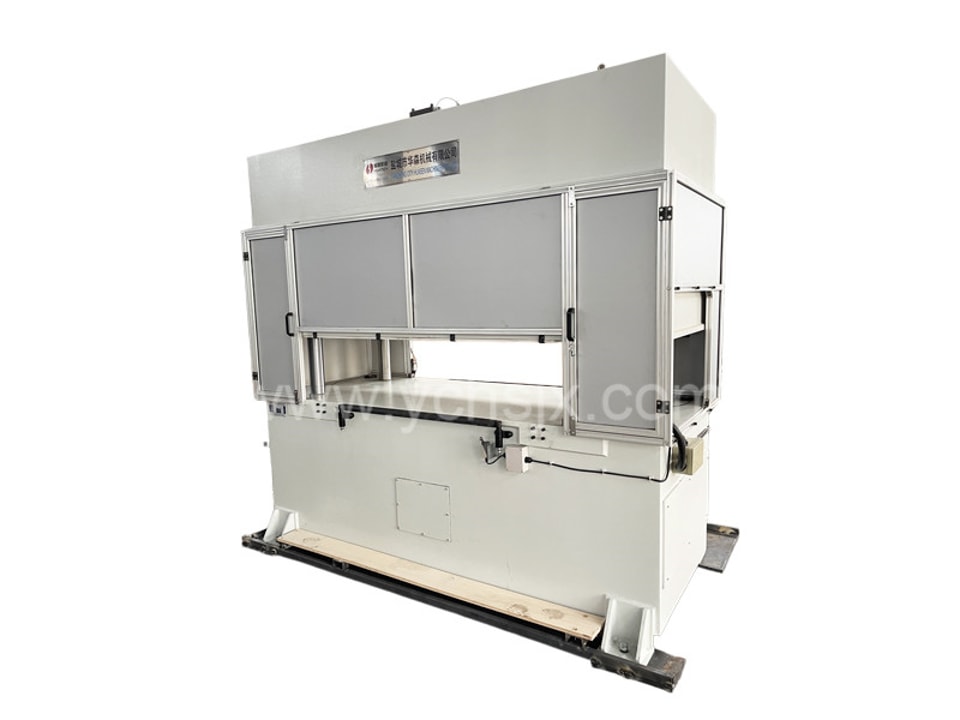
How Does a Four-Column Structure Improve Cutting Stability?
The four-post structure is a key design feature that distinguishes the four-post cutting machine from other cutting equipment. This structure utilizes four precision guide posts to support and guide the upper platen, ensuring stable movement during the cutting process.In industrial production, cutting stability directly impacts dimensional accuracy, processing efficiency, and material utilization. With advantages such as uniform force distribution, precise guidance, and high-rigidity support, the four-post structure effectively enhances overall equipment performance, meeting the demands of various materials and high-precision processing. I. Four-post guidance ensures smooth movementDuring the cutting process, the upper platen undergoes a reciprocating vertical motion. If the guidance system is inadequate, issues such as misalignment or tilting can occur, leading to uneven force on the cutting die and compromising the cutting quality.The four-post structure establishes a stable path of motion via its four guide posts, ensuring the upper platen moves strictly vertically. Even under high pressure, it minimizes positional deviation and enhances the stability of the cutting process. II. Uniform pressure distribution improves cutting resultsThe uniformity of pressure distribution during cutting directly affects the quality of the processed material.Equipment with conventional structures may experience localized pressure concentration, resulting in incomplete cuts or material deformation in certain areas. In contrast, the four-post structure distributes pressure more evenly across the work area, ensuring consistent force application across the entire cutting die.Uniform pressure output ensures a clean, complete cut and improves edge smoothness, making it ideal for high-precision processing requirements. III. Enhanced structural rigidity reduces operational vibrationIndustrial equipment often operates continuously for extended periods; insufficient structural rigidity can lead to vibration and positional drift.The four-post structure employs a multi-point support system, boosting the equipment's overall stability. During high-speed, continuous cutting, it minimizes mechanical oscillation and maintains optimal operating conditions.High structural rigidity not only improves cutting stability but also helps extend the equipment's service life. IV. Improved capability for processing large-area materialsLarge-format materials often require a wide cutting area, placing higher demands on equipment stability.The four-post structure effectively supports large work areas, ensuring that pressure is evenly distributed across the entire cutting zone. When processing large-scale products made of leather, foam, or composite materials, the four-column structure minimizes processing errors caused by uneven force distribution, thereby enhancing overall cutting quality. Ⅴ. Ensuring Precise Die PositioningThe accuracy of the cutting die's position is a critical factor influencing cutting results.The four-column guide structure minimizes deviation during the movement of the upper platen, ensuring the cutting die maintains a stable operating path.Precise positioning capabilities improve dimensional consistency, making the system particularly suitable for high-volume production scenarios requiring repetitive processing. Ⅵ. Adapting to Diverse Material Processing NeedsDifferent materials—varying in hardness, thickness, and elasticity—impose distinct requirements on cutting stability.For instance, leather requires precision cutting, foam necessitates deformation prevention, and rubber demands sufficient pressure to ensure a clean cut. The four-column structure provides stable pressure transmission, allowing the equipment to easily adapt to processing a wide range of materials.By adjusting pressure parameters and swapping cutting dies, the equipment can meet diverse production requirements. Ⅶ. Minimizing Processing Errors and Boosting Production EfficiencyA stable cutting process reduces defect rates and cuts down on the time required for rework and manual finishing.The four-column structure ensures consistency in every cutting stroke, standardizing the production process.For mass-production enterprises, stable processing quality not only enhances efficiency but also lowers overall production costs.8. Enhancing Long-Term Operational ReliabilityIndustrial equipment often operates in demanding environments characterized by long hours and high-intensity workloads. Thanks to its optimized force distribution, the four-column structure prevents individual components from bearing excessive stress.Over the long term, this stable structural design helps maintain equipment precision and mitigates performance degradation caused by structural deformation. ConclusionThe four-column structure utilizes four guide pillars to provide precise guidance and stable support, ensuring superior stability during the cutting machine's operation.Its key advantages include smooth movement, uniform pressure, high structural rigidity, precise positioning, and broad material adaptability. In industrial settings requiring high-efficiency and high-precision cutting, the four-column structure effectively improves processing quality, ensures product consistency, and provides a reliable foundation for stable, long-term production.
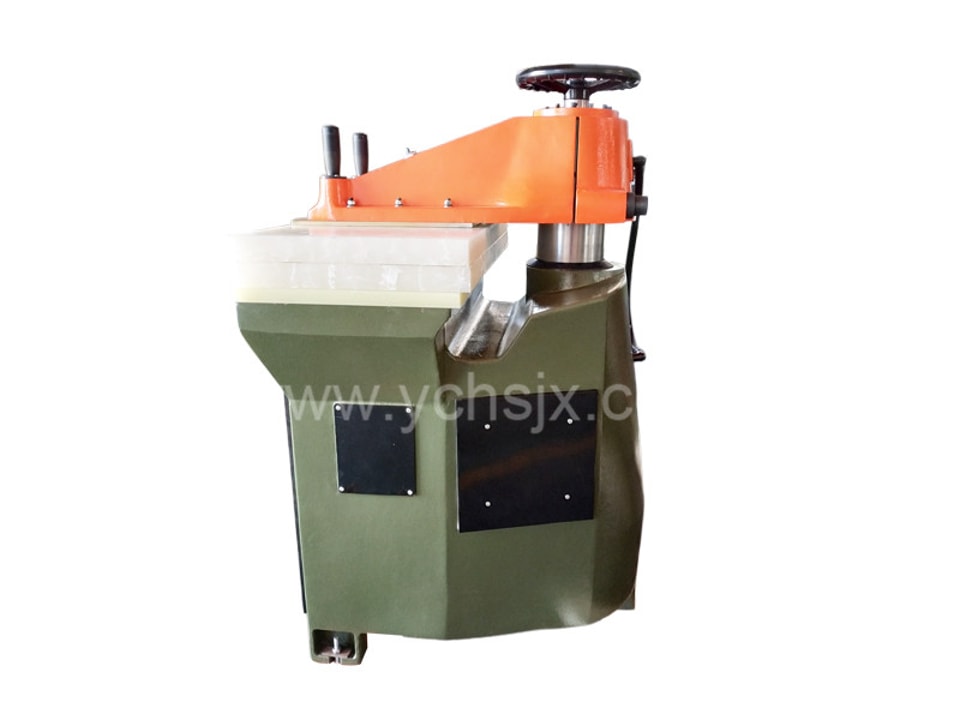
What Are the Main Features of a Swing Arm Clicker Press?
The swing-arm cutting machine is specialized equipment designed for the die-cutting of flexible materials. It utilizes a hydraulic system to drive the movement of a swing arm, enabling a mounted cutting die to precisely cut the material. Thanks to its flexible structure, ease of operation, and broad applicability, it is widely used in industries such as footwear, leather goods, luggage, packaging, automotive interiors, electronic accessories, and sporting goods.Compared to traditional manual cutting methods, the swing-arm cutting machine not only boosts processing efficiency but also enhances product consistency and reduces material waste. Its unique structural design and stable performance make it a vital piece of equipment in the field of flexible material processing. I. Flexible swing-arm structure and ease of operationOne of the defining features of the swing-arm cutting machine is its pivoting swing-arm structure. During operation, the operator can flexibly move the swing arm based on the material's placement, making it easier to adjust the cutting area.Compared to fixed cutting equipment, the swing-arm structure offers greater operational space, facilitating material placement, positioning adjustments, and die changes. The flexible design is particularly advantageous when processing large or complexly shaped materials, as it enhances operational convenience. II. Compact footprint, suitable for diverse production environmentsThe swing-arm cutting machine features a compact overall structure that occupies relatively little space, making it adaptable to production facilities of various sizes.For processing enterprises with limited production space, the machine can be put into operation without requiring a large installation area. Furthermore, the equipment allows for flexible layout planning, enabling efficient arrangement according to production workflows and maximizing workshop space utilization. III. Stable cutting pressure and high processing precisionThe swing-arm cutting machine employs a hydraulic drive system to deliver stable cutting pressure, ensuring the cutting die applies force evenly across the material's surface.This stable pressure output guarantees clean, complete cuts, minimizing issues such as incomplete cutting or uneven edges. Whether processing leather, foam, rubber, or composite materials, the machine allows for pressure parameter adjustments based on specific requirements, achieving highly precise processing results. IV. Wide range of applicable materialsThe swing-arm cutting machine demonstrates excellent material adaptability, capable of processing a wide variety of flexible and semi-flexible materials. Commonly processed materials include natural leather, synthetic leather, EVA, rubber sheets, foam, sponge, fabrics, non-woven fabrics, plastic sheets, and composite materials.Processing is achieved simply by matching the material with the appropriate cutting die and adjusting the corresponding cutting parameters. This broad applicability allows the equipment to meet production needs across various industries. V. Die-based cutting enhances product consistencySwing-arm cutting machines typically employ a die-cutting method, using custom dies to process products into various shapes.Compared to manual cutting, die-cutting ensures uniform product dimensions and minimizes errors caused by human operation. For products requiring mass production—such as footwear components, luggage accessories, and packaging inserts—die-based processing significantly improves production stability.Additionally, standardized cutting reduces the need for adjustments during subsequent assembly stages, thereby boosting overall production efficiency. VI. Rapid die changes and high production flexibilityIn actual production, different products often require cutting dies of varying shapes and sizes. Swing-arm cutting machines are designed for easy die replacement, allowing for quick adaptation to the processing needs of different products.This feature makes the equipment suitable not only for the mass production of a single product but also for processing orders involving multiple specifications and varieties.Enterprises can rapidly switch between products by changing dies, thereby increasing the flexibility of the production line. VII. Stable operation and low maintenance costsSwing-arm cutting machines feature a mature design, consisting primarily of a frame, hydraulic system, worktable, and swing-arm mechanism, ensuring overall operational stability.Routine maintenance—such as inspecting the hydraulic system, lubricating mechanical parts, and cleaning the equipment—is sufficient to maintain optimal working conditions.Stable performance minimizes equipment downtime and enhances production continuity. VIII. High safety standards and reliable operationModern swing-arm cutting machines are typically equipped with safety features—such as two-hand controls and safety limit devices—to reduce the risk of accidental operation.With proper use and standardized maintenance, the equipment provides a safer and more reliable working environment for operators.Furthermore, mechanized cutting reduces the frequency of direct human contact with cutting tools, offering superior safety compared to traditional manual cutting methods. IX. Material Savings and Enhanced Production Cost-EfficiencyPrecision cutting is a key advantage of the swing-arm cutting machine. By optimizing material layout and utilizing high-precision cutting dies, waste—such as offcuts—can be minimized during production.Improving material utilization is particularly effective in reducing production costs within sectors that involve high-cost materials, such as leather processing and packaging. ConclusionThe swing-arm cutting machine is characterized by its flexible structure, ease of operation, stable pressure, high precision, broad applicability, rapid die-changing capabilities, and reliable performance.Thanks to these advantages, the equipment meets the demands of various industries for the efficient, high-quality processing of flexible materials. In modern manufacturing, the swing-arm cutting machine not only boosts cutting efficiency but also helps enterprises lower production costs and improve product quality, making it a highly valuable tool for flexible material processing.
Contact Us


