
What Does a Sliding Table Do on a Die Cutting Machine?
What Does a Sliding Table Do on a Die Cutting Machine?
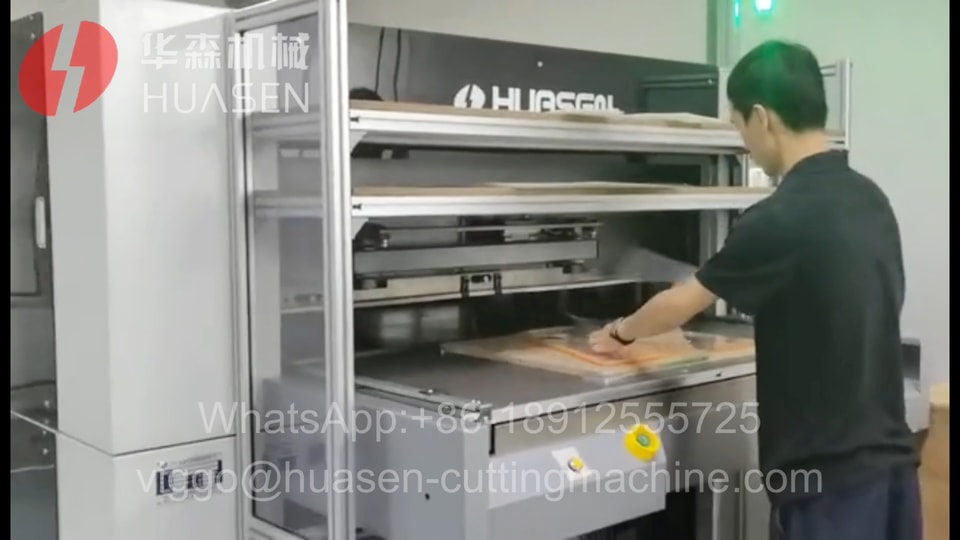
A sliding table carries the die and the material in and out of the pressing zone on rails, so that loading and unloading happen outside the area where the platen comes down. It does not change how the machine cuts; it changes when the operator can work. On a fixed-table press the operator reaches into the press to position the die, waits for the stroke, then reaches in again to remove the part. On a sliding-table press the table travels out, the operator works in clear space, and the table carries the job back under the beam. The cut still takes the same time, but the loading stops competing with it for the same floor space and the same seconds.
I. What the Table Does Mechanically
The table is a steel plate carried on guides, driven in and out by a hydraulic cylinder, a pneumatic cylinder or a rack-and-pinion drive. It has two positions. In the loading position it sits outside the uprights, giving the operator access to the whole die. In the cutting position it is centred under the platen and mechanically locked or positively seated, because any movement during the stroke would show up as a dimensional error in the part.
Two details decide whether the table is a convenience or a source of rejects. The first is seating repeatability: the table must return to the same position every cycle, which usually means a locating block or a taper seat rather than relying on the cylinder's end stop. The second is flatness under load. A table that deflects slightly in the middle will cut deeper there than at the edges, and the effect grows with table size and with the force of the press.
II. Single Table and Double Table
A single sliding table removes the need to reach into the press, but the press is still idle while the table is out. The cycle is: table out, load, table in, cut, table out, unload. The saving is real but partial, and it is largest on big, heavy dies that are slow to position.
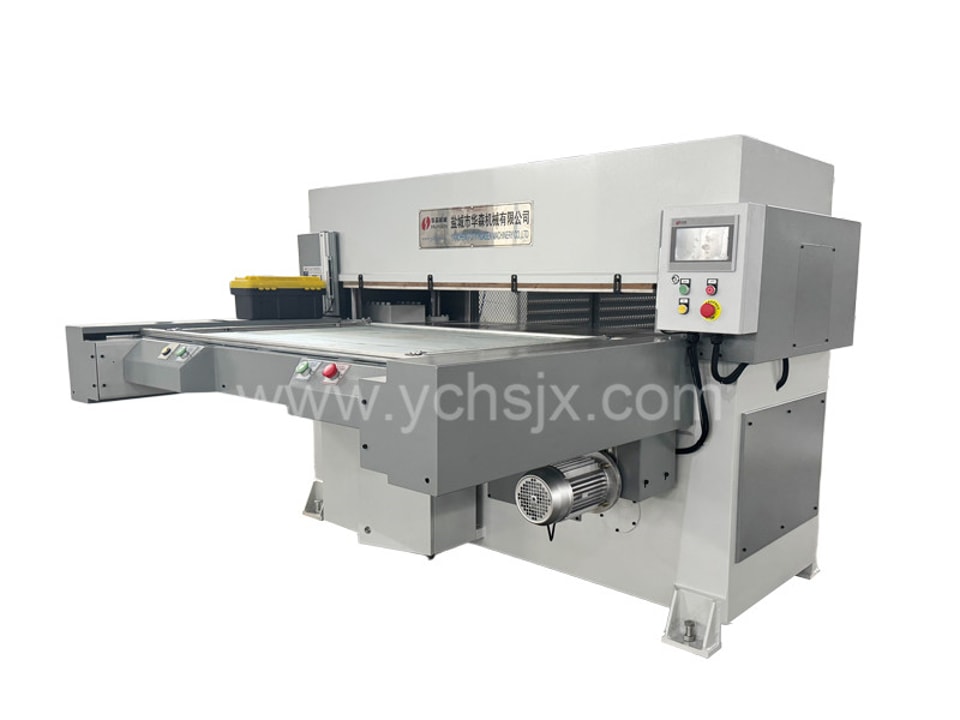
A double sliding table puts two tables on the same frame. One sits under the platen being cut while the other is outside being unloaded and reloaded, and the two swap positions. The press now spends most of its time cutting instead of waiting, which is why catalogue sheets for this type usually state that a double-side feeding system raises output substantially compared with single-side feeding. That gain is only realised if the operator can actually load and unload within one press cycle; if loading takes longer than the cut, the second table buys nothing.
The same machines are commonly offered across a wide force range, from about 400 kN up to 4,000 kN, with cutting areas up to roughly 1,600 × 1,500 mm on the largest versions. Table size, not tonnage, is usually the figure that decides whether a particular die fits.
III. What It Changes on the Factory Floor
The first change is safety. Loading outside the pressing zone removes the most common reason operators put their hands under a platen: the need to adjust a die that has shifted.
The second is ergonomics. Working at a table extended towards the operator is easier on the back than reaching across a fixed table into a machine frame, particularly with heavy dies and thick stacks.
The third is throughput, in the specific sense of cutting time as a share of the shift. A press that cuts for 40 percent of the shift because the rest is loading can be pushed towards 70 or 80 percent with a well-matched double table — but only if the upstream material supply keeps up.
The fourth is floor space. The table travel needs clear space in front of the machine, and a double table needs it on both sides. Machines are often specified with the table travel forgotten, then installed in a bay that is 500 mm too short.
The fifth is die changing. With the table out, the die is fully accessible and can be lifted vertically rather than slid out from under a frame — which is why shops running many short jobs tend to prefer this layout even when the volume does not demand it.
IV. What to Check Before You Buy
Start with table size against your largest die, and load capacity against the heaviest die plus material. Then ask about the drive: hydraulic tables are smooth and strong, pneumatic tables are faster and cheaper but less rigid, and rack-and-pinion drives suit very long travel.
Ask what locks the table in the cutting position, and how repeatable that lock is. Ask for the flatness tolerance of the table surface, not just its dimensions. Ask how the cutting board is changed — on some designs the board can only be reached with the table removed, which turns a ten-minute job into an hour.
Finally, ask about the interlocks. On a double-table machine the essential requirement is that the tables cannot index while the platen is descending, and that the loading station is guarded so a second operator cannot reach into the cutting position. Two-hand control or a light curtain at the cutting station is normal on machines built for export markets; confirm what is fitted rather than assuming.
V. Where Sliding Tables Are Used
The layout appears wherever dies are large, heavy or numerous: footwear uppers, soles and insoles; automotive interior panels and sound insulation; foam and gasket converting; EPE and packaging inserts; bag and luggage panels; abrasive products; and sports mats.
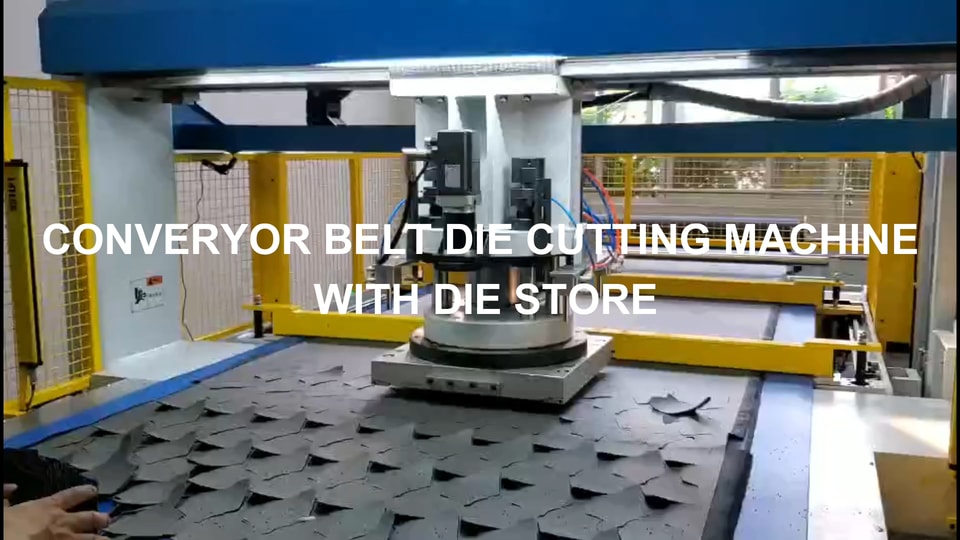
If the material arrives in rolls rather than sheets, a sliding table is the wrong starting point. Roll work is better served by a beam press with an automatic feeding system, because the table would add a manual step where the process is trying to remove one.
VI. Where the Layout Stops Helping
A sliding table is a way of organising manual work, not a way of eliminating it. Once a job runs continuously with the same die, the operator's loading time becomes the limit, and the next step is an automatic line rather than a bigger table.
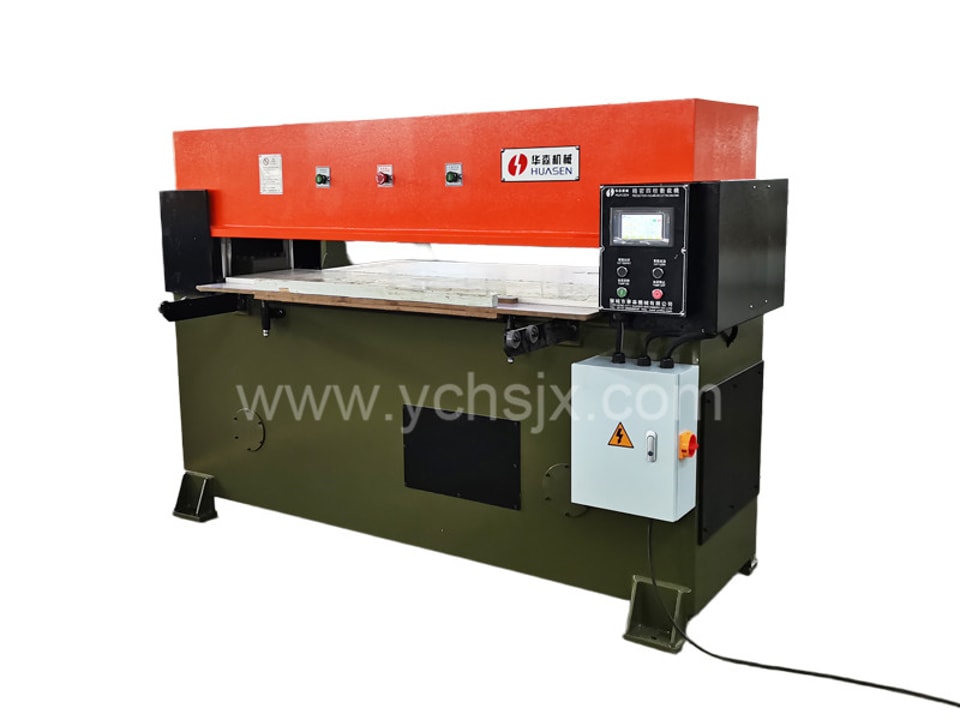
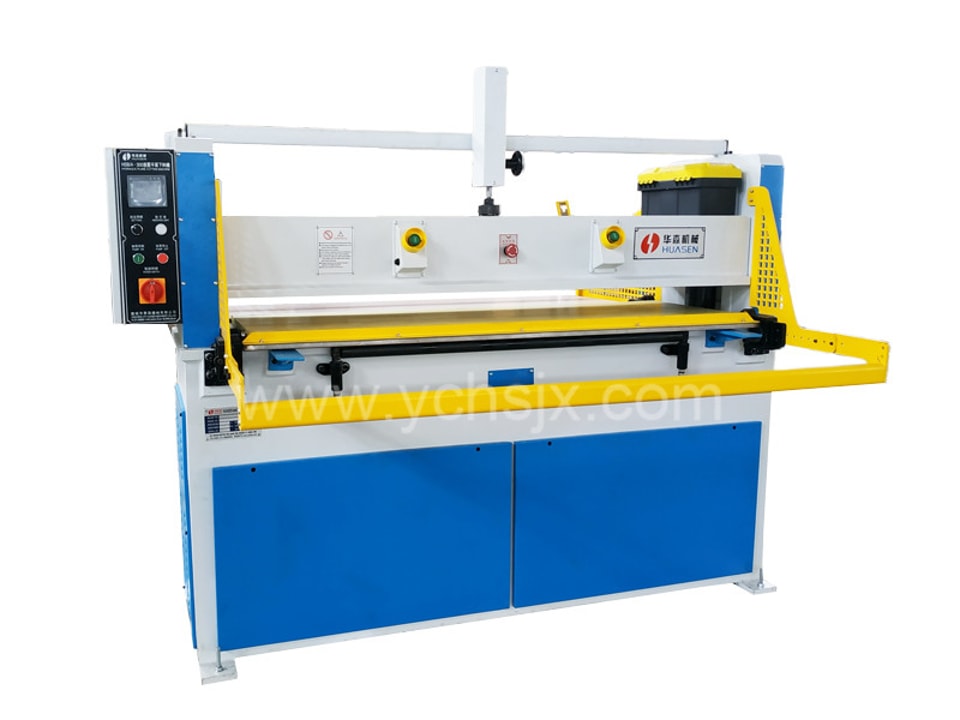
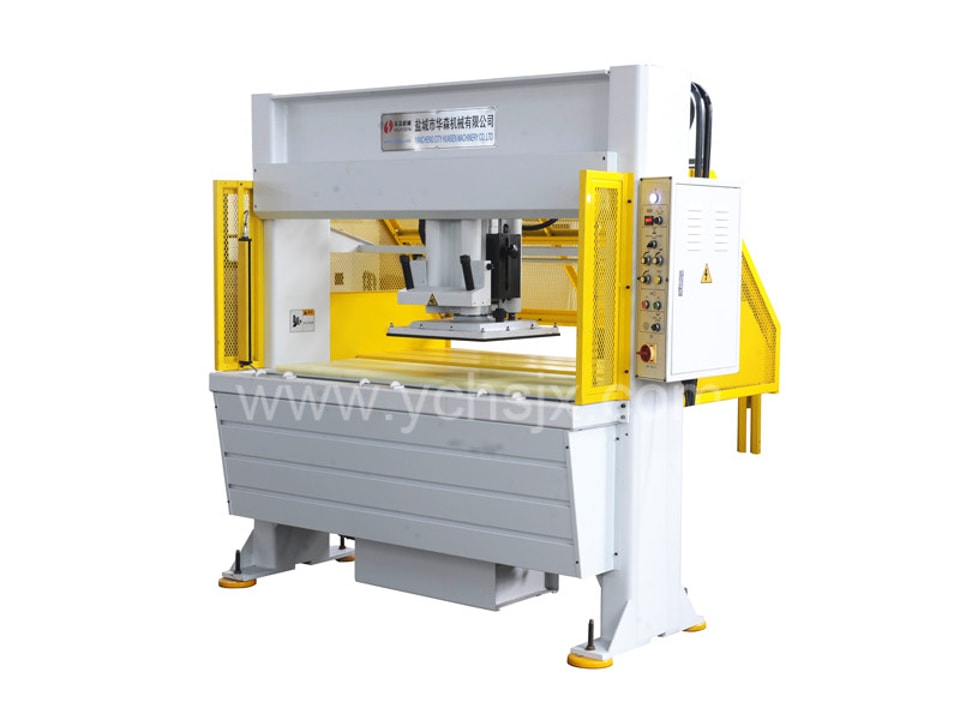
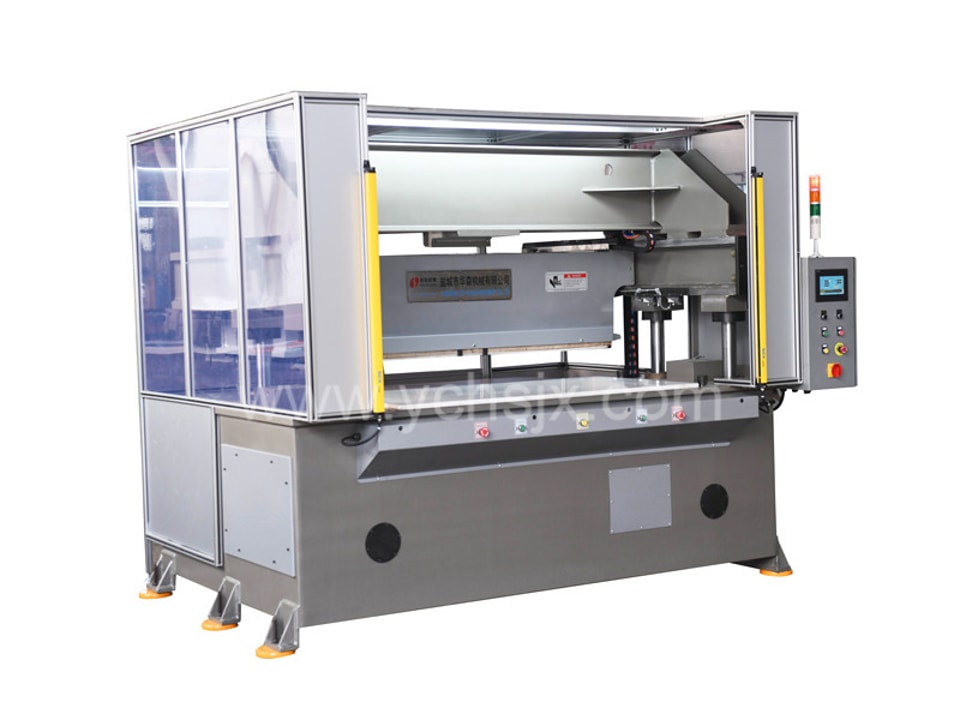
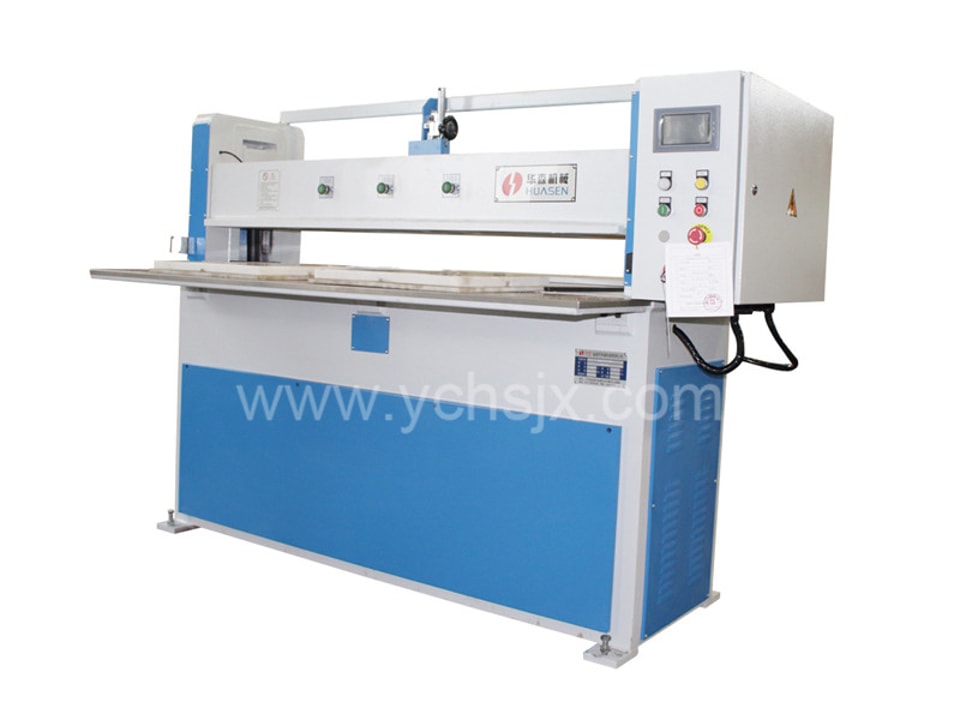
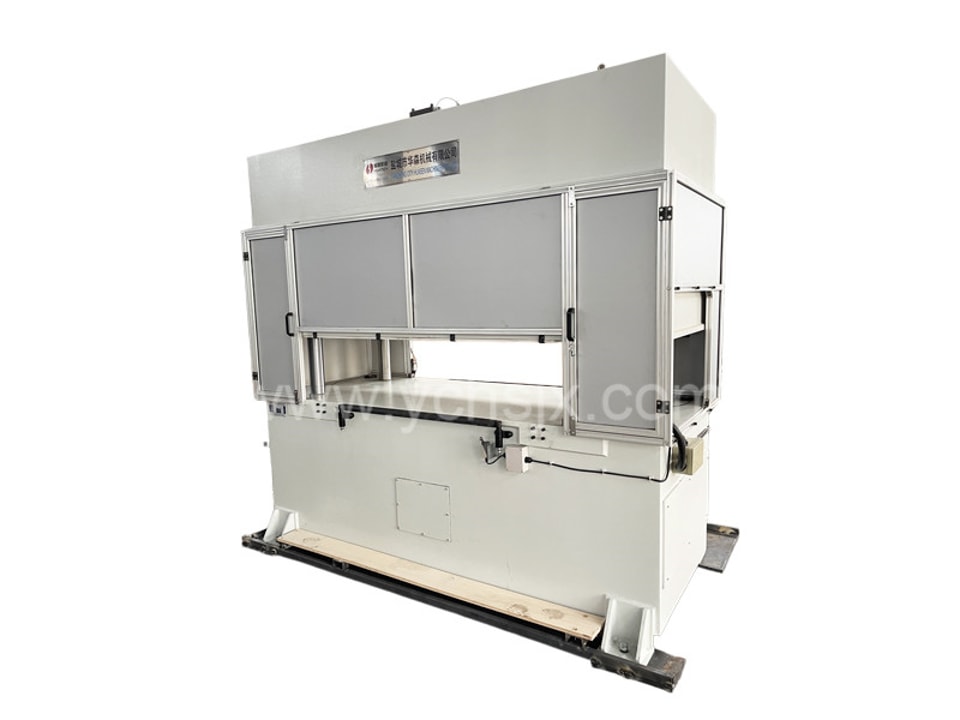
Within those limits it is one of the cheapest productivity upgrades available on a hydraulic press, because it converts operator time that was previously wasted inside the machine into useful loading time outside it. The four-column press with double sliding tables is the version most buyers land on for repeat production; single-table versions and the wider four-column die cutting range cover lower volumes and larger parts. Where the requirement is small parts with two independent working positions rather than two tables, a dual-station machine is the different answer.
FAQ
Does a sliding table make a cutting machine faster?
It makes the machine more productive rather than faster. The press stroke is unchanged; what disappears is the idle time while the operator reaches into the press. A double table usually gains the most, because one table is loaded while the other is being cut.
Single sliding table or double sliding table?
A single table suits low to medium volume and large parts, where the time saved by loading outside the press already justifies it. A double table suits repeat work with short cut cycles, where loading time would otherwise dominate the cycle.
Is it safe to load the table while the press is cutting?
Only on a machine where the loading station is physically outside the pressing zone and the controls are interlocked so the table cannot move while the platen descends. On a single-table machine the operator never loads during the cut, because the table is inside the press.
Why does cut depth vary across a sliding table?
Usually three reasons: the table surface is not flat, the table does not seat in exactly the same position every cycle, or the rails and frame have worn so the table tilts slightly when it locks. Check seating repeatability before adjusting the press.
Is a double sliding table the same as a dual-station machine?
No. A double sliding table carries two tables under one press so loading and cutting overlap in time. A dual-station machine has two independent pressing heads or working positions, typically for small parts and secondary punching.
Working Out Which Layout Fits?
Send us your largest die footprint, the material, the number of die changes per shift and the output you need. We will tell you whether a single table, a double table or an automatic feed is the sensible choice, and what floor clearance to plan for. Contact our team with the details.
Contact Us


