
Four-Column, Four-Post, Four-Bar: What the Names Mean
Four-Column, Four-Post, Four-Bar: What the Names Mean
Four-column, four-post and four-bar are three names for one frame geometry: a moving platen guided at its four corners by uprights that tie a top yoke to a base. What changes between the names is not the layout but which job the writer has in mind — the column that carries the reaction force, the post that keeps the platen level, or the tie rod that holds the whole frame in preload. Suppliers choose whichever term their catalogue translator preferred, and buyers end up comparing pages that describe the same machine under different headings.
I. Where the Three Names Come From
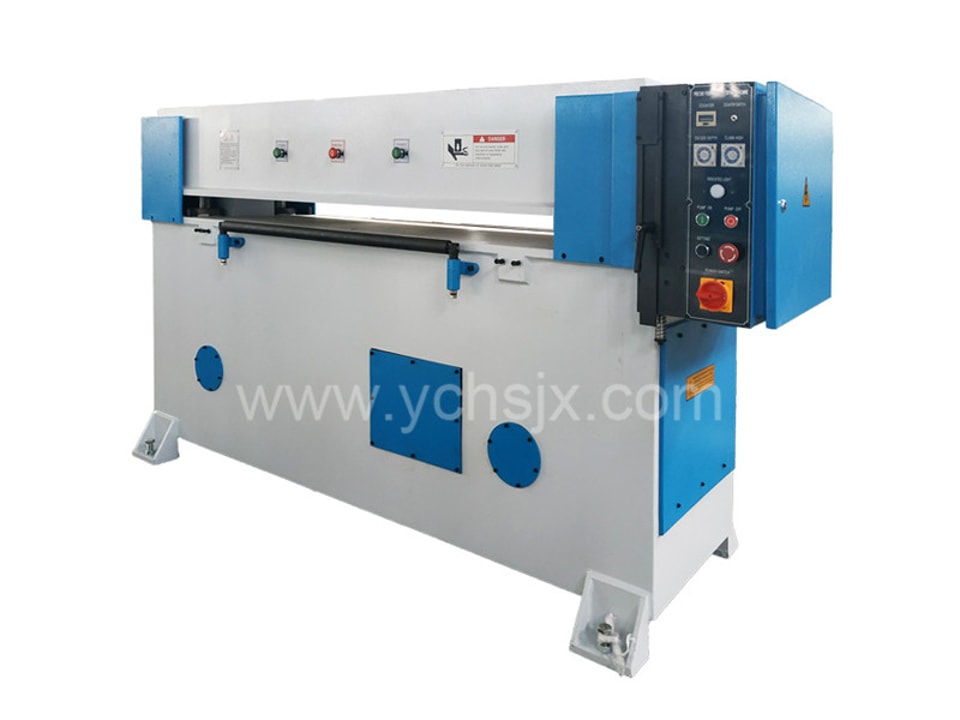
In a typical four-column hydraulic press the uprights are hardened, ground and usually chrome-plated, threaded at both ends, and clamped by nuts above the top yoke. That single member does three jobs at once: it carries the reaction force of the cut, it guides the moving platen so it stays parallel, and it holds the frame together in preload. A writer describing the load path calls it a column; a writer describing the sliding fit and the bush calls it a post; a writer describing the threaded, nut-tensioned construction calls it a bar or tie rod.
Most of the confusion is translation-driven. The Chinese source terms are si zhu (four columns), si dao zhu (four guide posts) and si la gan (four tie rods), and different factories have historically translated the same machine three ways. There is no trade association that fixed one English term, so the same drawing can appear on three supplier pages with three headings.
II. Why the Distinction Still Matters
If all three names described the identical casting, the choice would be cosmetic. It is not quite, because a tie-rod frame and a monoblock frame are genuinely different constructions, and both get called four-column.
A tie-rod frame is built from separate pieces — base, top yoke, and four tensioned uprights — pulled together by nuts. The preload is what gives it stiffness: the joint stays closed under cutting load because the rods are already stretched. That frame can be re-torqued, which is useful after transport, after a foundation settles, or after years of service. It also means the preload is a maintenance item. If a nut works loose or is never checked at commissioning, the frame loses stiffness and the platen can tilt slightly under an off-centre load, which shows up as uneven cutting depth across a wide die.
A monoblock frame is welded or cast as one piece. There is no preload to maintain and nothing to re-torque, but it is heavier, and any repair means welding rather than replacing a rod. Buyers rarely ask which one they are getting, and catalogues rarely say.
III. What the Name Cannot Tell You
Once you know that four-column means four uprights at the corners, the name has said everything it can, and the rest has to come from the specification. Five items matter more than the label, and none of them is implied by it.
The first is whether the quoted force is the rated cutting force, the working force, or the maximum the cylinder can produce once. The second is the table size and the daylight, meaning the clear height between the platen and the table with the press open — that figure, not the tonnage, decides whether your die and stack actually fit. The third is stroke. The fourth is the guiding arrangement: bush material, running clearance, and how the guide is lubricated. The fifth is whether the columns also carry the load or whether the frame's side members do, which changes how the machine behaves when a die sits off-centre.
Unit confusion sits on top of all five. A tonne-force and a kilonewton are not interchangeable: 1 tf is about 9.81 kN, so a press quoted at 200 in one catalogue and 2,000 in another may be the same machine.
IV. How to Read a Supplier Catalogue
Look for the model table rather than the headline. A usable table lists, for each model, the rated force in kN or tf, the table dimensions, the daylight, the stroke, the main motor power and the machine weight. If a page shows one photograph and one number, the photograph is almost certainly shared across the whole range and tells you nothing about the model you are being quoted.
Two more traps are worth knowing. The first is that four-post is sometimes used loosely for any press with four uprights, including machines whose uprights only guide and carry no preload. The second is that the same machine may appear under two different names on the same site, in the category page and in a product page, with slightly different figures. Ask for the outline drawing with overall dimensions and the daylight marked; that single document resolves more confusion than any amount of terminology.
V. Which Term to Use in Your Enquiry
Use four-column, because it is the term most suppliers will recognise, and then remove the ambiguity yourself by stating force, table size, daylight, material, die footprint and target output. Add one line asking the supplier to confirm whether the frame is a pre-stressed tie-rod design or a monoblock. That single question separates a catalogue entry from a specification.
The same applies in Chinese: si zhu cai duan ji (four-column cutting press) is understood everywhere, while dao zhu (guide post) and la gan (tie rod) describe the same member from a different angle. If you are comparing quotations from several factories, restate each offer in the same terms before comparing price, or you will be comparing three vocabularies rather than three machines.
VI. Where the Term Appears in Buying Specifications
Four-column machines turn up in the specifications of any process that needs a wide, flat table and a die that cannot be supported by a single arm: automotive interior trimming, footwear sole and insole cutting, bag and luggage panels, abrasive converting, household cleaning products, and sports mats. In each of those, the reason for choosing the frame is the same — a large die has to meet the material evenly across its whole area, and the platen has to stay parallel while it does.
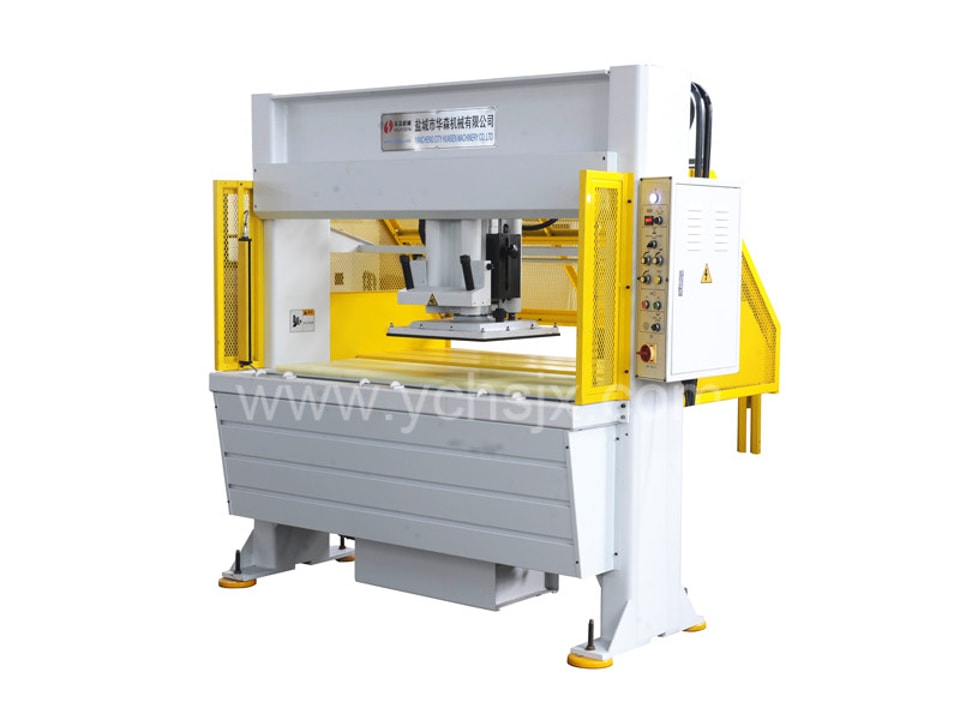
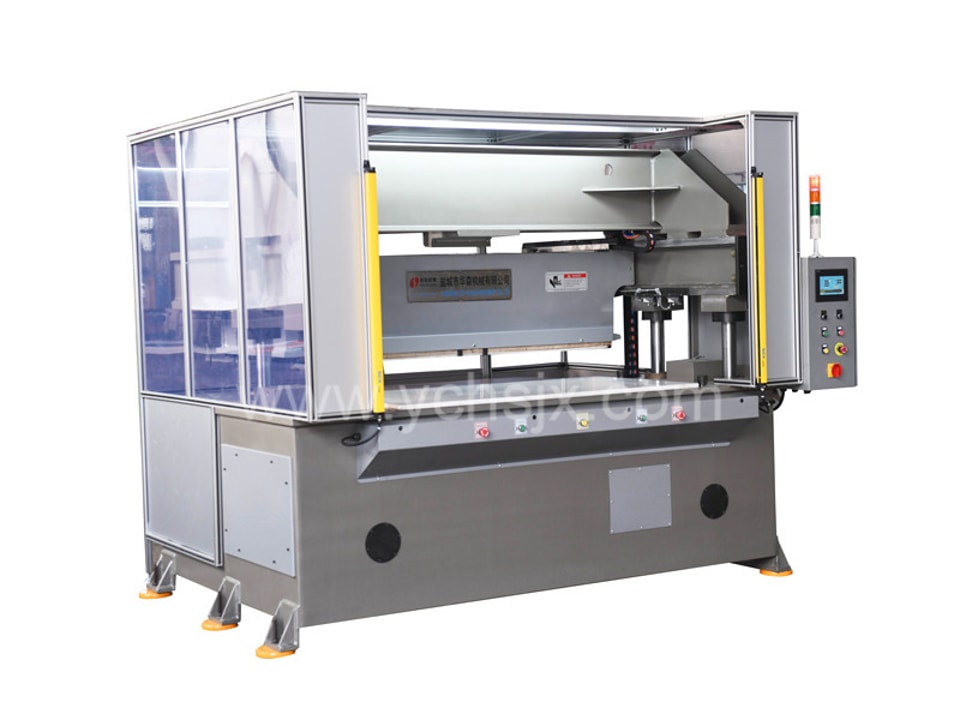
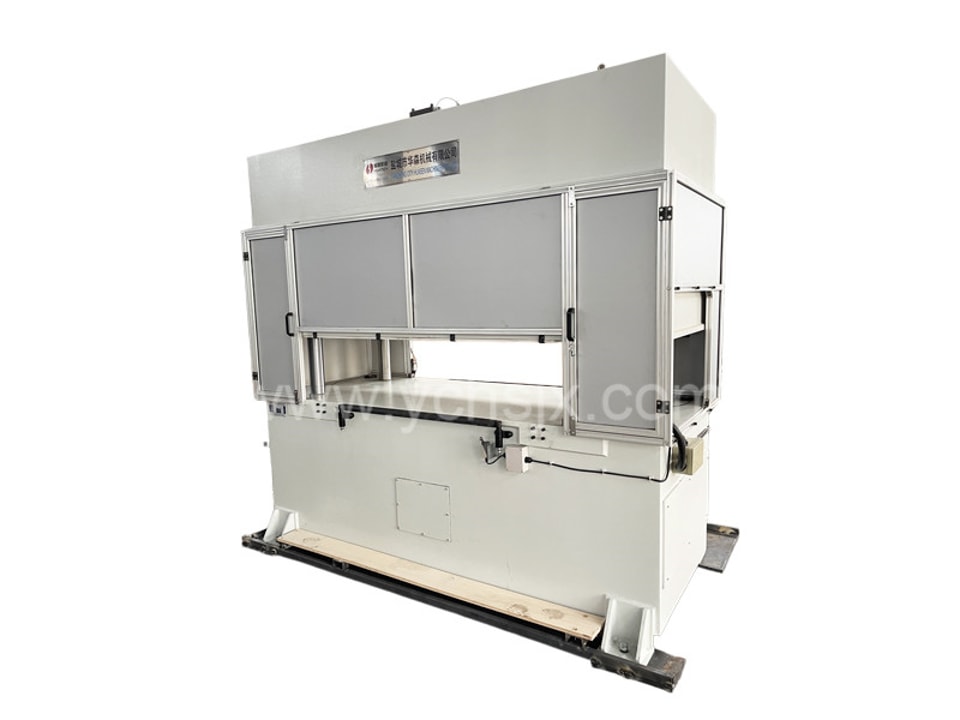
If you are still deciding between frame types rather than naming one, the practical rule is that the die footprint decides the frame and the material decides the force. The four-post hydraulic press and the wider four-column die cutting range cover most of those cases; where the frame is built from tensioned rods, it is listed separately as a four-bar hydraulic cutting press.
FAQ
Is a four-post press the same as a four-column press?
In practice yes. Both describe a press whose moving platen is guided at four corners by uprights tying a top yoke to a base. The word post emphasises guidance and the word column emphasises the structural member, but they refer to the same part.
What does four-bar mean then?
The same geometry, named after the tie rods that clamp the frame together and put it in preload. If a supplier writes four-bar, ask whether the frame is a pre-stressed tie-rod design or a monoblock, because that affects maintenance.
Do more columns mean more tonnage?
No. Cutting force comes from the cylinder bore and the hydraulic pressure. Four columns distribute the reaction force and keep the platen parallel; adding a fifth or sixth column changes stiffness, not force.
Why do Chinese suppliers use three different English names?
They are translations of different Chinese source terms: si zhu, si dao zhu and si la gan. There is no industry standard mapping, so the same machine can appear under any of the three.
Should I specify tie-rod or monoblock in my enquiry?
Yes, if the machine will be moved, re-levelled or kept for a long service life. A tie-rod frame can be re-torqued to restore preload; a monoblock frame has no preload to maintain but is heavier and cannot be re-tensioned.
Still Comparing Names?
Send us your die drawing and the material you are cutting, and we will reply with the frame type and the model that fits it, stated in the same terms on every quotation. Contact our team with the details.
Contact Us


