
How Does a Four-Column Die Cutting Machine Work?
How Does a Four-Column Die Cutting Machine Work?
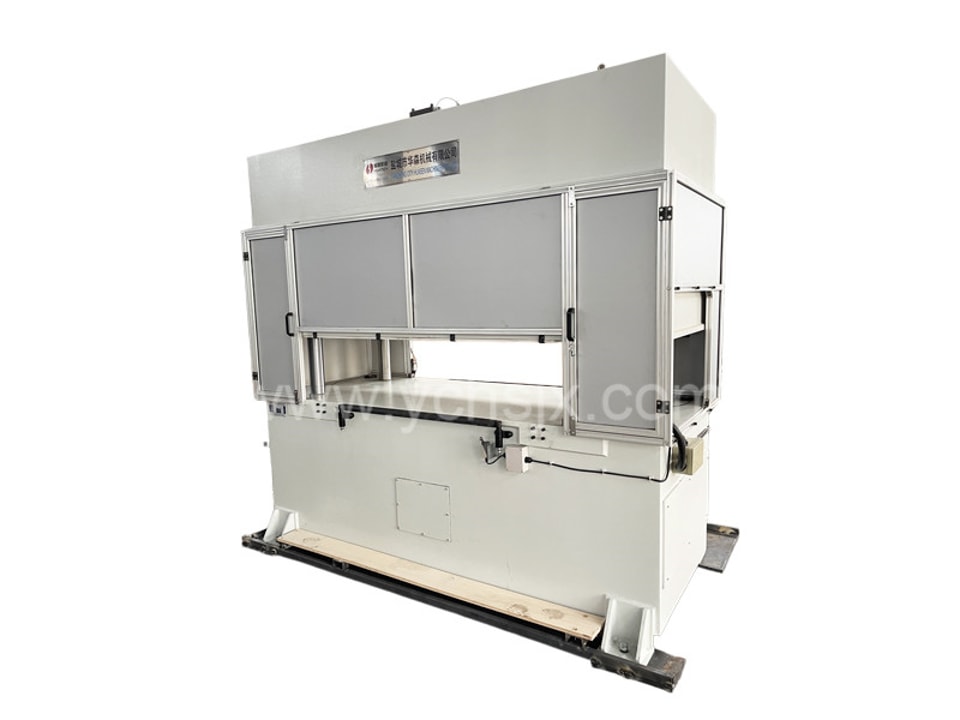
A four-column die cutting machine is a hydraulic press in which a moving platen is guided by four vertical columns at its corners. Hydraulic pressure pushes the platen down onto a die resting on the worktable, and the four columns keep the platen level as the load rises. The die shears the material in one stroke; the platen returns, the operator moves the material, and the cycle repeats. The columns are what separate this design from a single-frame press: they carry the load at four points rather than one, which is why wide dies and thick stacks can be cut at an even depth across the whole table.
I. The Frame: Four Columns, One Moving Platen
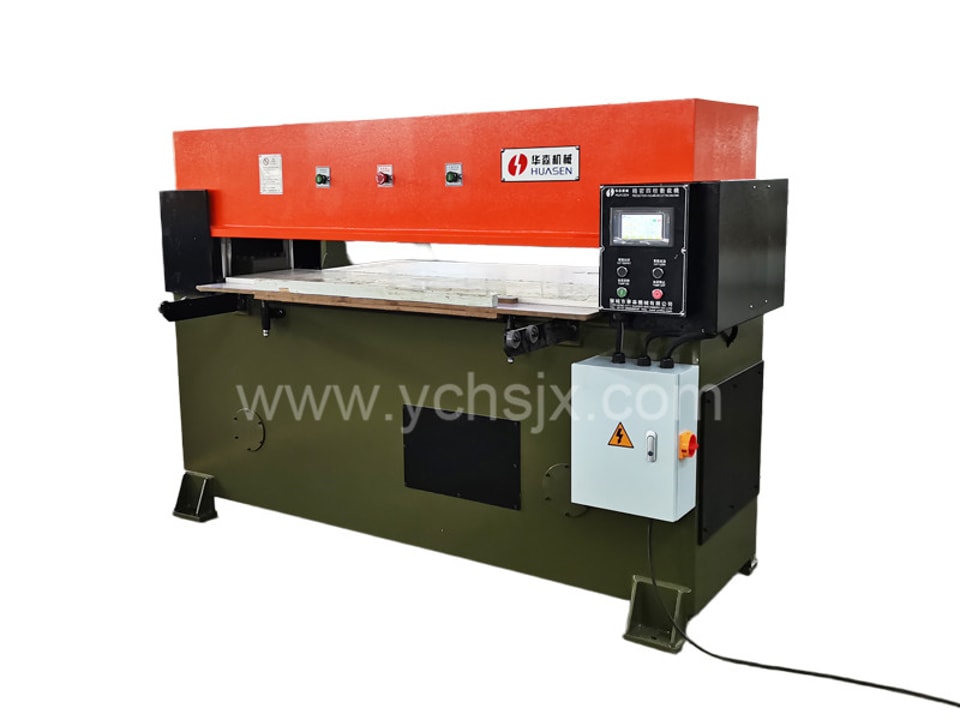
The structure is simple to describe and demanding to build. A heavy base carries the worktable. Four columns rise from the base and pass through guide bushes in the moving platen, which is tied at the top to the main hydraulic cylinder. The upper yoke closes the frame and takes the reaction force.
Every element has a job. The columns resist the sideways and twisting loads that appear the moment the die meets material unevenly. The guide bushes set the clearance that decides how much the platen can tilt. The base and upper yoke must be rigid enough that they do not deflect under full tonnage, because any deflection shows up as a variation in cutting depth. On a machine with a wide table, frame rigidity matters more than cylinder size.
This is also why the same nominal tonnage can behave very differently between two machines. A light frame flexes, the platen tilts slightly, and the die cuts deeper on one side. A rigid frame with properly fitted guides delivers the rated force where the die actually is.
II. Where the Force Comes From
Power comes from the hydraulic power unit: a motor drives a pump, the pump pressurises oil, and valves direct that oil into the main cylinder. The piston area multiplies pressure into force, so the tonnage on the nameplate is a function of both working pressure and cylinder bore.
Two practical consequences follow. First, the pressure gauge alone does not tell you the cutting force; you need the effective piston area to convert one into the other. Second, force is adjustable within a range, which is why the same machine can cut soft foam at low pressure and dense rubber at high pressure without changing anything mechanical.
Most machines in this category use a two-stage approach: fast approach at low pressure to close the gap quickly, then a slower, high-pressure stroke for the actual cut. The slow stroke is not a compromise — it is what allows the blade to propagate through the material instead of punching a hole and tearing the edges.
Machines in this family differ less in principle than in scale. Huasen's HSC series covers cutting forces from 200 kN to 2,000 kN, cutting areas from 1,000 × 450 mm up to 1,600 × 1,000 mm, and main motor power from 1.5 kW to 11 kW. The presses use two cylinders together with a double-crank connecting rod balancing mechanism: the cylinders supply the force while the linkage holds the platen level mechanically, which is how the same cutting depth is maintained at every position on the table. A central oil supply lubricates the guides and linkage automatically — a detail that matters more on a machine running all shift than on one used occasionally.
III. What the Four Columns Actually Do
If force is the easy part, guidance is the difficult one. Three things depend on it.
Depth consistency. A die with several cavities must cut every cavity to the same depth. If the platen tilts by a fraction of a millimetre across a one-metre table, one cavity is over-cut into the board while the opposite one barely separates. On thick or laminated materials this shows up immediately as parts that hang together on one edge.
Die life. A tilted platen loads one side of the die harder than the other. That side wears faster, the die loses height unevenly, and the operator compensates by raising pressure — which accelerates wear further. Parallel guidance is one of the cheapest ways to extend die life.
Board life. The cutting board under the die is a consumable. Even penetration wears it evenly and allows repeated resurfacing. Uneven penetration digs a deep trench on one side and forces early replacement.
IV. The Cutting Cycle, Step by Step
In production the sequence is short and repeatable. The operator lays the material on the cutting board and positions the die, either by eye against a mark or with a locating frame. The pump builds pressure while the platen descends on its fast approach. When the die contacts the material, resistance rises and the machine completes the cut on the slow, high-pressure stroke. A pressure switch or a position sensor ends the stroke, the directional valve reverses the flow, and the platen returns to the top of its travel.
Cycle time is therefore set by three things the buyer can influence: the approach speed, the length of the slow stroke, and how quickly the operator can reposition material. On a machine with a sliding table, the repositioning step happens outside the press area, so loading and cutting overlap and the effective cycle shortens noticeably.
V. Table Options That Change How the Machine Is Used
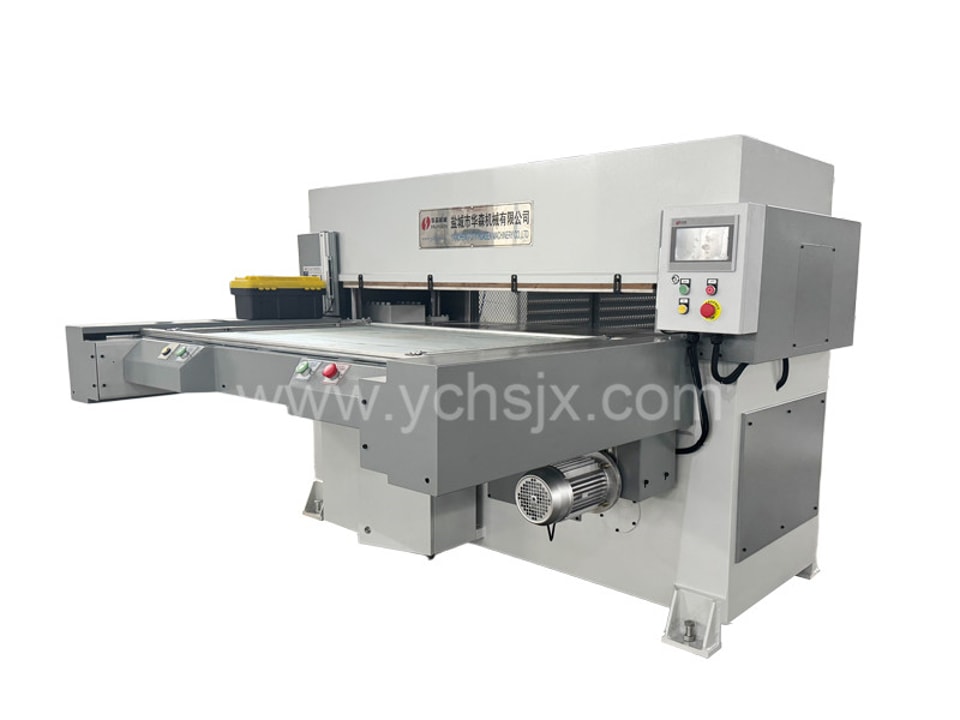
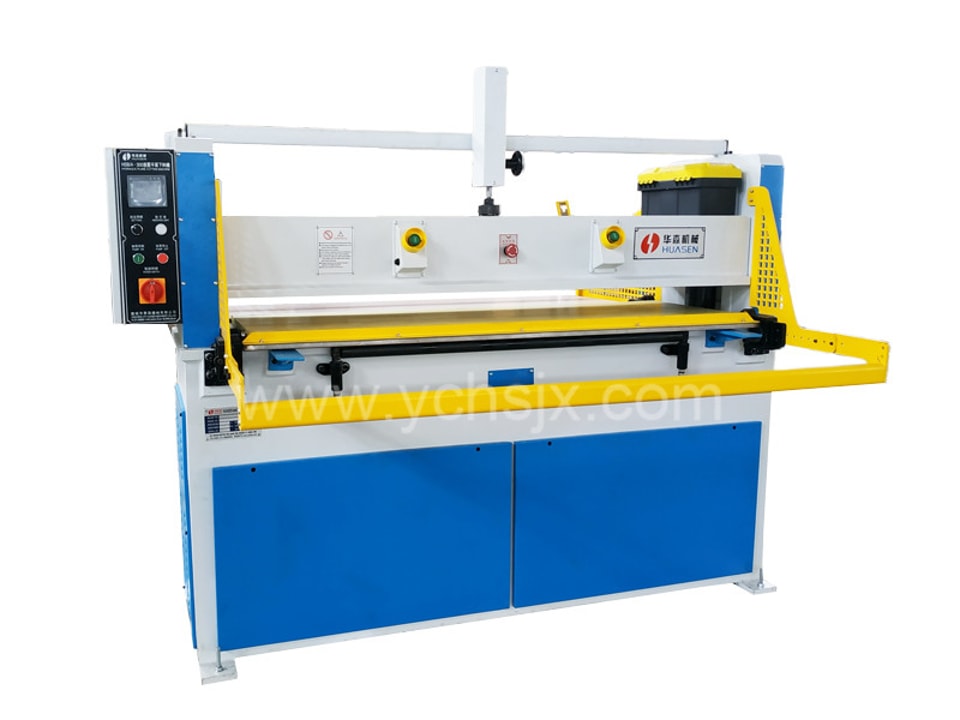
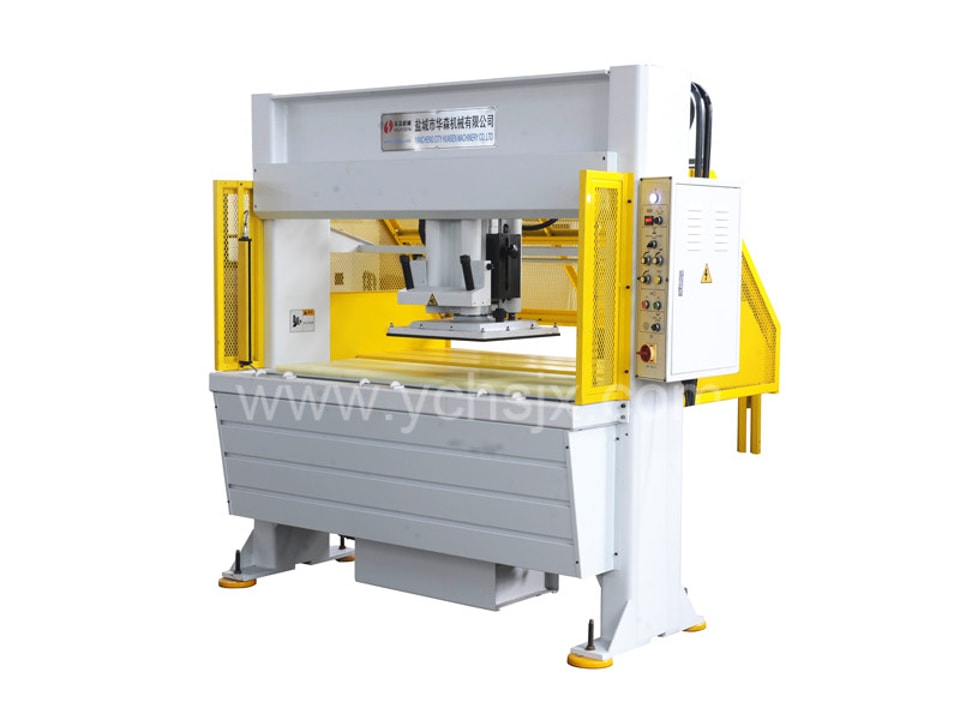
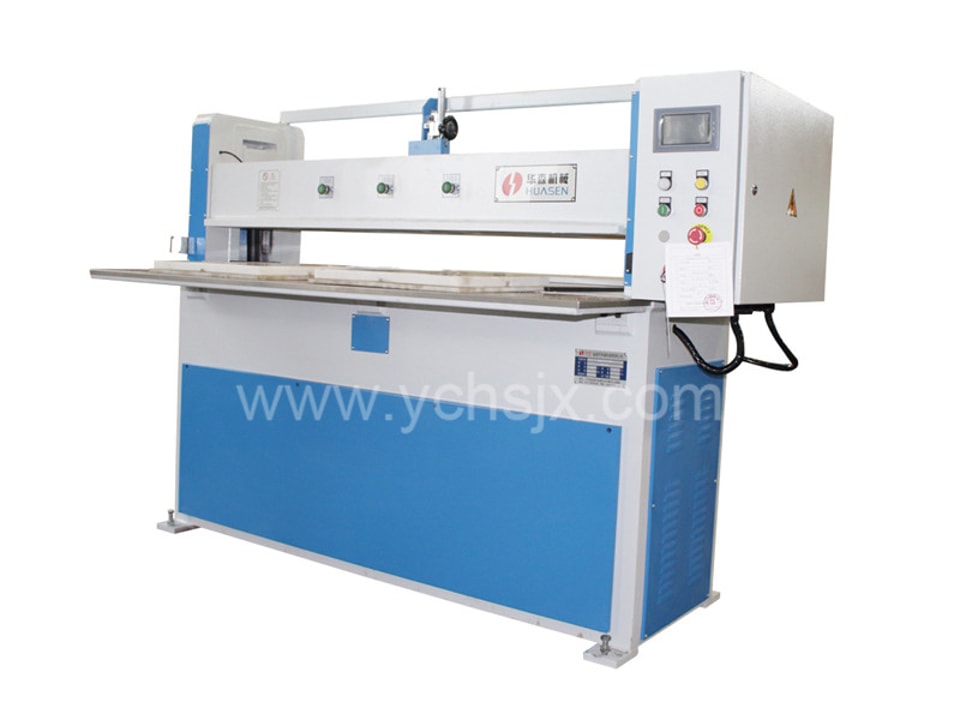
The frame stays the same; the table decides the workflow. A single fixed table is the simplest and cheapest, and suits parts that are easy to reach and lift. A sliding table moves the work surface out of the pressing zone so the operator can arrange the die and material in the open, then push it under the platen. On wide or heavy dies this removes most of the physical effort and reduces the risk of a hand being in the pressing area during the stroke.
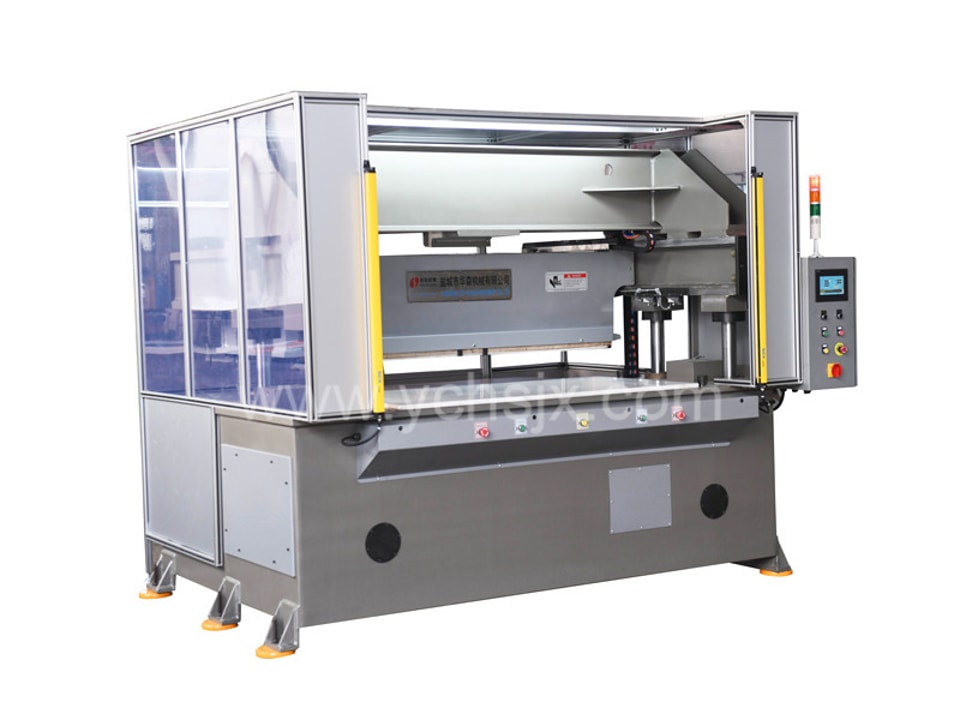
Double sliding tables go a step further: while one table is being cut, the other is being loaded, so the machine spends less time waiting for the operator. Configurations in this range include presses with double sliding tables and heavy-duty versions built for high tonnage, such as the 200-ton model.
VI. What These Machines Are Used For
Because the design favours large dies and even depth, four-column presses concentrate in industries where parts are wide and materials are flexible: automotive interior components such as seat covers, sound insulation cotton and door panel liners; footwear soles, insoles and uppers; bag and luggage panels; foam and sponge packaging inserts; non-woven and textile parts; rubber and plastic gaskets; and laminated composites where several layers must be cut together.
The common thread is not the material but the requirement: a part too wide for a small clicker bed, a die too heavy to swing by hand, or a depth tolerance that a single-point frame cannot hold over the full table.
VII. What to Confirm Before Choosing a Model
Four questions decide most of the specification. How long is the total cut line on the largest die, and how thick is the stack — those two give the required force. What is the largest die footprint, which sets the table size and therefore the frame class. And how often does the die change, which decides whether a sliding table or a fixed table is the sensible choice.
Buyers who answer those four before contacting a supplier usually end up with a smaller, better-fitted machine than those who start from a tonnage figure. The full range is listed under four-column die cutting machines, and our engineers will check the numbers against your die drawing before quoting.
FAQ
What is the advantage of four columns over a single-frame press?
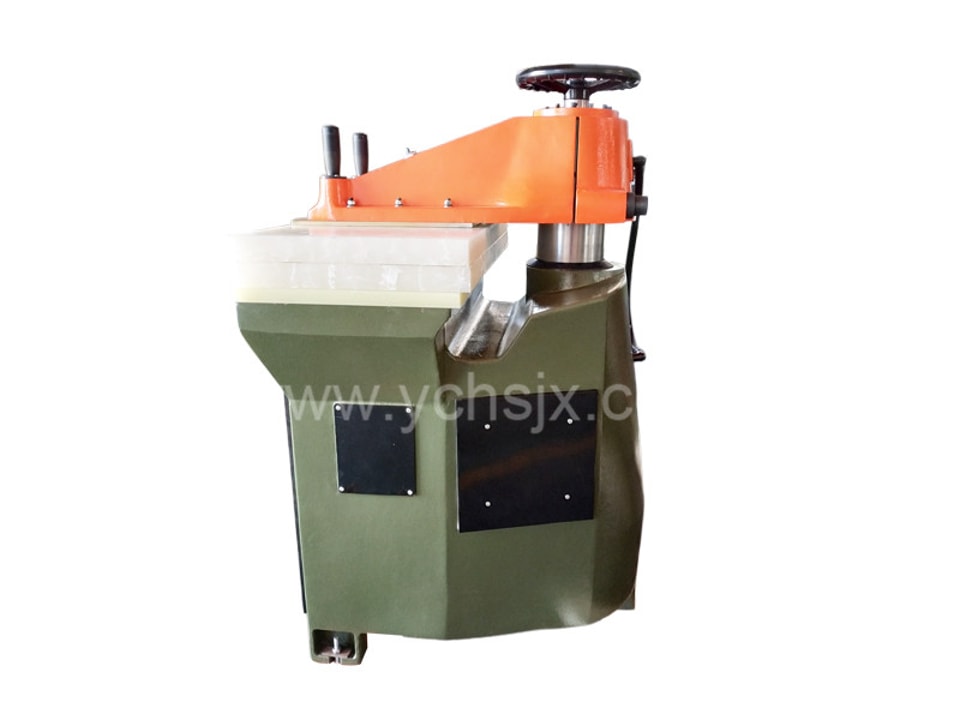
Four columns share the load between four guided points instead of one C-frame, so the moving platen stays parallel across a wide table. On large dies and thick stacks that means uniform cutting depth from edge to edge instead of a deeper cut near the ram.
Why does parallelism matter more than tonnage?
A machine can have enough force and still cut badly if the platen tilts. A tilted platen pushes one side of the die deeper than the other, so part of the material is over-penetrated and part is not fully cut. Guidance quality decides whether the available force reaches the whole die evenly.
What materials are usually cut on a four-column machine?
Mostly flexible and semi-rigid sheet materials: leather and synthetic leather, EVA and PU foam, sponge, rubber, non-woven fabric, textile, felt, sound insulation cotton, cardboard, plastic sheet and laminated composites used in automotive interiors, footwear and packaging.
Can a four-column press cut several layers at once?
Yes, within the limits of die height and available force. Because the platen descends evenly, multi-layer cutting is more consistent than on a light frame, but the blade must still be tall enough to pass through the whole stack and the force must cover the combined thickness.
What maintenance does the structure itself need?
Column surfaces and guide bushes need clean lubrication, the platen should be checked for parallelism at intervals, and the hydraulic oil, filter and seals follow the service schedule. Most parallelism problems start as contamination on the columns rather than as wear in the cylinder.
Ask us to check your die against the frame
Send the die drawing, the material and the stack height, and we will confirm which four-column configuration holds your tolerance without oversizing the press. Contact our team for a specification review.
Contact Us


