
Sports Goods
Our machines are suitable for sports products such as basketball, volleyball, tennis equipment and yoga mats, offering precise cutting for various flexible materials.
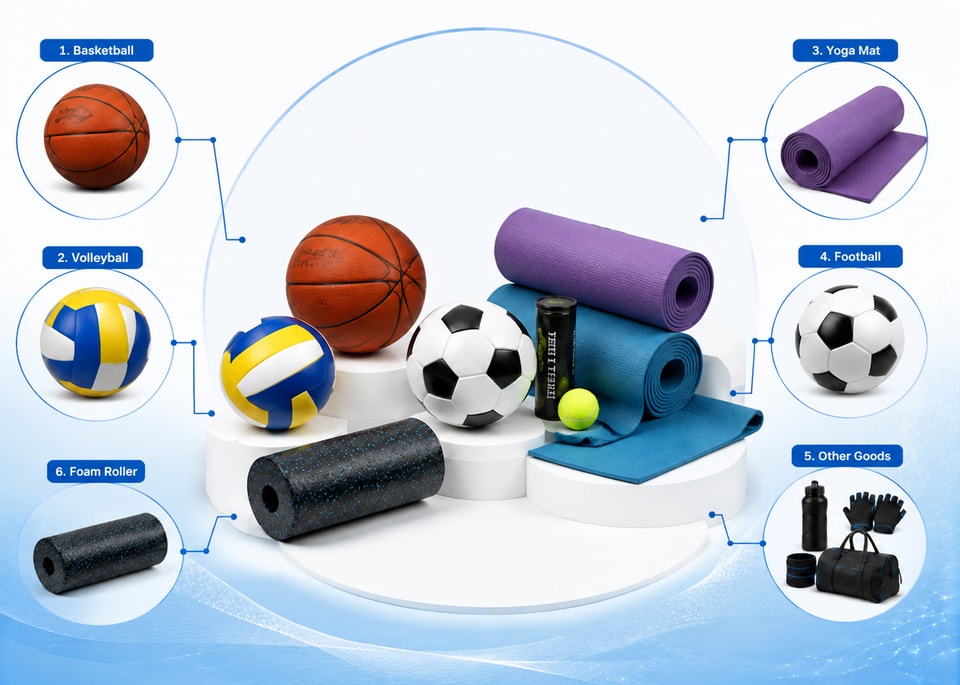
Automatic cutting machines are indispensable in the sports products industry, where materials range from highly elastic textiles and compressible foams to tough synthetic leathers and rubber compounds. Their applications span ball sports, fitness equipment, protective gear, and yoga accessories, enabling precision, consistency, and high-volume production while accommodating complex 3D geometries and demanding performance requirements.
For sports balls (soccer, basketball, volleyball, rugby, and American football), CNC-controlled die-cutting and laser cutting systems are used to process the multi-panel synthetic leather or polyurethane (PU) covers. Traditional steel-rule dies cut stacked sheets (up to 20 layers) into pentagon, hexagon, or custom curved panels with tolerances of ±0.2mm, ensuring that all panels fit precisely during subsequent stitching or heat-bonding. For premium seamless thermal-bonded balls, CO₂ laser cutters create perfectly matching edges with micron-level accuracy (±0.05mm), while simultaneously micro-perforating the panels to improve air retention and tactile grip. Automated nesting software optimizes panel layout on expensive microfiber or PU sheets, achieving material utilization rates above 90% and significantly reducing scrap. For inflatable bladders (butyl rubber or latex), rotary die-cutters produce flat sheets that are later heat-sealed into spheres, with integrated thickness sensors ensuring uniform gauge across each batch.
For yoga mats (PVC, TPE, natural rubber, or cork composite), automatic cutting machines perform multiple critical functions. CNC reciprocating knife systems process full rolls (up to 2m wide) into individual mat lengths, cutting through 3–8mm thick foam layers with clean, straight edges without compression marks. For high-end mats with alignment lines or positioning marks, vision-guided laser cutters precisely cut printed textile surfaces, ensuring graphic elements are perfectly centered. Ultrasonic cutting technology is increasingly used for TPE and rubber mats, as the high-frequency vibration simultaneously cuts and seals the edge, preventing delamination and fraying of multi-layer composites. For yoga blocks, bolsters, and straps, oscillating knife cutters process closed-cell EVA foam into rectangular or contoured shapes, with bevel-cutting attachments enabling chamfered edges for comfort. Waterjet cutting systems handle cork-rubber blends, producing burr-free edges without thermal degradation of the natural cork fibers.
For protective sports equipment (shin guards, shoulder pads, helmet liners, and goalie gear), multi-axis CNC routers and ultrasonic cutters process expanded polypropylene (EPP) and EVA foams into precise contoured shells and impact-absorbing inserts. 5-axis waterjet systems cut carbon fiber-reinforced plastic sheets for lightweight, rigid protective plates, achieving tolerances of ±0.1mm required for snap-fit assembly with outer shells. Laser cutting of the outer synthetic leather covers includes simultaneous perforation for ventilation and weight reduction, with the laser energy sealing the edges to prevent tear propagation under repeated impact.
For fitness accessories (resistance bands, suspension straps, and weightlifting belts), automatic indexing cutters with rotary blades precisely cut elastic webbing and nylon tubular webbing to exact lengths (±0.5mm), with built-in ultrasonic welding attachments that simultaneously seal cut ends to prevent unraveling. For neoprene wrist wraps and knee sleeves, oscillating knife systems cut multilayer stacks (up to 40mm thick) of rubber-neoprene fabric, while punch attachments create eyelets and hook-and-loop fastener attachment points in a single pass.
For sports flooring and gym tiles, high-speed waterjet and circular-blade cutting systems cut interlocking rubber tiles (up to 15mm thick) into standardized or custom puzzle-edge shapes. Vision-guided systems read alignment marks on printed floor graphics, ensuring cut patterns match court markings for basketball, badminton, or pickleball surfaces. Automated stacking and palletizing modules handle heavy rubber sheets, reducing manual handling and risk of injury.
For swimming and diving accessories (kickboards, pull buoys, and hand paddles), CNC hot-wire cutters shape expanded polystyrene (EPS) and EVA foams into hydrodynamically optimized forms, while waterjets cut polycarbonate hand paddles with precise finger-contour curves and strap slots. Ultrasonic cutters process silicone swim caps, creating smooth, seamless edges that reduce drag and improve comfort.
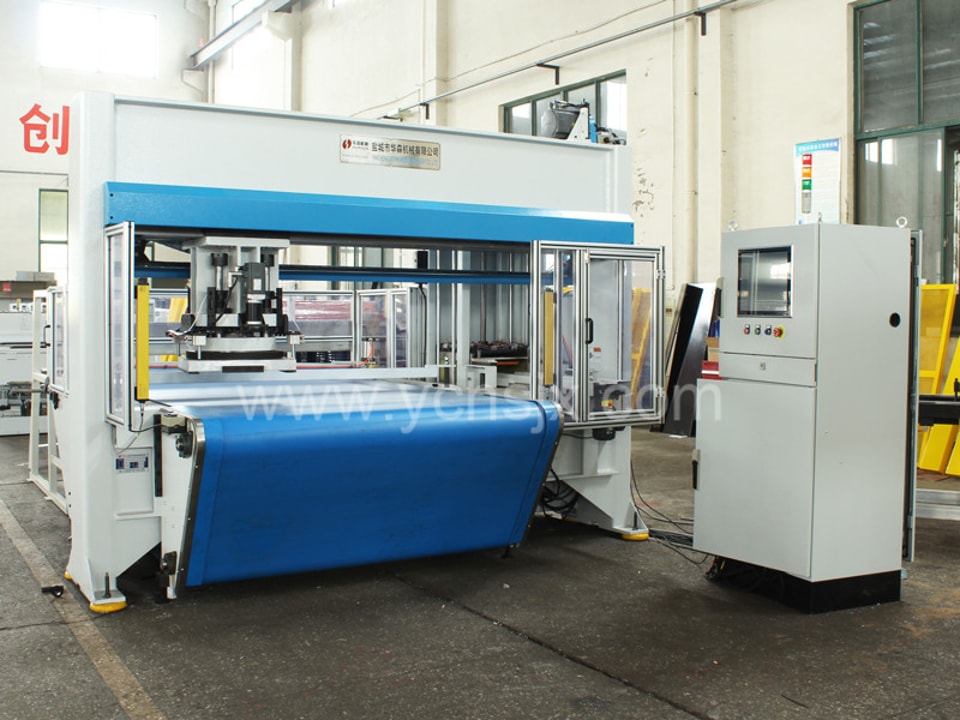
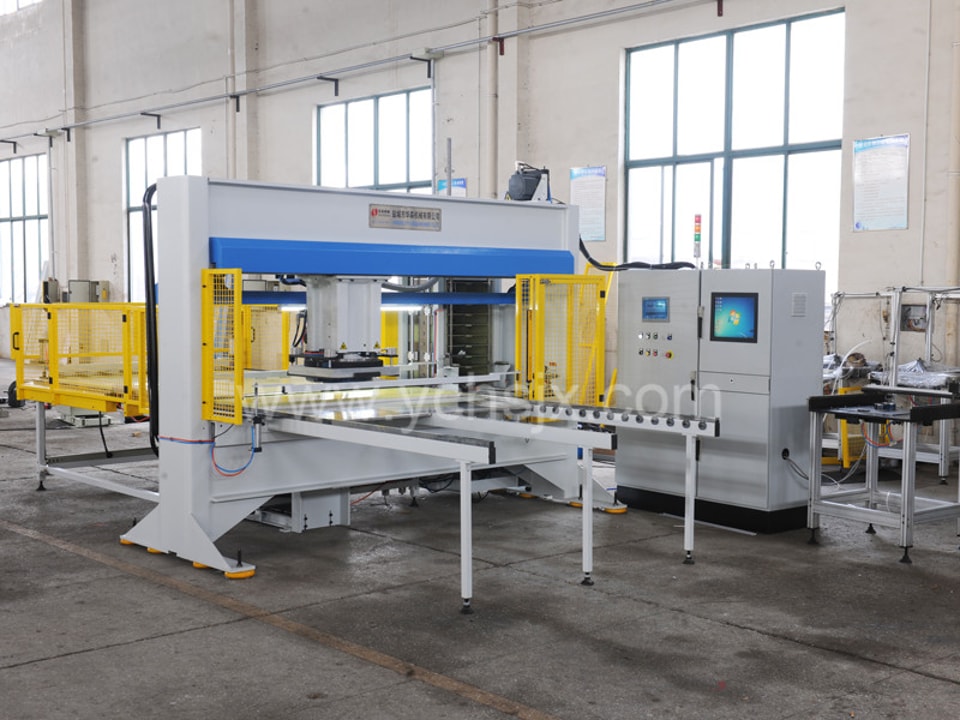
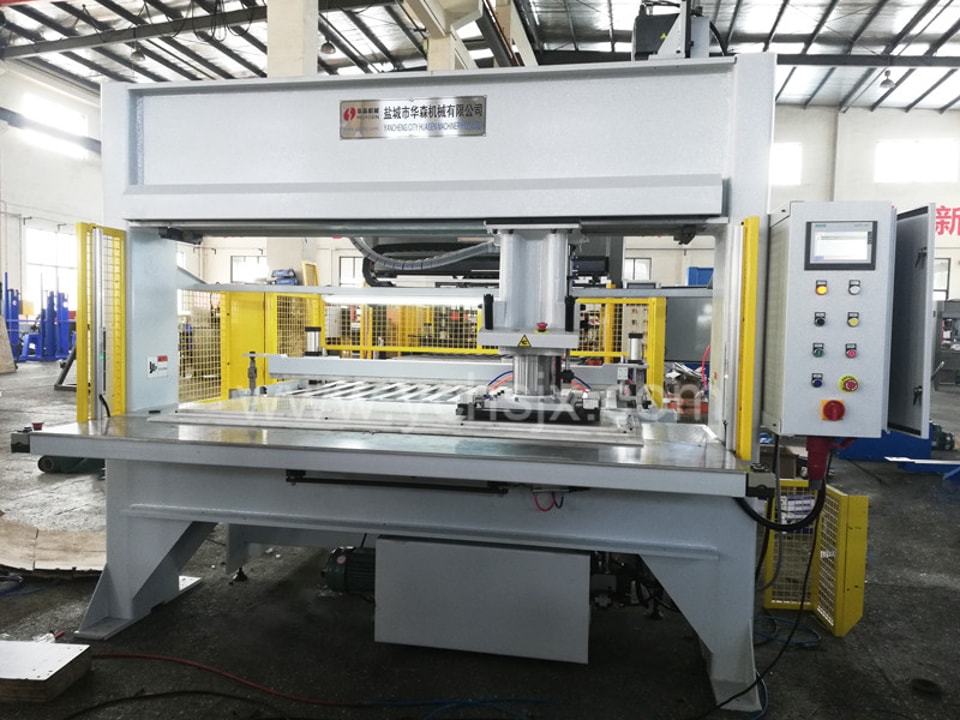
Finally, all these automatic cutting systems are integrated with smart manufacturing platforms, featuring auto tool-changing carousels, vision-based edge inspection cameras, and conveyorized material handling for continuous flow production. Real-time monitoring of blade wear, vacuum pressure, and material feed ensures consistent quality, while integrated dust and fume extraction systems (HEPA/ATEX certified) manage the fine particles from rubber, foam, and carbon composites. Predictive maintenance and IIoT connectivity reduce downtime by up to 35%, while CAD/CAM nesting software delivers 15–25% material savings. Collectively, these technologies enable sports product manufacturers to achieve 40–50% labor reduction, enhanced product consistency, and the agility to produce everything from mass-market entry-level equipment to precision-engineered professional-grade gear, meeting the diverse demands of athletes, fitness enthusiasts, and recreational users worldwide.
Contact Us


