
Bags and Luggage Carriers
Cutting machines are suitable for leather bags, handbags, backpacks, wallets and luggage materials. The equipment provides clean cutting edges and stable performance for high-quality bag production.
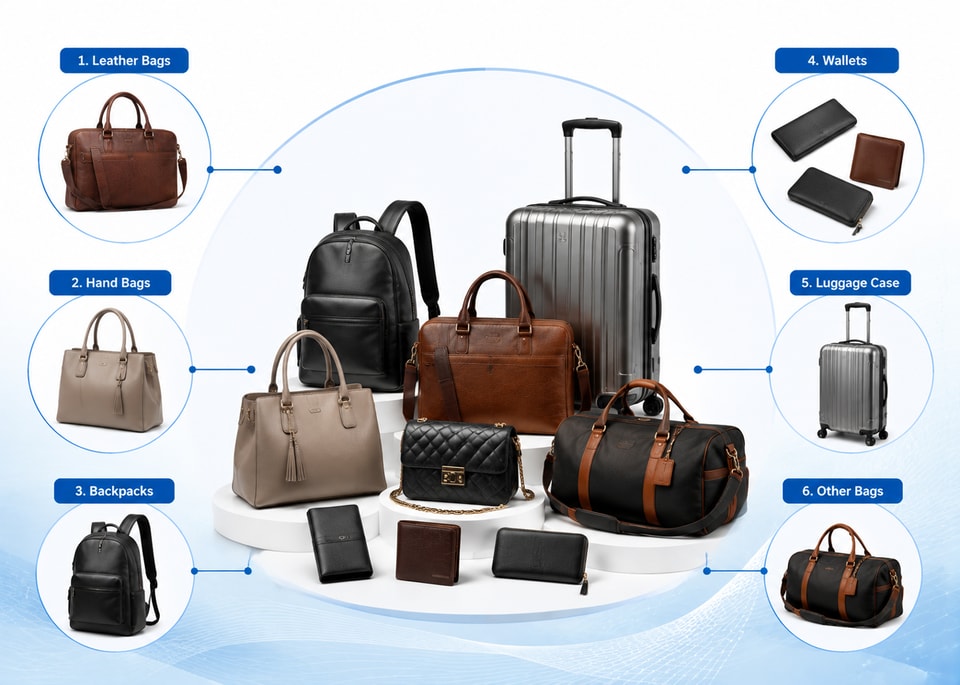
Automatic cutting machines are transformative in the bags and luggage carriers industry, where diverse materials, complex geometries, and high-mix low-volume production demand precision, speed, and waste reduction. Their applications cover everything from luxury handbags to rugged outdoor backpacks and hard-shell suitcases.
For soft materials—including genuine leather, split leather, synthetic PU/PVC, nylon, polyester, canvas, and coated textiles—highly versatile CNC-driven oscillating knife and reciprocating blade cutting systems are the standard. These machines handle multilayer stacks (often up to 50–70mm thick) to maximize throughput while maintaining edge quality without fraying or delamination. Advanced models integrate high-definition vision systems (CCD cameras) that scan each hide or panel to identify natural defects, scars, wrinkles, and grain variations. Coupled with intelligent nesting algorithms, the system automatically rotates and positions pattern pieces—from gussets and pockets to handles and straps—to achieve optimal material utilization, often improving yield by 15–25% compared to manual die-cutting. For high-frequency welded or heat-sealed components, laser cutting machines produce perfectly fused, non-fraying edges on synthetics, eliminating secondary sealing operations.
For hard-shell luggage (polycarbonate, ABS, aluminum, and composite blends), waterjet and fiber laser cutting systems are employed. Waterjet cutting (with abrasive garnet) processes rigid shells up to 8mm thick without heat distortion, preserving material strength and surface finish for smooth edge polishing. 5-axis robotic laser cutters precisely cut wheel housings, handle recesses, combination lock cutouts, and internal rib structures with micron-level accuracy (±0.02mm), enabling tight tolerances for TSA-approved locking mechanisms and telescopic handle assemblies. These systems also perforate ventilation or drainage holes in sport luggage with zero burrs.
In the realm of lining, foam padding, and reinforcement materials, ultrasonic cutting technology dominates. Ultrasonic blades vibrating at 20–35 kHz effortlessly slice through bonded foam, non-woven felt, honeycomb paperboard, and thermoplastic reinforcements, creating sealed, fused edges that prevent fiber shedding and layer separation. This is particularly critical for protective laptop compartments, camera inserts, and shock-absorbing shoulder pads, where structural integrity directly impacts product durability. Multi-head ultrasonic cutters can process up to 100mm stack heights, significantly boosting production capacity.
For webbing, zipper tapes, hook-and-loop fasteners, and elastic bands, automatic indexing cutters with rotary or guillotine blades are used. Servo-driven feeding systems precisely measure and cut these continuous rolls to exact lengths (tolerance ±0.5mm), with automatic notching and hole-punching features for buckle attachments and end-finishing. Some advanced models incorporate ultrasonic sealing to simultaneously cut and melt synthetic webbing ends, preventing unraveling without additional stitching or heat-sealing steps.
Digital pattern projection systems complement these cutting machines by projecting full-scale cutting lines onto the material surface, guiding operators for manual placement of irregular or high-value pieces. This hybrid approach reduces setup time for small-batch custom orders (e.g., bespoke leather goods) and allows real-time adjustment based on material stretch or grain direction.
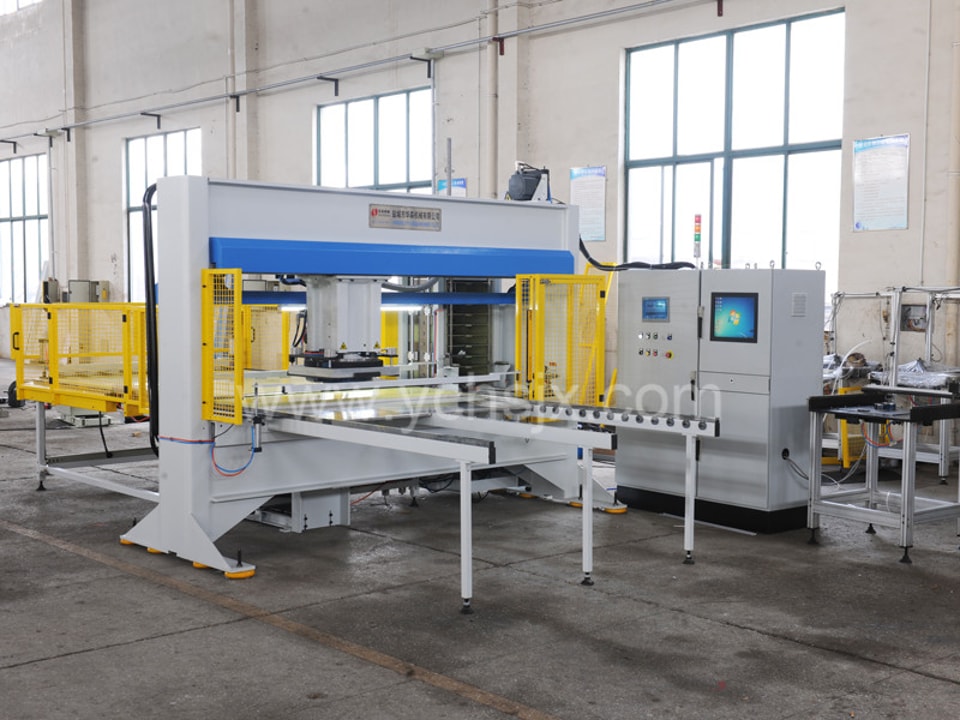
Finally, all these systems are integrated with Industry 4.0 software suites, including ERP and MES connectivity. They feature automatic tool-change carousels, vacuum tables for material fixation, and conveyorized feed/outfeed for continuous operation. Advanced models include self-diagnostic sensors that monitor blade wear, vacuum pressure, and motor load, automatically adjusting cutting parameters to maintain consistency across shifts. Dust and fume extraction systems with HEPA filtration ensure a clean, safe working environment, particularly important when cutting synthetic materials that may emit volatile compounds.
Collectively, automatic cutting machines in the bags and luggage industry deliver not only superior quality and precision but also significant economic benefits: labor reduction of up to 60%, material savings of 20–30%, and production lead-time compression of 40–50%, enabling brands to respond swiftly to ever-changing fashion trends and seasonal collections.
Contact Us


