
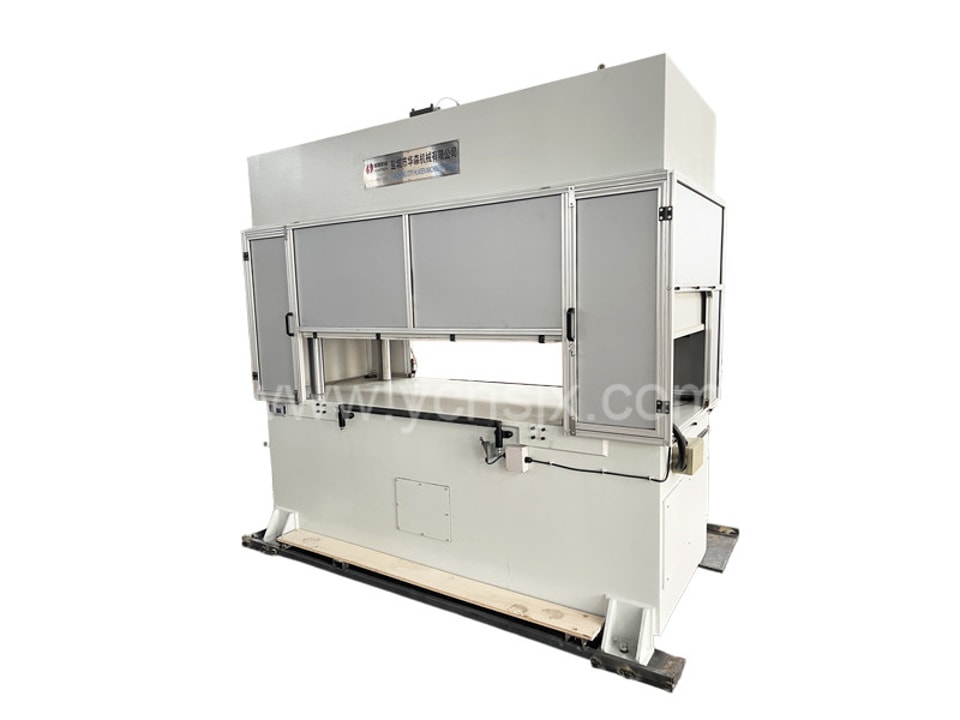
How Does a Four-Column Structure Improve Cutting Stability?
The four-post structure is a key design feature that distinguishes the four-post cutting machine from other cutting equipment. This structure utilizes four precision guide posts to support and guide the upper platen, ensuring stable movement during the cutting process.In industrial production, cutting stability directly impacts dimensional accuracy, processing efficiency, and material utilization. With advantages such as uniform force distribution, precise guidance, and high-rigidity support, the four-post structure effectively enhances overall equipment performance, meeting the demands of various materials and high-precision processing. I. Four-post guidance ensures smooth movementDuring the cutting process, the upper platen undergoes a reciprocating vertical motion. If the guidance system is inadequate, issues such as misalignment or tilting can occur, leading to uneven force on the cutting die and compromising the cutting quality.The four-post structure establishes a stable path of motion via its four guide posts, ensuring the upper platen moves strictly vertically. Even under high pressure, it minimizes positional deviation and enhances the stability of the cutting process. II. Uniform pressure distribution improves cutting resultsThe uniformity of pressure distribution during cutting directly affects the quality of the processed material.Equipment with conventional structures may experience localized pressure concentration, resulting in incomplete cuts or material deformation in certain areas. In contrast, the four-post structure distributes pressure more evenly across the work area, ensuring consistent force application across the entire cutting die.Uniform pressure output ensures a clean, complete cut and improves edge smoothness, making it ideal for high-precision processing requirements. III. Enhanced structural rigidity reduces operational vibrationIndustrial equipment often operates continuously for extended periods; insufficient structural rigidity can lead to vibration and positional drift.The four-post structure employs a multi-point support system, boosting the equipment's overall stability. During high-speed, continuous cutting, it minimizes mechanical oscillation and maintains optimal operating conditions.High structural rigidity not only improves cutting stability but also helps extend the equipment's service life. IV. Improved capability for processing large-area materialsLarge-format materials often require a wide cutting area, placing higher demands on equipment stability.The four-post structure effectively supports large work areas, ensuring that pressure is evenly distributed across the entire cutting zone. When processing large-scale products made of leather, foam, or composite materials, the four-column structure minimizes processing errors caused by uneven force distribution, thereby enhancing overall cutting quality. Ⅴ. Ensuring Precise Die PositioningThe accuracy of the cutting die's position is a critical factor influencing cutting results.The four-column guide structure minimizes deviation during the movement of the upper platen, ensuring the cutting die maintains a stable operating path.Precise positioning capabilities improve dimensional consistency, making the system particularly suitable for high-volume production scenarios requiring repetitive processing. Ⅵ. Adapting to Diverse Material Processing NeedsDifferent materials—varying in hardness, thickness, and elasticity—impose distinct requirements on cutting stability.For instance, leather requires precision cutting, foam necessitates deformation prevention, and rubber demands sufficient pressure to ensure a clean cut. The four-column structure provides stable pressure transmission, allowing the equipment to easily adapt to processing a wide range of materials.By adjusting pressure parameters and swapping cutting dies, the equipment can meet diverse production requirements. Ⅶ. Minimizing Processing Errors and Boosting Production EfficiencyA stable cutting process reduces defect rates and cuts down on the time required for rework and manual finishing.The four-column structure ensures consistency in every cutting stroke, standardizing the production process.For mass-production enterprises, stable processing quality not only enhances efficiency but also lowers overall production costs.8. Enhancing Long-Term Operational ReliabilityIndustrial equipment often operates in demanding environments characterized by long hours and high-intensity workloads. Thanks to its optimized force distribution, the four-column structure prevents individual components from bearing excessive stress.Over the long term, this stable structural design helps maintain equipment precision and mitigates performance degradation caused by structural deformation. ConclusionThe four-column structure utilizes four guide pillars to provide precise guidance and stable support, ensuring superior stability during the cutting machine's operation.Its key advantages include smooth movement, uniform pressure, high structural rigidity, precise positioning, and broad material adaptability. In industrial settings requiring high-efficiency and high-precision cutting, the four-column structure effectively improves processing quality, ensures product consistency, and provides a reliable foundation for stable, long-term production.
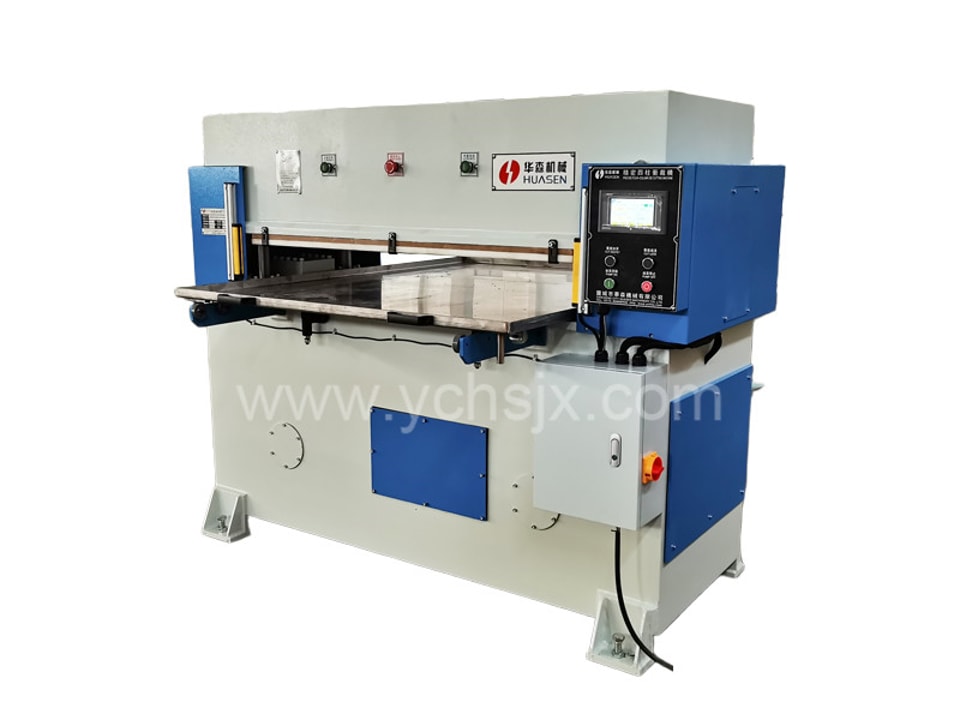
Why Choose a Four-Column Die Cutting Machine for Industrial Production?
The four-column cutting machine is a precision cutting device widely used in industrial material processing. Powered primarily by a hydraulic system, it utilizes a four-column guide structure to ensure stable operation during the cutting process. As the manufacturing industry increasingly demands higher production efficiency, product precision, and processing stability, the four-column cutting machine has become a vital piece of equipment in many industrial production workflows, thanks to its efficiency, reliability, and versatility. I. Stable Structure Ensures Processing PrecisionThe four-column cutting machine employs a four-column guide structure that keeps the upper platen steady during vertical movement, effectively minimizing deviation and oscillation.Many industrial products—such as automotive interior components, electronic accessories, and sealing materials—require high dimensional precision. A stable mechanical structure ensures accurate cutting positioning for every cycle, enhances product consistency, and reduces rework caused by dimensional errors. II. Hydraulic System Delivers Powerful Cutting CapabilityIndustrial production often involves processing materials of varying thicknesses and hardness levels; manual methods or standard equipment often struggle to meet these demanding processing requirements.Driven by a hydraulic system, the four-column cutting machine delivers consistent, steady pressure, allowing the cutting die to penetrate materials rapidly.Whether processing leather, foam, rubber, composite materials, or multi-layer sheets, the pressure can be adjusted to meet specific production needs, ensuring efficient cutting. III. Boosts Production Efficiency; Ideal for Batch ProcessingIndustrial production frequently requires repetitive processing tasks. Manual cutting is not only inefficient but also susceptible to variations in operator skill levels.By using a die-cutting method, the four-column cutting machine enables rapid, standardized production. Simply changing the cutting die allows for the continuous production of items with identical specifications.This processing method reduces the time required to produce individual units and increases overall output capacity, making it particularly well-suited for high-volume manufacturing. IV. Ensures Consistent Product QualityIn traditional processing methods, dimensional variations between product batches can occur, potentially affecting subsequent assembly and performance.The four-column cutting machine utilizes fixed cutting dies, ensuring that the cutting path and dimensions remain consistent across every cycle, thereby effectively minimizing human error.For the production of industrial components requiring high consistency—such as seals, protective materials, and insulation parts—this equipment enhances the stability of product quality. V. Adaptability to Various Industrial MaterialsFour-column cutting machines possess strong material adaptability, capable of processing a wide range of materials commonly used in industry.Materials such as leather, EVA, rubber, foam, non-woven fabrics, plastic sheets, textiles, and composite materials can all be processed by simply adjusting equipment parameters.This broad applicability allows enterprises to manufacture different products using the same machine, thereby enhancing equipment utilization efficiency. VI. Reduction of Material WasteMaterial costs constitute a significant portion of industrial production expenses; improving material utilization rates can effectively lower production costs.Through precise positioning and die-based processing, four-column cutting machines allow for the optimal planning of cutting layouts, thereby minimizing scrap generation.For high-value materials—such as premium leather or specialized composites—precise cutting helps enterprises reduce waste and improve economic returns. VII. Simple Operation and Convenient Production ManagementModern four-column cutting machines feature user-friendly operation, requiring only basic training to master.Compared to complex processing equipment, the production workflow of a four-column cutting machine is more intuitive, facilitating easier personnel scheduling and production management.Additionally, stable automated operation minimizes inconsistencies caused by manual handling, ensuring a more standardized production process.VIII. Stable Operation and Low Maintenance CostsIndustrial production demands continuous, long-term equipment operation, making stability a crucial factor.Four-column cutting machines feature a mature structural design with highly durable key components. Maintaining optimal operating conditions requires only routine tasks such as checking the hydraulic system, lubricating moving parts, and keeping the machine clean.Low maintenance requirements reduce equipment downtime and enhance production continuity. IX. Suitable for Applications Across Multiple IndustriesFour-column cutting machines are widely used in sectors such as footwear materials, automotive manufacturing, electronics, packaging, leather goods, textiles, and industrial components.Whether for large-scale mass production or the processing of diverse product varieties, the machine offers flexible application through the simple changing of cutting dies and adjustment of parameters. ConclusionThe choice of four-column cutting machines for industrial production is driven by advantages such as structural stability, powerful cutting force, precision, high efficiency, and broad material compatibility.By combining a hydraulic system with a four-column guiding structure, the equipment effectively meets the modern manufacturing industry's demands for high-efficiency, high-quality processing. At the same time, mold-based production methods can reduce material waste and improve product consistency.For manufacturing enterprises that require extensive cutting of flexible materials and industrial sheets, the four-column cutting machine is a crucial piece of equipment for boosting production capacity and optimizing processing workflows.
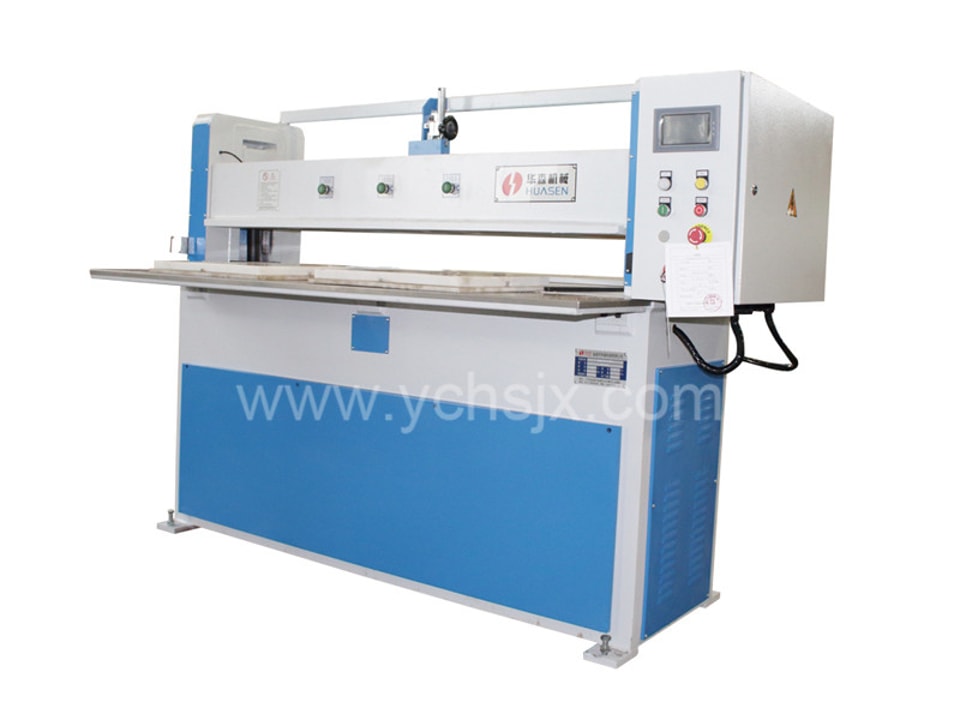
How Does a Hydraulic Plane Cutting Machine Work?
A hydraulic flatbed cutting machine is a piece of equipment that utilizes hydraulic power to perform material cutting operations. It primarily operates by using a hydraulic system to drive the movement of the upper platen, forcing a mounted cutting die against the material to achieve precise cutting.This equipment is widely used in industries such as footwear, leather processing, packaging, automotive interiors, electronic accessories, textiles, and rubber manufacturing. Its operation integrates hydraulic drive, mechanical transmission, and die-cutting technologies to deliver efficient and highly consistent material processing. I. Power Provided by the Hydraulic SystemThe hydraulic system is the core component of the hydraulic flatbed cutting machine.Upon startup, the hydraulic pump engages, delivering hydraulic fluid into the cylinder to generate thrust. The pressure of the hydraulic fluid is converted into mechanical motion, driving the upper platen downward.Compared to traditional mechanical drive methods, hydraulic systems offer more stable and powerful pressure. Additionally, cutting force can be adjusted according to the material type to meet specific processing requirements. II. Material Placement and PositioningBefore cutting begins, the operator lays the material flat on the worktable and positions it accurately relative to the cutting die.Hydraulic flatbed cutting machines typically utilize specialized cutting dies, with die designs tailored to specific product shapes.Proper material placement and precise positioning maximize material utilization and minimize waste during the cutting process. III. Die-Cutting OperationOnce the machine is activated, the hydraulic system drives the upper platen downward, bringing the mounted cutting die into contact with the material.As pressure increases, the edge of the cutting die gradually penetrates the material, completing the cutting process.Upon reaching the preset pressure and cutting depth, the machine stops applying pressure, the upper platen returns to its initial position, and the operator removes the processed product.The entire process is rapid and stable, making it ideal for mass production. IV. Pressure Control Ensures Cutting QualityA key feature of the hydraulic flatbed cutting machine is its ability to precisely control cutting pressure.Different materials have varying pressure requirements; for instance, leather requires a clean, smooth cut, foam requires pressure that avoids compressive deformation, and rubber materials require sufficient force to ensure a complete cut.The machine utilizes a hydraulic control system to adjust pressure levels, thereby ensuring a stable and consistent cutting process. Proper pressure settings not only improve processing quality but also reduce wear on cutting dies and minimize material damage. V. Flat Worktable Enhances Processing StabilityHydraulic flatbed cutting machines utilize a flatbed design, making material placement more convenient.The level work area ensures uniform pressure distribution across the material, preventing cutting errors caused by material shifting or uneven force.For large-format materials, the flatbed structure provides superior support, thereby increasing cutting precision. VI. Die Changing Enables Multi-Product ProcessingHydraulic flatbed cutting machines typically employ a die-cutting method, allowing for the use of specific dies tailored to different products.Products such as footwear components, packaging inserts, and electronic accessories can be rapidly processed by designing appropriate cutting dies.This versatility expands the machine's scope of application, enabling a single unit to meet the production needs of various products. VII. Cyclic Operation Boosts Production EfficiencyDuring continuous production, the hydraulic flatbed cutting machine operates in a repeating cycle based on a fixed workflow.After the operator places the material, the machine executes a sequence—descending to cut, maintaining pressure, and automatically retracting—before proceeding to the next cycle.This standardized workflow reduces manual handling time and increases efficiency, making it ideal for high-volume production. VIII. Safety Controls Ensure Operational SafetyModern hydraulic flatbed cutting machines are typically equipped with safety features such as two-hand start controls and safety limit switches.These designs prevent accidental operation and enhance the safety of machine usage.Additionally, standardized operation and regular maintenance of the hydraulic system and mechanical components ensure long-term, stable machine performance. IX. Suitable for Processing a Wide Range of MaterialsThanks to their stable pressure and flexible adjustment capabilities, hydraulic flatbed cutting machines can process a diverse array of materials.Common materials include leather, EVA, foam, rubber, non-woven fabrics, textiles, plastic sheets, and composite materials.By adjusting pressure parameters and selecting the appropriate cutting die, the machine can meet the processing requirements of various industries. ConclusionThe operating principle of the hydraulic flatbed cutting machine relies on a hydraulic system to generate power; a hydraulic cylinder drives the movement of the upper platen, which then forces the cutting die to cut through the material.Its operation is characterized by stable pressure, precise cutting, ease of use, and high production efficiency. With its reliable hydraulic drive system and flatbed cutting structure, the hydraulic flatbed cutting machine meets the modern manufacturing industry's demands for high-efficiency and high-precision material processing, establishing itself as a key piece of production equipment in the field of flexible material cutting.
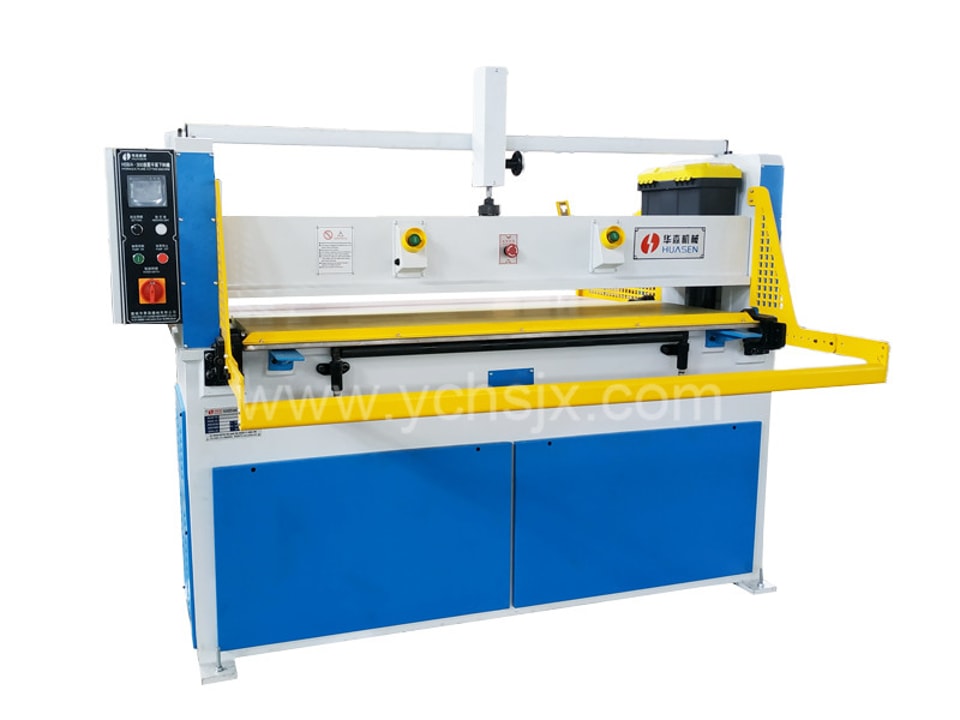
What Is a Hydraulic Plane Cutting Machine Used For?
A hydraulic flatbed cutting machine is an industrial device that utilizes a hydraulic system to power the stamping and cutting of materials between upper and lower platens. Characterized by stable cutting pressure, high processing efficiency, and ease of operation, this equipment is widely used in the processing of flexible, sheet, and composite materials.Compared to traditional manual cutting methods, hydraulic flatbed cutting machines enable rapid, precise batch processing using cutting dies, thereby boosting production efficiency and ensuring dimensional consistency across products. Consequently, they find extensive application in industries such as footwear materials, leather goods, packaging, automotive interiors, electronic accessories, and textiles. I. Application in Footwear Material ProcessingThe footwear industry is a key sector for the application of hydraulic flatbed cutting machines.Footwear production involves cutting materials such as natural leather, synthetic leather, EVA, rubber, foam, and insole materials to manufacture components like uppers, soles, insoles, and decorative elements.By utilizing specialized cutting dies, hydraulic flatbed cutting machines can rapidly cut materials into various shapes. The stable pressure output ensures clean cutting edges and high dimensional accuracy, making the equipment ideal for the mass production of footwear components. II. Application in Leather Goods ProcessingLeather is characterized by its softness and significant variations in thickness, demanding high precision during cutting.Hydraulic flatbed cutting machines can process materials such as natural leather, artificial leather, and PU leather, and are widely used in the manufacture of luggage, leather goods, and furniture upholstery.Through die-based processing, the equipment minimizes errors associated with manual cutting, improves material utilization rates, and ensures dimensional uniformity across different production batches. III. Application in Packaging Material ProcessingThe packaging industry requires large quantities of cushioning and protective materials, such as EPE foam (pearl cotton), sponge, cardboard, and corrugated materials.Hydraulic flatbed cutting machines allow for the design of custom cutting dies based on product structure, enabling the rapid production of components like packaging inserts, protective pads, and cushioning layers.Precise cutting ensures a better fit between packaging materials and the product, enhancing packaging effectiveness while reducing manual processing costs. IV. Application in Automotive Interior Material ProcessingAutomotive manufacturing involves the precise cutting of numerous interior components. Hydraulic flatbed cutting machines can be used to process flexible materials such as automotive seat materials, sound-insulating cotton, felt, foam, and leather.The equipment's stable cutting performance ensures dimensional accuracy of parts, boosts downstream assembly efficiency, and meets the quality and consistency requirements of automotive interior production. V. Processing of electronic auxiliary materialsThe manufacturing of electronic products often requires the processing of various precision auxiliary materials, such as insulation materials, foam tapes, double-sided tapes, and protective films.These materials are typically thin and demand high cutting precision.By precisely controlling pressure, hydraulic flatbed cutting machines enable the rapid cutting of small parts with clean edges, making them suitable for mass production in the electronics industry. VI. Processing of textiles and non-woven fabricsMaterials such as fabrics, non-woven fabrics, felt, and composite textiles used in the textile industry can also be processed using hydraulic flatbed cutting machines.The equipment is suitable for cutting products such as garment accessories, filtration materials, protective gear, and decorative materials.Compared to manual cutting, mechanical die-cutting offers faster speeds and more consistent dimensions, helping to improve production efficiency. VII. Processing of rubber and plastic materialsHydraulic flatbed cutting machines are suitable for various rubber and plastic sheets, such as rubber pads, silicone sheets, PVC materials, and TPU materials.These materials are commonly used in industrial products like seals, shock-absorbing components, and protective parts.By adjusting cutting pressure and selecting the appropriate cutting die, the equipment achieves precision processing, minimizes material deformation, and enhances product quality. VIII. Processing of composite materialsIn modern manufacturing, many products feature multi-layer composite structures—such as leather bonded with foam or fabric bonded with adhesive layers.Hydraulic flatbed cutting machines can adjust pressure based on material thickness, enabling the simultaneous cutting of multiple layers.This processing method reduces production steps, increases efficiency, and meets the demands of processing complex composite materials. IX. Production of industrial componentsBeyond the consumer goods sector, hydraulic flatbed cutting machines are also used to process industrial components.Items such as gaskets, shock-absorbing pads, insulation pads, and filtration materials require precision cutting during production.The equipment's stable processing capabilities ensure dimensional consistency, thereby enhancing the reliability of industrial products. SummaryHydraulic flatbed cutting machines are primarily used for the precision cutting of various flexible materials, sheets, and composites.Their applications span multiple industries, including footwear materials, leather, packaging, automotive interiors, electronic accessories, textiles, rubber, and industrial components.Leveraging the stable pressure provided by hydraulic drive systems, die-based processing, and high production efficiency, these machines help enterprises improve processing accuracy, reduce material waste, and meet the modern manufacturing industry's demand for efficient production.
Contact Us


