
What Is the Working Principle of a Four-Column Die Cutting Machine?
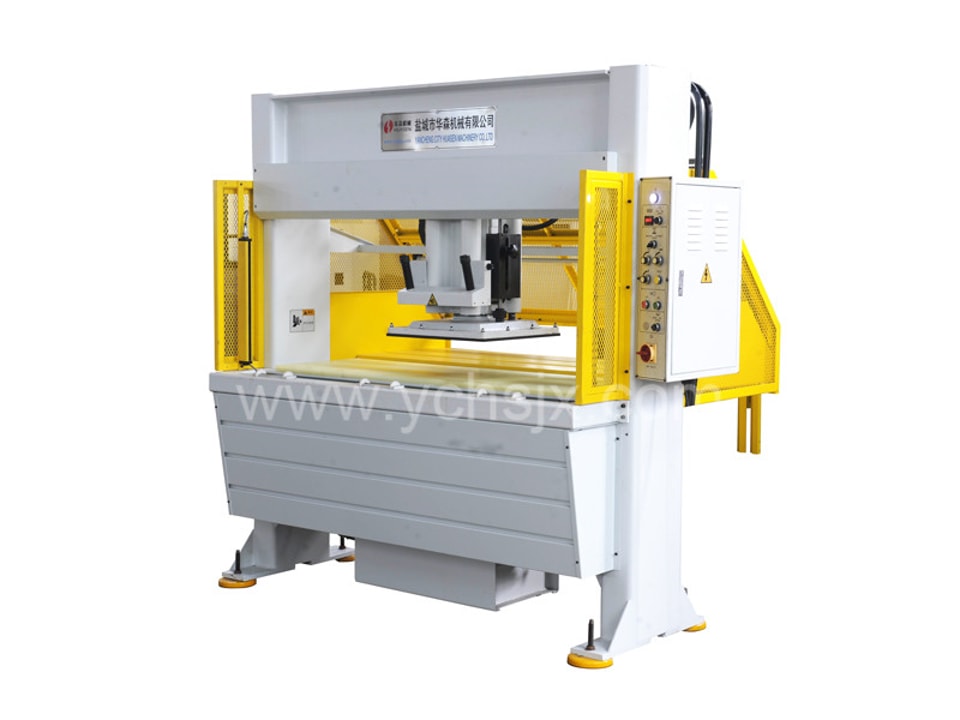
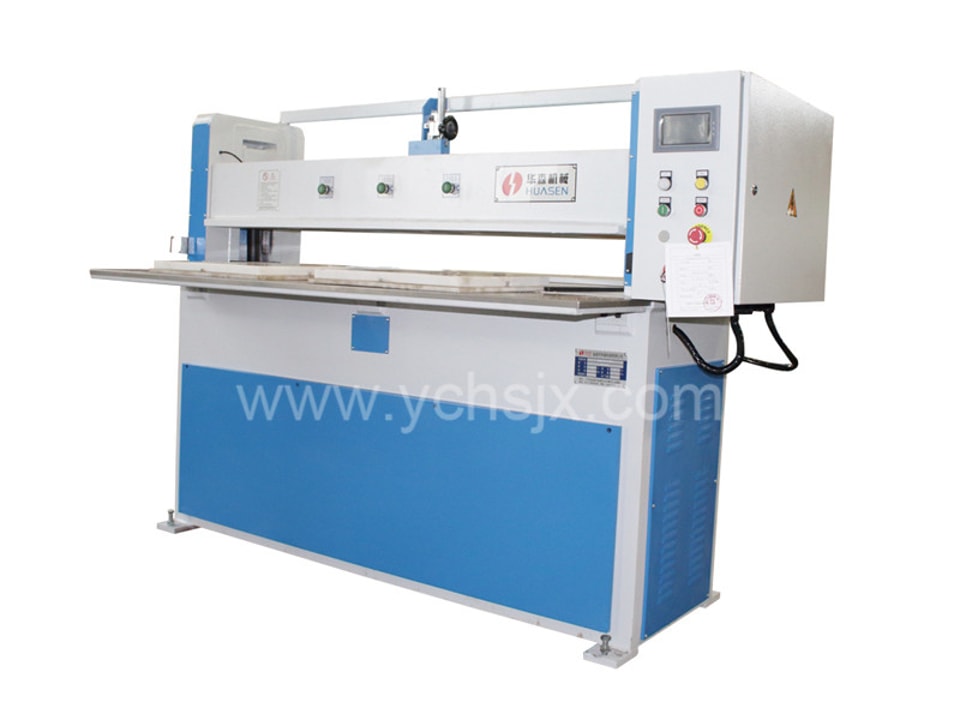
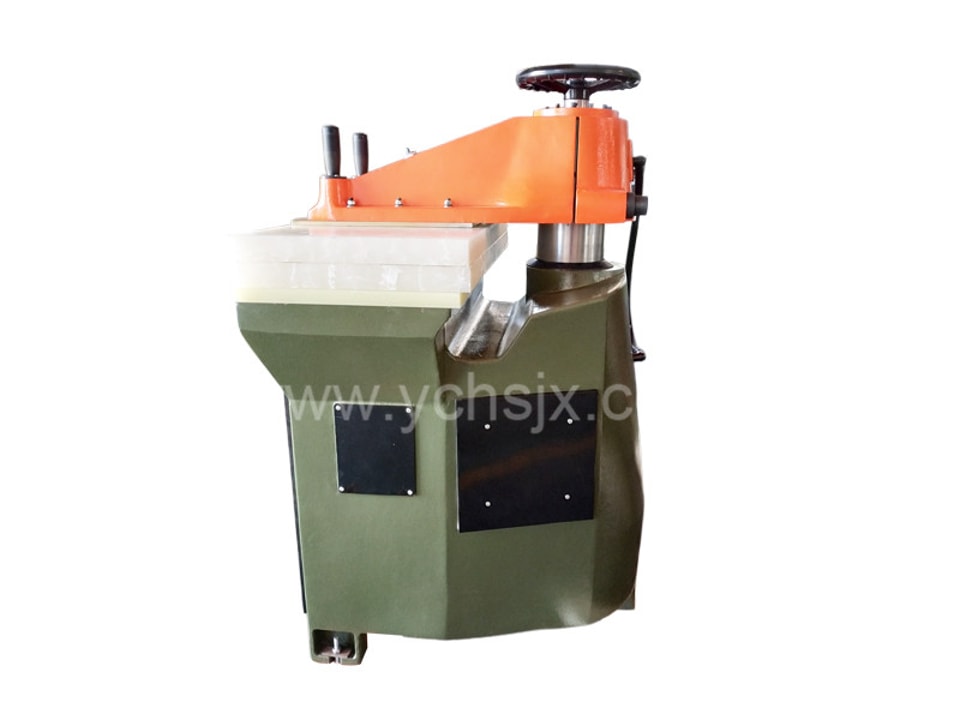
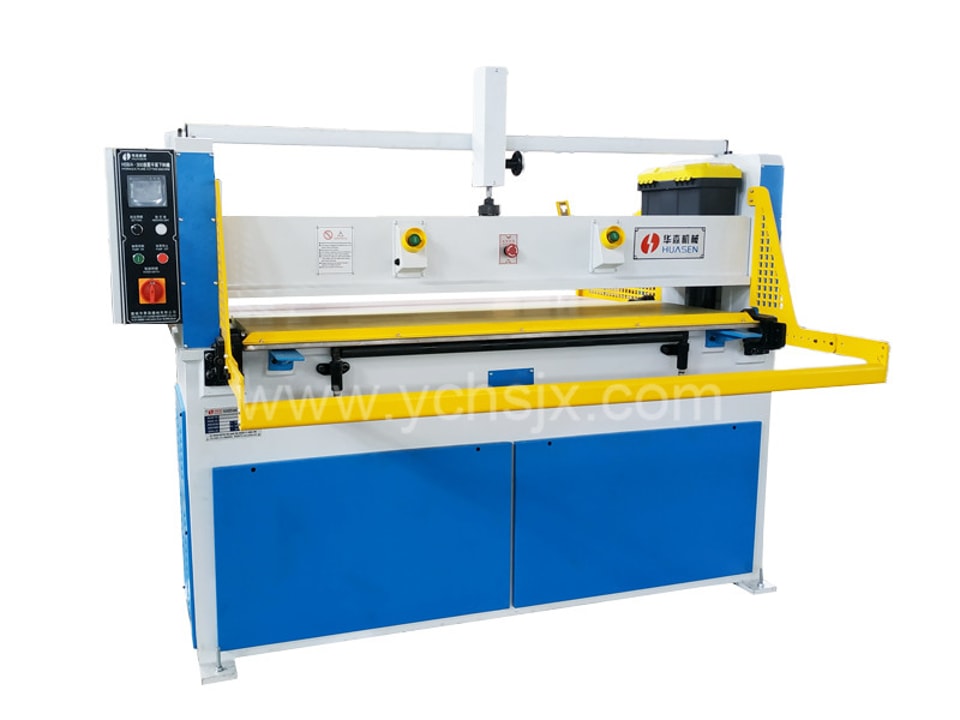
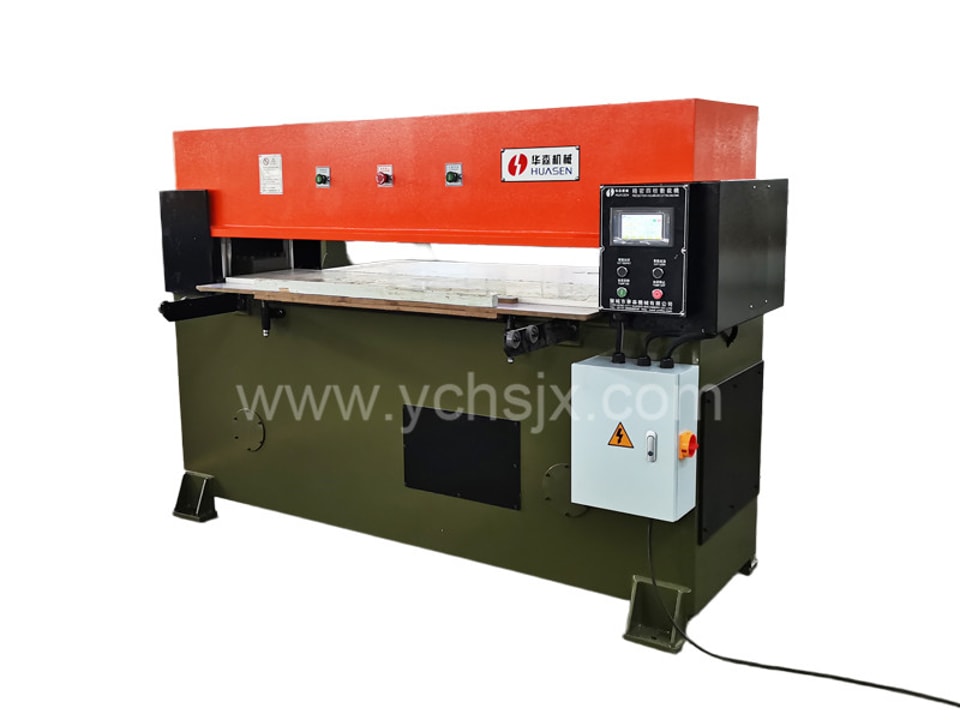
The four-column cutting machine is widely used for the die-cutting of flexible materials. Powered primarily by a hydraulic system, it drives the upper platen to move steadily along the guide columns, utilizing specialized cutting dies to cut the material. Thanks to its four-column guiding structure, the machine offers stable operation, uniform force distribution, and high cutting precision, making it suitable for industries such as footwear, leather goods, packaging, automotive interiors, electronic components, and composite materials.
Understanding the working principle of the four-column cutting machine helps in mastering its performance and selecting the right processing solution for specific production needs.
I. Hydraulic System Provides Cutting Power
The hydraulic system serves as the core power source for the four-column cutting machine. Upon startup, the hydraulic pump delivers hydraulic fluid to the cylinder, generating the downward pressure required for operation.
When the operator initiates the cutting cycle, the hydraulic system drives the upper platen downward, applying pressure to the material placed on the worktable. Once the pressure reaches the preset level, the cutting die penetrates the material, completing the cut.
The hydraulic system delivers stable, continuous pressure, enabling the machine to process materials of varying thicknesses and hardness levels.
II. Four-Column Guiding Structure Ensures Operational Stability
The four-column structure is a key feature of this equipment. Four precision guide columns position and support the upper platen, ensuring smooth, stable movement during the up-and-down stroke.
Compared to single-column or standard structural designs, the four-column guiding method effectively minimizes operational misalignment and ensures a more uniform distribution of cutting pressure.
When processing large-sized materials or performing high-precision work, this stable guiding structure ensures consistent force application on the cutting die, thereby enhancing cutting quality.
III. Precision Die-Cutting
Four-column cutting machines typically utilize specialized cutting dies. Molds are custom-made to match specific product shapes and dimensions and are then installed in the machine's cutting zone.
During operation, the upper platen drives the cutting die downward, using pressure to cut the material into the desired shape.
This mold-based processing method facilitates mass production, ensuring consistent product dimensions and minimizing errors associated with manual operation. IV. Operational Cycle
The operating cycle of a four-column cutting machine typically involves material feeding, positioning, downward stroke, cutting, and the return stroke.
First, the material to be processed is placed on the worktable and aligned with the cutting die. The machine is then activated, and the hydraulic system drives the upper platen downward.
Once the cutting die contacts the material, continuous pressure is applied to ensure a clean, complete cut. After cutting is finished, the upper platen automatically returns to its initial position, allowing the operator to remove the finished product and begin the next cycle.
This continuous cycling capability enables the machine to meet the demands of mass production.
V. Pressure Control Ensures Cutting Quality
Different materials have varying requirements for cutting pressure. Materials such as leather, foam, rubber, and non-woven fabrics differ in thickness, density, and elasticity, necessitating appropriate pressure settings.
The four-column cutting machine utilizes a hydraulic control system to adjust pressure levels, allowing it to accommodate the processing of a wide range of materials.
Proper pressure settings not only ensure the material is cut through completely but also prevent deformation caused by excessive pressure, thereby enhancing product quality.
VI. High-Precision Structure Enhances Processing Results
The design of the four-column cutting machine prioritizes overall rigidity and operational precision. The four-column structure minimizes vibration during operation, thereby improving cutting stability.
When processing components with strict dimensional requirements, this stable mechanical structure reduces errors and ensures products consistently meet manufacturing standards.
Consequently, the machine is particularly well-suited for production scenarios demanding high precision and product consistency.
VII. Suitable for Processing Various Materials
Thanks to its stable pressure and precise guiding structure, the four-column cutting machine can process a wide variety of materials.
Commonly processed materials include leather, EVA, rubber, foam, sponge, fabric, non-woven materials, plastic sheets, and composites.
By simply changing cutting dies and adjusting machine parameters, manufacturers can rapidly produce different products, thereby expanding the machine's versatility.
Summary
The operating principle of the four-column cutting machine relies on a hydraulic system to generate power and a four-column guiding structure to ensure the stable movement of the upper platen; this setup works in conjunction with specialized cutting dies to perform material cutting.
Key characteristics of its operation include stable pressure, precise positioning, and high cutting efficiency, enabling it to meet the needs of various industries for the precision processing of flexible materials. Thanks to its stable structural design and excellent processing performance, the four-column cutting machine has become a vital piece of cutting equipment in the modern manufacturing industry for enhancing production efficiency and ensuring product quality.
Contact Us


