
What Materials Can Be Cut by a Swing Arm Clicker Press?
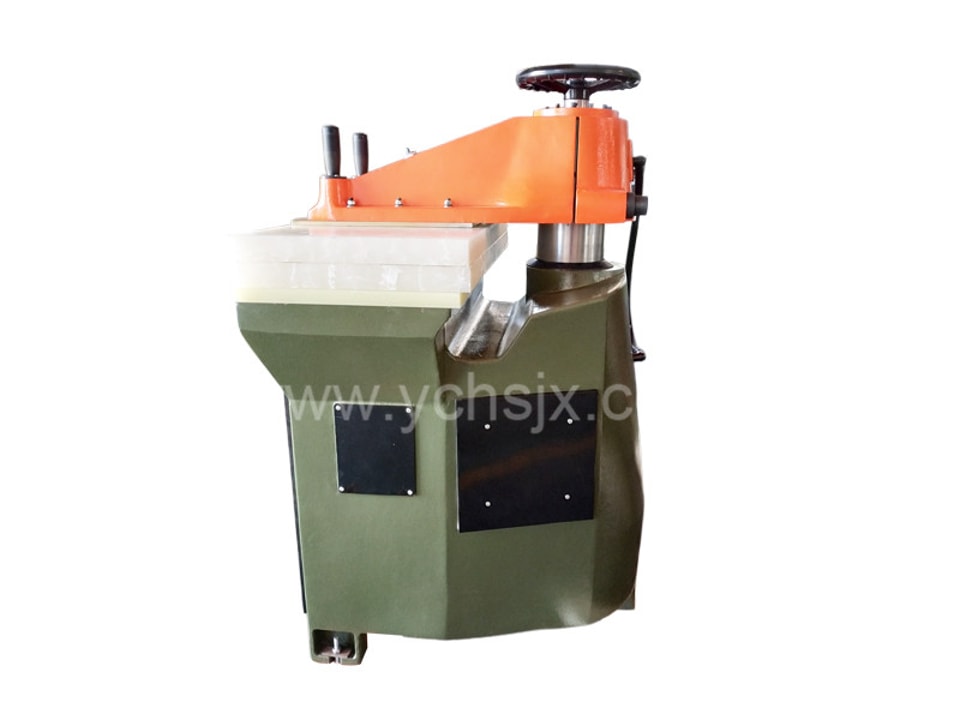
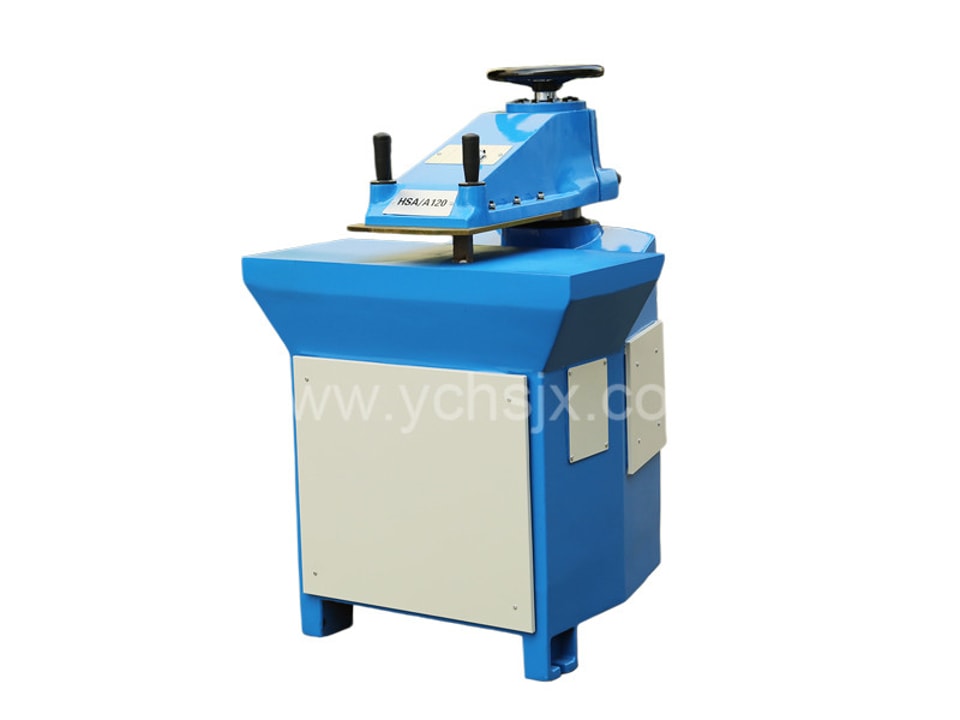
The swing-arm cutting machine is a type of cutting equipment widely used in the processing of flexible materials. It primarily utilizes a hydraulic system to drive a swing-arm structure, applying pressure via a cutting die to the material to achieve precise cutting. Characterized by flexible operation, a compact footprint, high cutting efficiency, and easy die changes, this equipment is extensively used in industries such as footwear, leather goods, packaging, automotive interiors, luggage, electronic accessories, and sporting goods.
Compared to traditional manual cutting methods, the swing-arm cutting machine uses dies to rapidly cut complex shapes, thereby enhancing both production efficiency and dimensional consistency. Consequently, understanding the range of materials suitable for this equipment is crucial for selecting the right cutting solution.
I. Leather Materials
Leather is one of the most common materials processed by swing-arm cutting machines; the equipment is particularly well-suited for flexible materials such as natural leather, artificial leather, and synthetic leather.
In footwear manufacturing, leather often needs to be cut into various shapes for components such as uppers, tongues, insoles, and heel counters. Given the characteristics of leather—such as softness, uneven thickness, and complex surface textures—manual cutting is prone to dimensional errors. In contrast, a swing-arm cutting machine paired with a specialized cutting die enables rapid, precise cutting while minimizing material waste.
In the luggage and leather goods industries, the equipment is used to process components for wallets, handbags, belts, and leather cases. By swapping dies of different specifications, manufacturers can achieve continuous production of various shapes to meet diverse product design requirements.
II. Footwear Materials and Accessories
The footwear industry is a major application area for swing-arm cutting machines. Footwear production involves a wide range of flexible materials, including upper leather, sole materials, insole materials, foam, EVA, and rubber sheets.
For materials like EVA foam and rubber sheets, the swing-arm cutting machine leverages high cutting pressure to drive the die quickly through the material, ensuring clean, neat edges. This is particularly valuable in the production of athletic shoes, casual shoes, and safety footwear, where large volumes of standardized parts are required; the equipment ensures dimensional uniformity across different production batches.
Additionally, the equipment can be used to cut components such as composite sole materials, cushioning pads, and anti-slip inserts, thereby increasing the level of automation on the production line.
III. Foam and Sponge Materials
Foam materials are lightweight, soft, and resilient, making them widely used in sectors such as packaging, protective equipment, automotive manufacturing, and electronics.
Swing-arm cutting machines are suitable for processing materials such as EVA foam, PU foam, sponge, and rubber-plastic foam. By using cutting dies of various shapes, manufacturers can produce foam parts in a wide range of sizes and configurations.
For example, electronics packaging requires precision-cut cushioning foam tailored to the product's shape, while automotive interiors require components like sound-insulation foam and cushioning pads. Swing-arm cutting machines meet the requirements for high-precision, high-efficiency processing of these materials.
IV. Textiles and Non-woven Fabrics
Textiles and non-woven fabrics are also common materials processed by swing-arm cutting machines.
The equipment can cut materials such as cotton, chemical fiber fabrics, knitted fabrics, felt, and non-woven fabrics. In the garment industry, it is used to process components like collars, cuffs, and decorative patches; in the home textile industry, it cuts mattress fabrics, curtain accessories, and decorative materials.
Due to their softness, breathability, and moisture resistance, non-woven fabrics are widely used in filtration media, medical supplies, and packaging materials. Swing-arm cutting machines enable rapid cutting, thereby boosting mass production efficiency.
V. Rubber and Plastic Sheets
Swing-arm cutting machines are also suitable for various rubber and plastic materials, such as natural rubber, silicone sheets, PVC sheets, and TPU materials.
These materials are typically used to manufacture products like seals, protective pads, and industrial components. Since rubber is elastic, conventional cutting methods can easily cause edge deformation; however, using cutting equipment with stable pressure ensures cleaner, flatter cut edges.
In industrial manufacturing, the equipment processes products such as rubber gaskets, anti-vibration pads, and anti-slip sheets in various specifications, ensuring consistent product quality.
VI. Automotive Interior Materials
As the automotive industry places increasingly high demands on interior quality, swing-arm cutting machines are finding widespread application in the processing of automotive interior materials. Components such as car seats, interior door panels, and sound insulation systems often require the processing of various flexible materials, including leather, fabrics, sound-insulating cotton, composite foam, and felt.
Using specialized dies, swing-arm cutting machines can rapidly cut automotive interior parts, ensuring precise dimensional accuracy and enhancing assembly efficiency. Additionally, the equipment accommodates materials of varying thicknesses, meeting the specific production needs of automotive components.
VII. Packaging and Cushioning Materials
In the packaging industry, swing-arm cutting machines are frequently used to process materials such as cardboard, EPE foam (pearl cotton), corrugated board, and shock-absorbing materials.
Packaging for precision products—such as electronic devices, instruments, and glassware—requires custom-designed cushioning structures tailored to the product's shape. These cutting machines can rapidly cut materials according to die shapes, resulting in packaging inserts that are both precise and aesthetically pleasing.
Compared to manual cutting, mechanical cutting not only boosts efficiency but also minimizes human error, making it ideal for high-volume packaging production.
VIII. Insulation and Electronic Auxiliary Materials
The electronics industry demands high precision in material processing; swing-arm cutting machines are suitable for processing insulation paper, conductive foam, adhesive tapes, protective films, double-sided tape, and auxiliary materials for flexible circuits.
These materials are typically thin, requiring clean, neat cutting edges to avoid interfering with subsequent assembly processes. Through precise pressure control and specialized cutting dies, the equipment ensures stable and consistent processing.
Electronics manufacturing involves the rapid forming of numerous small components, and swing-arm cutting machines are capable of meeting needs ranging from small-batch, multi-variety production to mass manufacturing.
IX. Sports Equipment Materials
The manufacture of sports equipment also involves the cutting of large quantities of flexible materials—such as those used for yoga mats, sports protective gear, ball liners, and safety equipment.
Swing-arm cutting machines can process rubber, foam, fabrics, and composite materials, cutting them into specific shapes based on design requirements to enhance production efficiency.
This is particularly important in the production of sports protective gear, where materials must offer excellent fit and cushioning properties; precise cutting ensures the comfort and functional performance of the final product. X. Multi-layer Composite Materials
In modern industrial production, an increasing number of products utilize composite material structures—such as leather bonded with foam, fabric with adhesive layers, or plastic films combined with fiber layers.
Swing-arm cutting machines offer excellent versatility; cutting pressure can be adjusted based on material thickness and hardness, enabling the processing of multi-layer materials.
For products requiring composite processing, multi-layer cutting reduces the number of production steps and boosts efficiency. Furthermore, by carefully selecting the cutting die and pressure parameters, manufacturers can ensure that all material layers are cut simultaneously, thereby enhancing overall processing quality.
Conclusion
Swing-arm cutting machines have a wide range of applications, capable of processing various flexible materials such as leather, footwear components, foam, sponge, textiles, non-woven fabrics, rubber, plastics, automotive interior materials, packaging materials, and electronic accessory components.
Their core advantage lies in using dies to achieve rapid, precise, and stable die-cutting, making them suitable for the diverse production needs of various industries. In practice, users can select the appropriate equipment configuration—based on material thickness, hardness, shape, and production requirements—to maximize efficiency and quality. For manufacturing enterprises requiring the mass production of standardized parts, the swing-arm cutting machine represents a highly efficient and reliable solution for material cutting.
Contact Us


